
In February of 2025 Dr. P went to far northern India, at the border with Tibet, to photograph snow leopards. It was an arduous trip and not for the faint of heart, due to the distance we had to travel to make it to the area where they are located, the altitude of 14,000 feet, and the bitter cold temperatures of the Himalayas.
Let’s hear what our main guide named Santosh has to say about this trip:
You can’t photograph them until you find, them, and you aren’t going to find them anywhere near a city. A big part of a trip like this is getting to where the snow leopards have their territories in order to increase the chance of actually seeing one.
We were warned that some groups never see one due to their elusive nature, the large territories they inhabit, and the ability to blend into their surroundings. Take a look at the photo below and decide if there is a snow leopard in it.
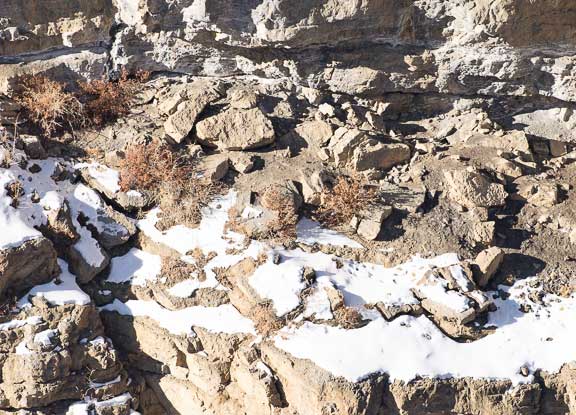
It is in the very center of the photo
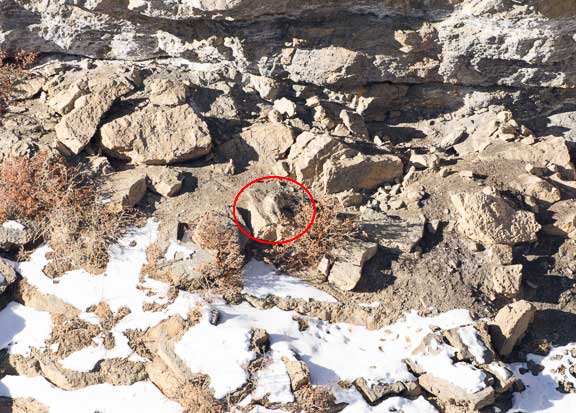
Does zooming in and circling it help?
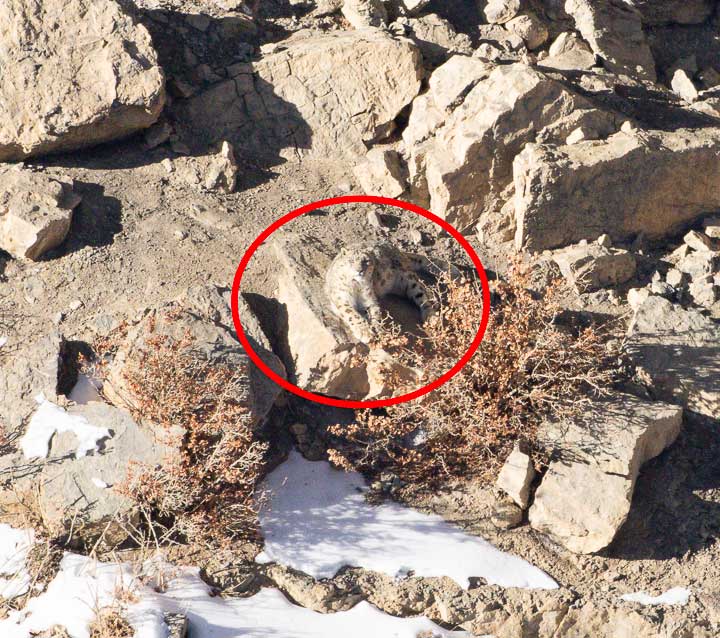
What about now?
Fortunately, Dr. P and his group had multiple sightings of the “ghost of the mountain”, interaction with great fellow travelers, and wonderful encounters with the warm and friendly guides and porters.
Santosh giving a summary of our last day
This set of posts is broken down into:
- Where Dr. P went
- How he got there
- Accommodations
- The guides and fellow travelers he was with
- What he saw when he finally arrived at his hotel in Kibber
Here is a teaser on one of his snow leopard photos taken at the Kibber Wildlife Sanctuary.
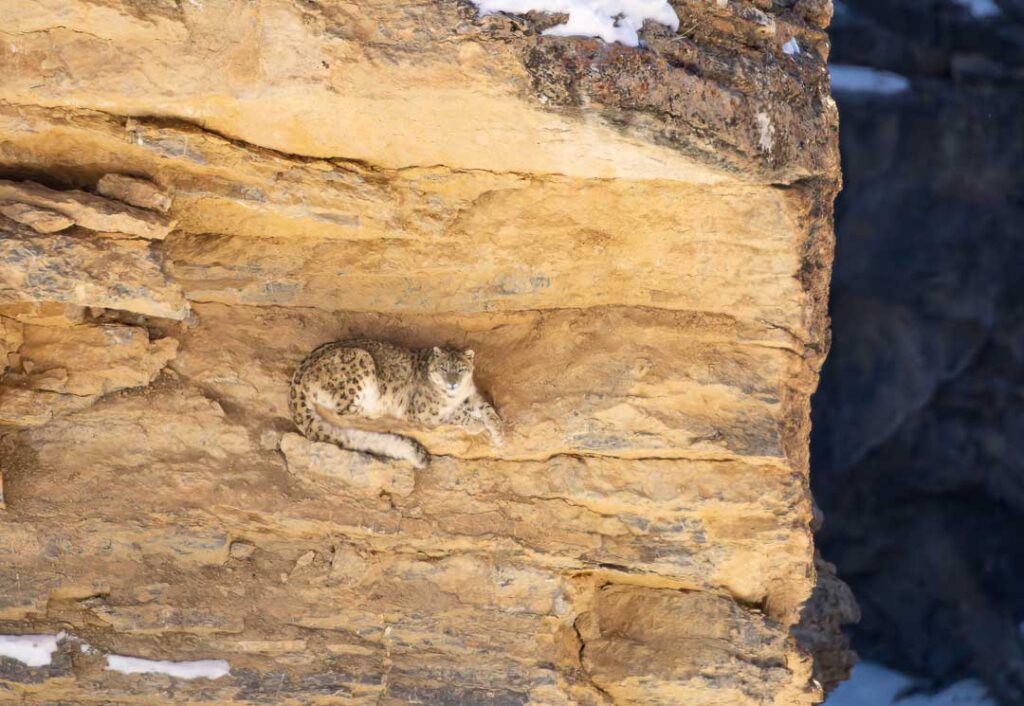
Yup, that is a snow leopard on a ledge staring at us. Stay tuned for more……
Location
The final location was at the Kibber Wildlife Sanctuary in the Spiti Valley.
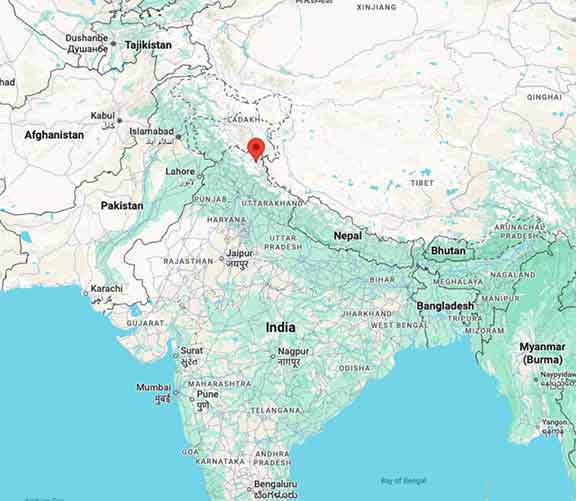
The red mark is where we finally ended up at the Kibber Wildlife Sanctuary, in the Spiti Valley, at the border with Tibet, three days after leaving Dehli
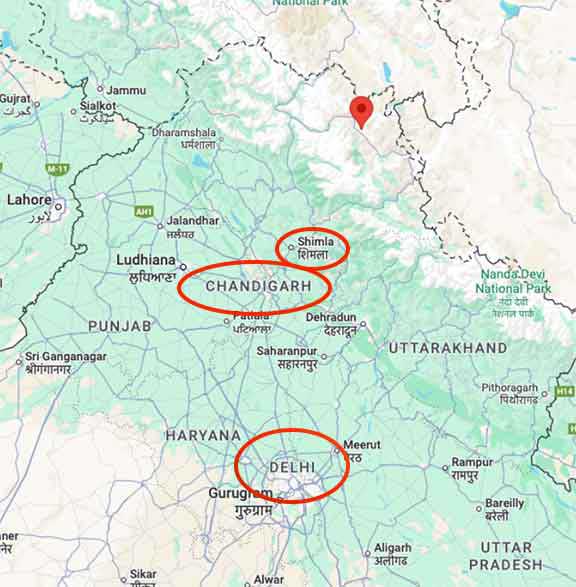
The International flight landed in Delhi, and after a night there we flew to Chandigarh, then started our winding 3 day car ride to our first hotel in Shimla
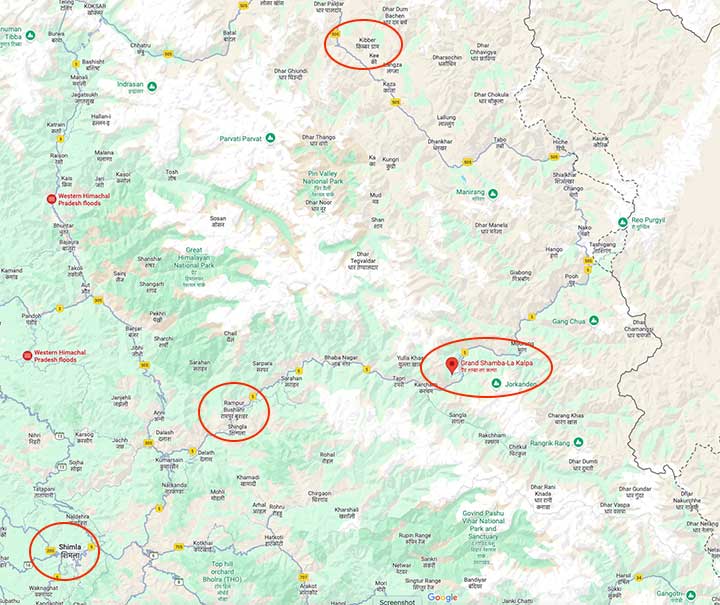
From Shimla (lower left red circle) we hit the mountainous roads and eventually made it to Kibber (the very top circle), our final stop at 12,000 feet for 5 days
The Drive Day I- Chandigarh to Shimla
The three-day breakneck-speed drive to our final hotel in Kibber might have been the most arduous part of the trip.
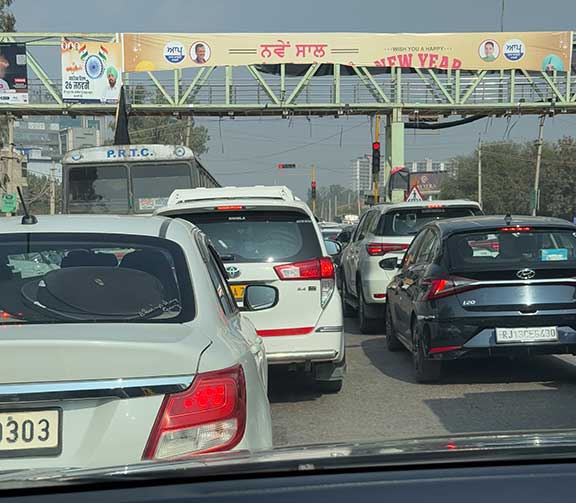
With a population of 1.5 billion, you can imagine what the traffic is like when we left Chandigarh
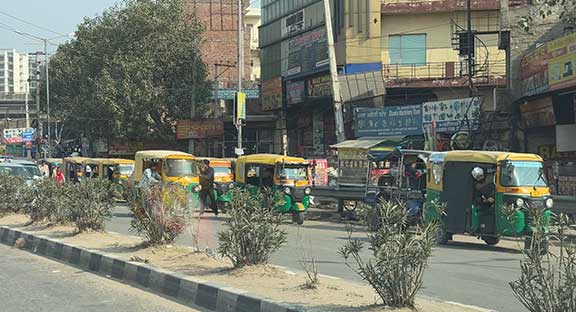
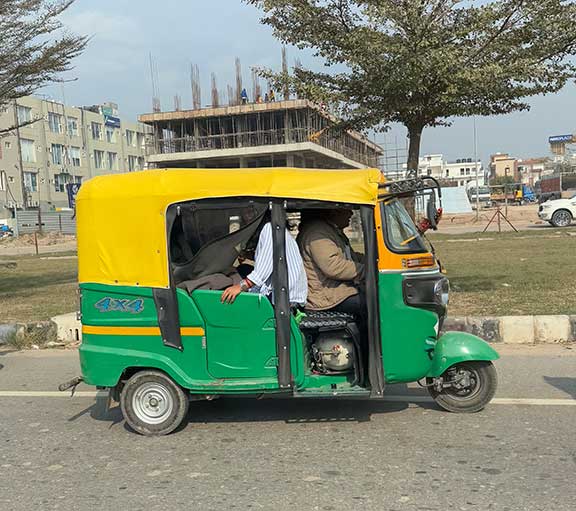
And of course there are rickshaws (called auto-rickshaws or tuk tuks). They are the cabs of the urban areas.
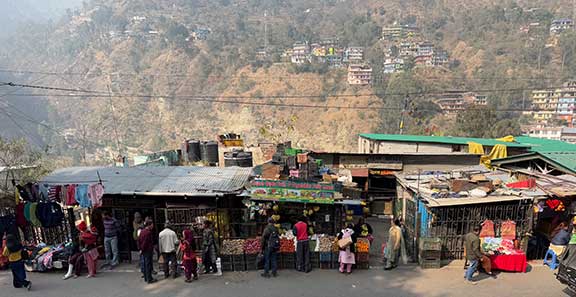
People and roadside markets crowd the streets on the windy roads through many towns
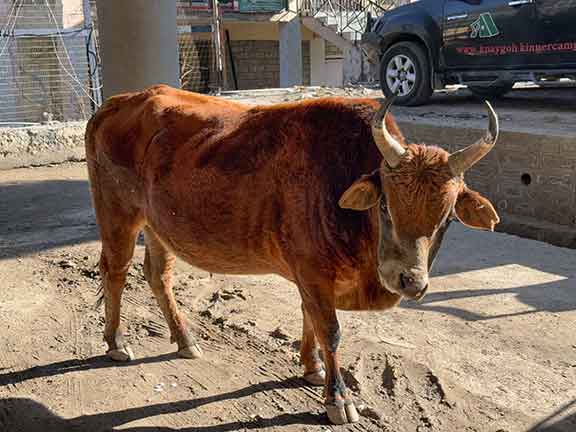
And of course, the sacred cow
Lunch
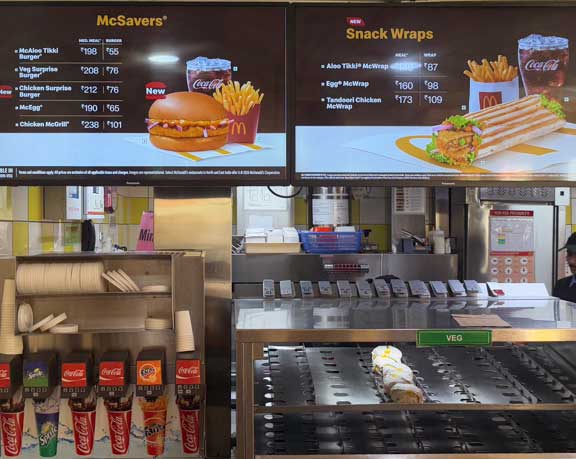
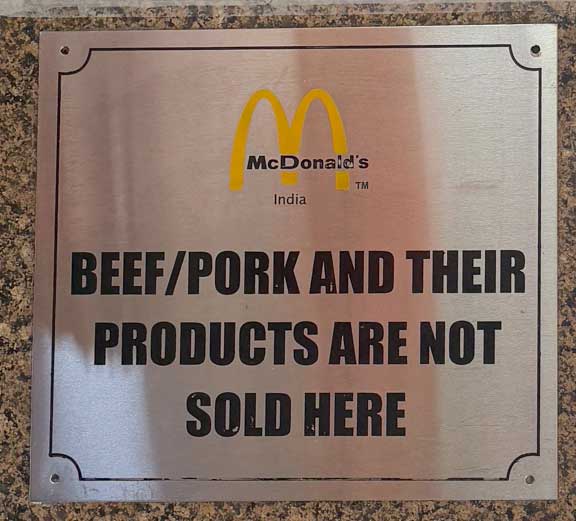
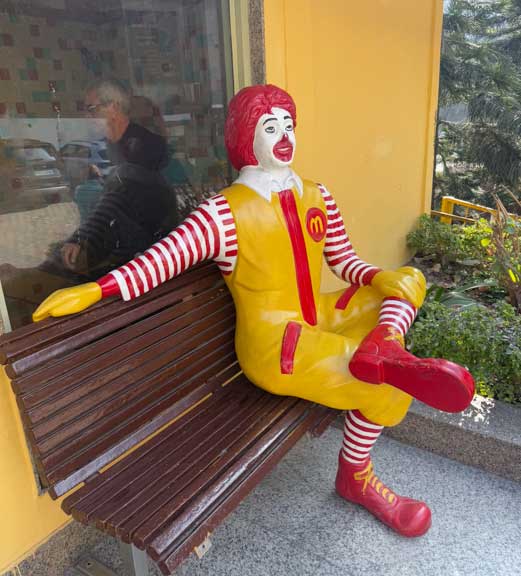
On our first day we stopped at a McDonalds for lunch and had chicken sandwiches. No beef or pork on the menu in India, but at least Ronald was there.
Traffic
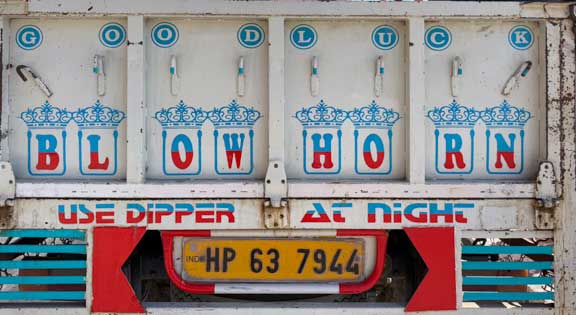
There was no shortage of diesel-belching trucks. See if you can figure out what the “blow horn” and “use dipper at night” words mean on the back of this truck (answer at the end of this page)
This sped-up video is not far from the truth on how fast we were driving
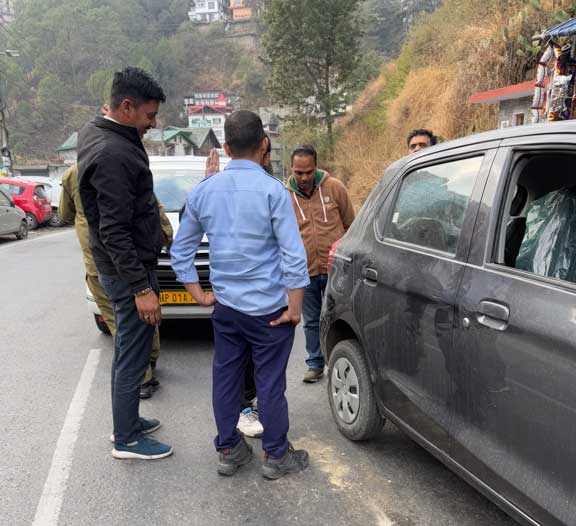
At the speed our drivers were traveling (and passing on the curves constantly), along with the volume of traffic, it is not surprising we had might best be called a “fender bender” along the way
Hotel in Shimla
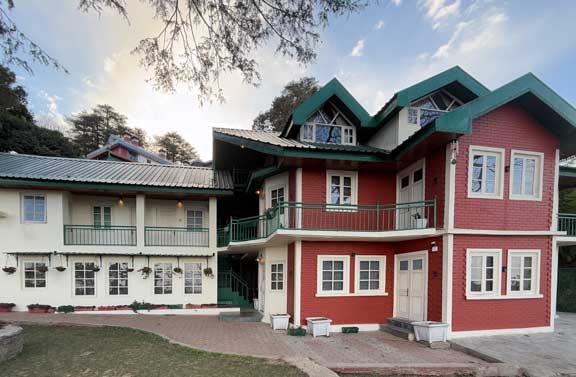
Our hotel in Shimla after a long day of driving
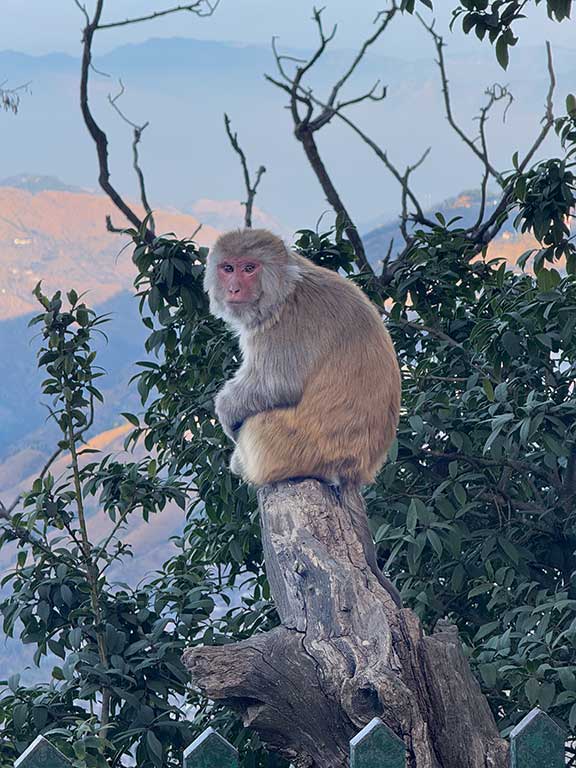
Our welcoming committee at this hotel
The Drive Day II- Shimla to Kalpa
We drove for 8 crazy hours this day, ending up at the Grand Shamba-La in Kalpa, where the temperature was plummeting since we were now at 9,000 feet.
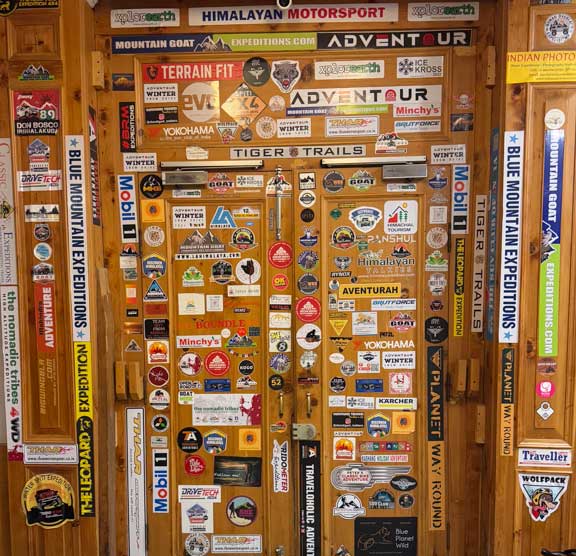
The inside door of the hotel showed how many adventurous travelers left their mark from their visit

One of the buddhist sayings on the wall at the hotel
We were introduced to the Zen-like music in this part of the world
The Drive Day III- Kalpa to Kaza
The next day we drove one-lane mountainous roads to Kaza to the Sakya Adobe hotel, and stayed the night at almost 12,000 feet. The drive is precarious as it winds above the Spiti river with rock overhangs and the potential for landslides at all times.
Video of the drive
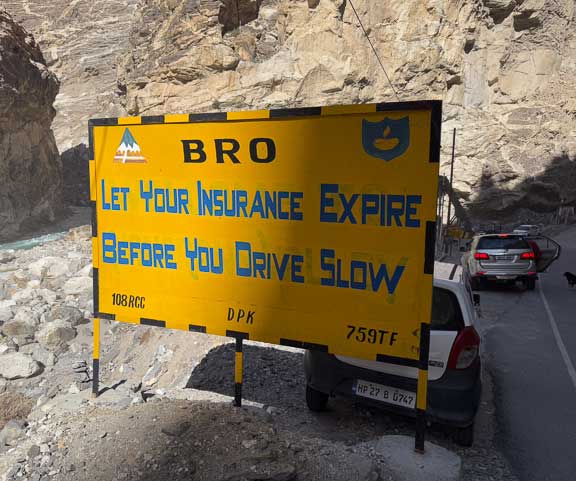
One of the signs at the start of the drive. Some things get lost in the interpretation
Answers to the two questions:
Blow horn means to honk your horn as you are passing cars on turns and letting the slower vehicles, especially trucks, know what you are doing.
Use dipper at night means to put your headlights on low beam at night so as not to blind opposing drivers. It also has another, more interesting meaning. It is a slogan from the Tata car company to remind truck drivers to use condoms.
Next Post Dr. P will introduce us to his group, the guides, and the porters.