
I followed the eagles from May through September for 7 years and became quite familiar with their patterns. I say “patterns” loosely, because wildlife do not read our books, do not care about our schedules or photos, and behave from a survival mode aspect and not an entertainment aspect towards us. Patience and persistence are the keys; keen observation of their patterns of behavior will increase the odds of seeing and photographing unique behavior. One of my first goals was to observe the male eagle bringing fish to the nest.
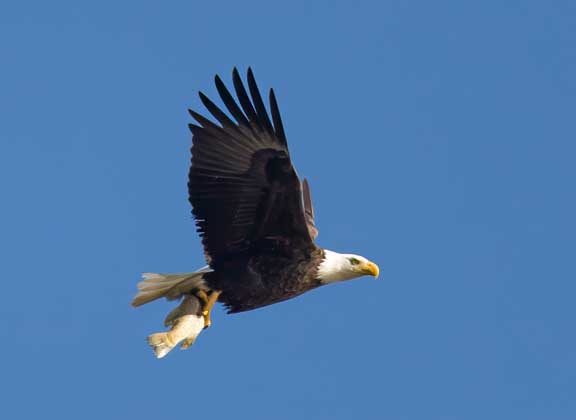
The first time I saw the male eagle (I nicknamed Daddy’O) with a fish in his talons flying towards the nest, so I was motivated to see if there were any chicks
Bird in Flight (BIF) Photography
This is called Bird in Flight (BIF) photography, and is one of the biggest photographic challenges in wildlife photography. The male eagle I photographed for years flying in with fish was going at least 40 mph, so it was a challenge for me, my camera, and lens. Luckily for me, I practiced for decades on very fast flying and small birds like kingfisher, so I was ready for a larger and slower flying bird like a bald eagle.
For those of you interested in the nuts and bolts of my camera equipment, I use a professional Canon camera called a 1Dx Mark III, along with a Canon R3. My lenses ranged from a Canon 400 mm D. O. f/4 to a Canon 500 mm f/4. When the Canon R1 and R5 Mark II come out I will be using them in addition to my R3.
Belted Kingfisher
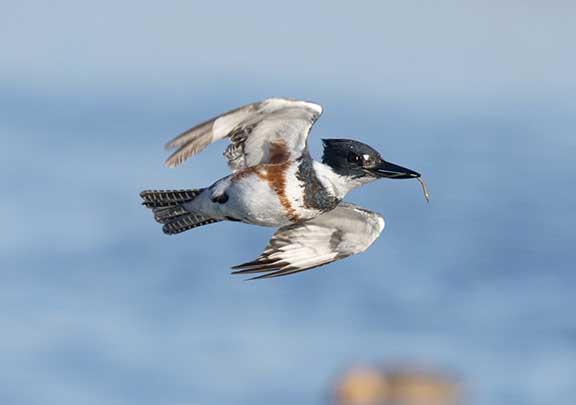
One of my practice subjects (click on the photo for a link to other kingfisher pics)
Bald Eagle
My eagle photography days started at 6 am because that is the time when the sun rose and the male eagle (I nicknamed him Daddy’O) started bringing his chicks lake trout from lake Michigan. On the days he did bring fish he usually ended by 8:30 AM. At that time the sun was too high for good photographic light and I was getting hungry, so by 9 AM I packed it in after 3 hours on the lake. He also appeared in the early evening (the sun does not set in northern Mich in the summer until 10 PM), and I would wait until it was too dark for photography.
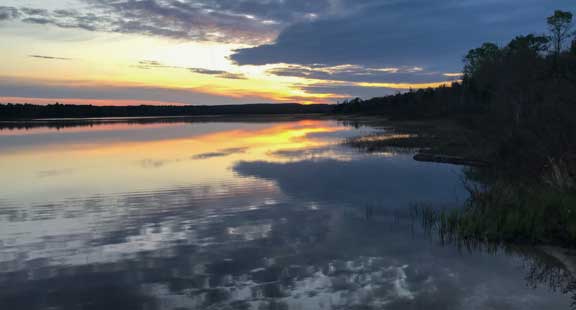
If you want to get shots of the male bringing fish to the nest you need to be in your kayak and ready even before the sun rises and it is too dark for eagle photography
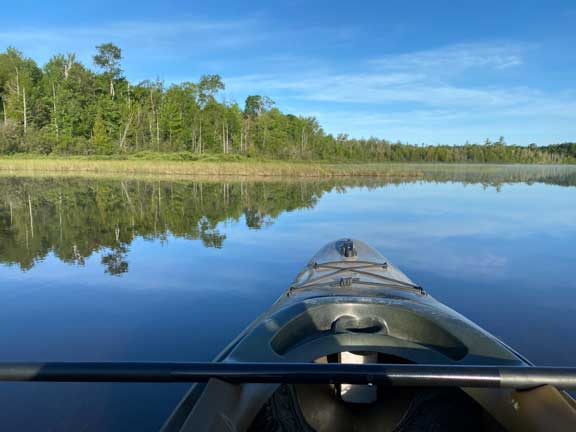
When the sun rises and you are in the right spot this is the view you will have of the direction the eagle is coming from over the trees
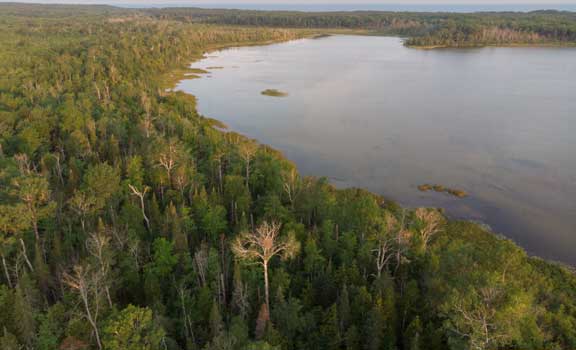
In this drone shot with the nest in front you are looking in the same direction, with the blue line on the horizon being lake Michigan where the eagle fishes for lake trout
The male eagle came in fast, and not always from the same direction over lake Michigan, so it was sometimes difficult to be in proper position to get a good shot in a bobbing kayak drifting in the current. His image in the distance resembled many of the other large birds on this lake like Canada geese and Sandhill cranes, so it was important to ID him right away.
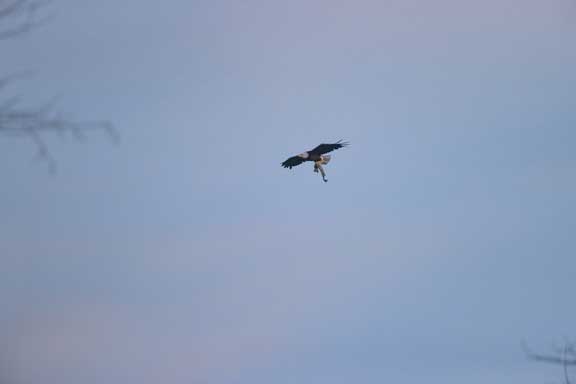
What the male eagle with a fish in its talons looked like in the distance
It turns out I had an early warning system to help me. It was the female bald eagle on the nest. Perching next to the nest to protect any chicks from crows and hawks she was 75 feet high, and of course with her superior eyesight, she would see the male coming long before I could in the kayak. She would start squawking in excitement, giving me a heads up to his rapid approach. Being observant and using all of your senses is mandatory when photographing unpredictable wildlife, so put that cellphone away and let nature in!
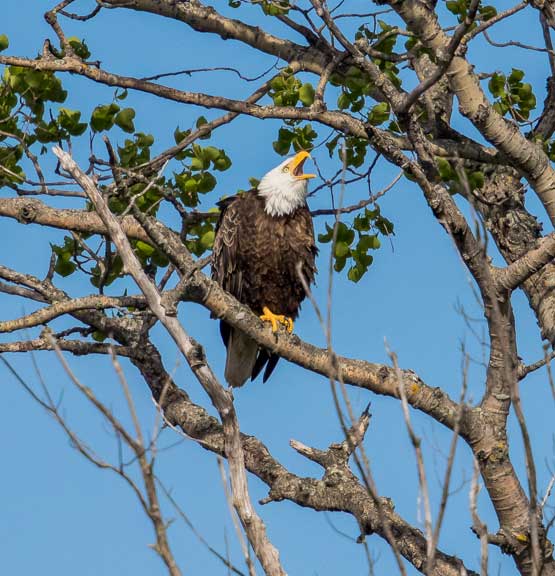
My early warning system in action
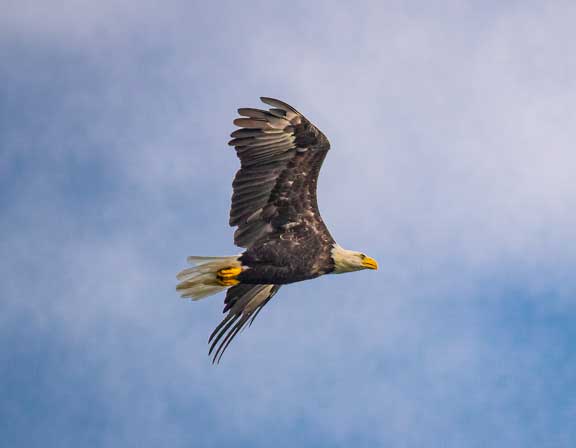
Some days Daddy’O returned with empty talons and the chicks had to wait for another fishing trip from him
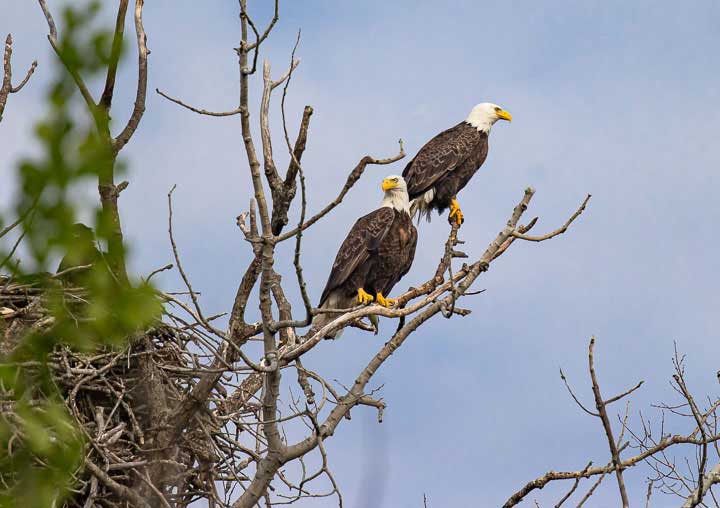
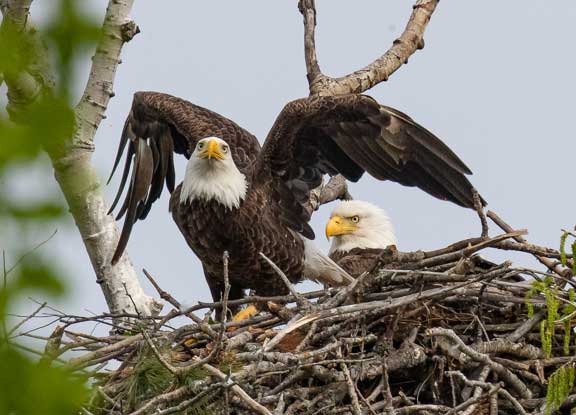
The male and female bald eagle keeping guard over the nest when not fishing
Over the course of several years I was able to get some good shots of Daddy’O delivering breakfast to his chicks. The following shots were taken from a kayak bobbing in the water near the nest as he was habituated to me and allowed me the pleasure of observing his morning routine.
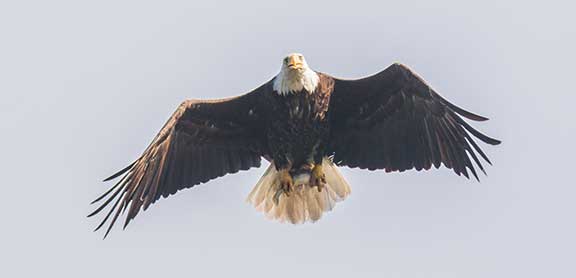
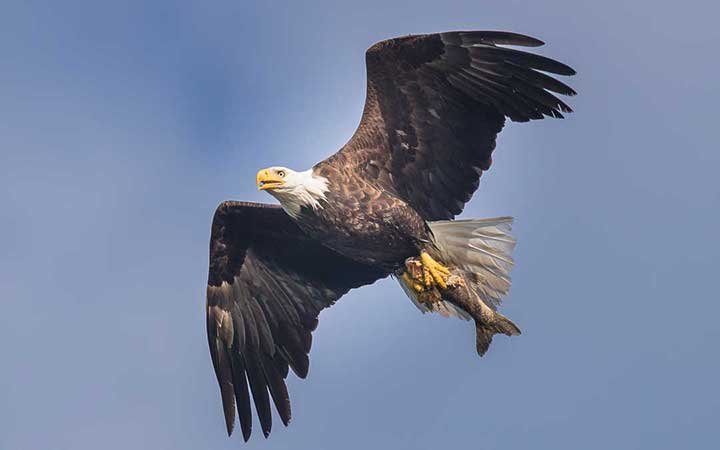
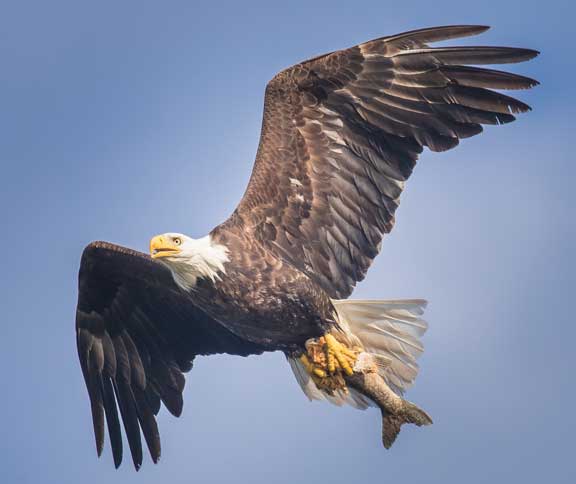
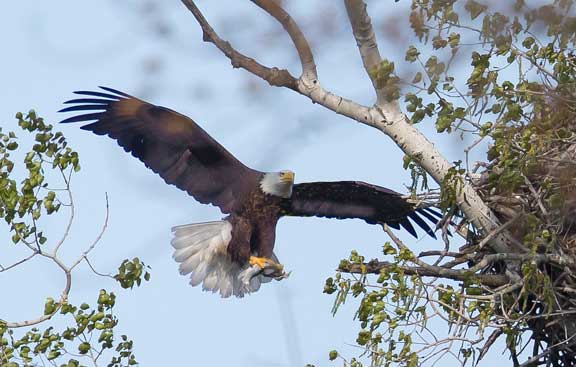
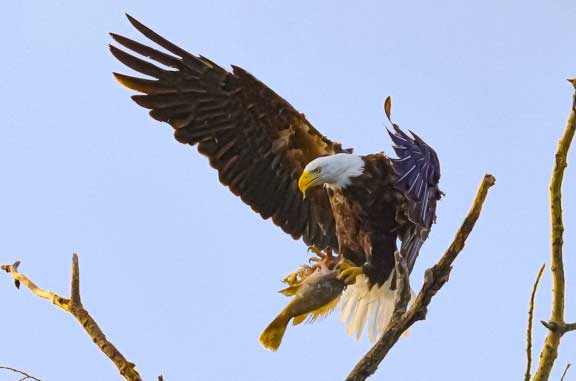
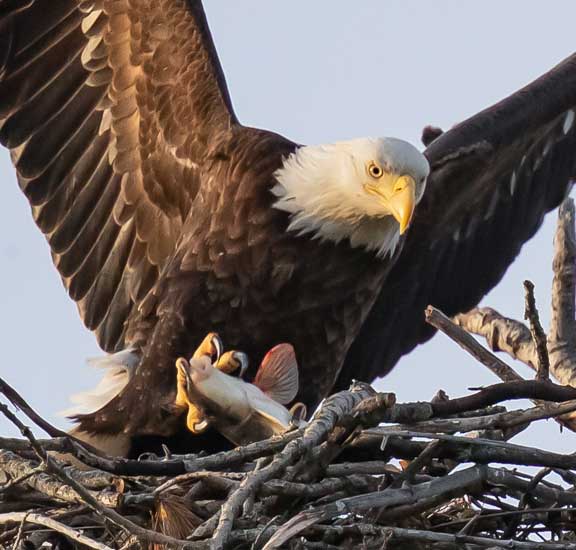
After he delivered the goods he was off for more
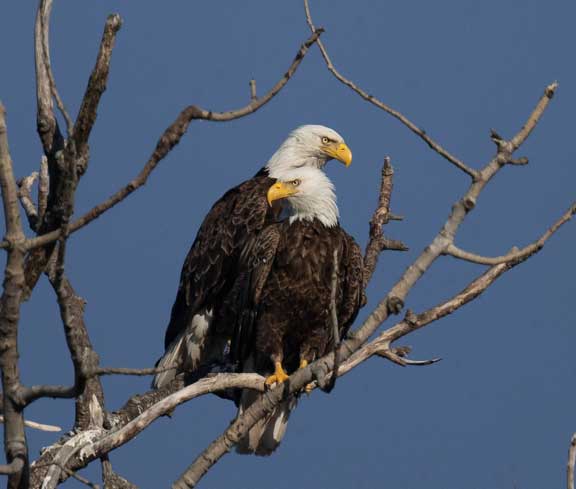
When he was done fishing he would oftentimes perch next to the nest with the female
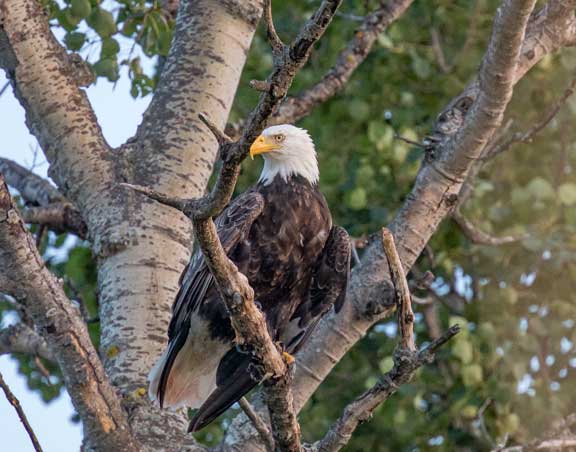
Sometimes he would perch by himself, justifiably proud of his fishing skills