
In August of 2021 Dr. Palazzolo took a team of veterinarians to the Waterberg mountains of South Africa and Marataba in the Waterberg Region to do medical and conservation work on white and black rhino. The veterinarian in charge is Andre Uys, and he runs the Marataba in the Waterberg Region.

Dr. P and Andre with a sedated rhinoceros
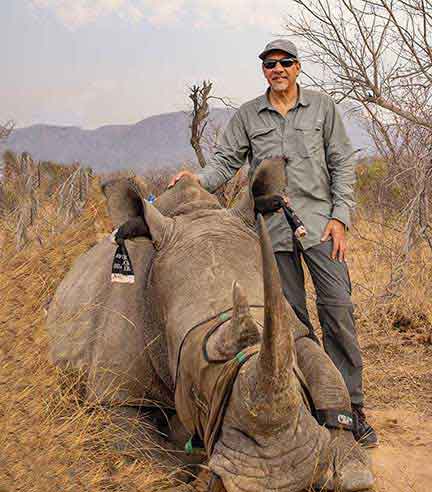
Dr. P and a sedated rhino
Poaching
These rhino are highly endangered, and doomed to extinction in the very near future, since the demand at the moment exceeds the supply. This is due to the tremendous demand from China and Vietnam for rhino horn for medicinals and cancer cures according to their ancient traditions.
There is no evidence that rhino horn, which is equivalent to our fingernails, cures anything. This has not stopped this ancient tradition, and with the tremendous number of people in China, their increased buying power over the last several decades, the economic conditions and rampant corruption in many parts of Africa, there are not enough rhino left to meet the demand.
Here is a short video from Andre talking about this
In 2023 Dr. P is taking another group of veterinarians for an exclusive trip to work with Andre to sedate more rhino to take blood samples, DNA samples, and put radio collars on them. After that he is also taking some non-veterinarians to be up close and personal with the rhino, in addition to going on a safari.
If you have ever entertained a trip to Africa, and want to do something so unique that it would be rare for you to know someone that has done something like this on their safari, and want to help in the conservation effort to save the rhino, contact Dr. Palazzolo.
The following photos from the recent trip show some of the things we will be doing on our August/September 2023 trip.
Prior to going in the helicopter to find and sedate a rhino Andre gave us a briefing of the collar he is putting on and what it is like to sedate a rhinoceros
The following photos are a mix of the sedation and medical care of several different rhinos. In the 25 minutes the rhino is sedated the veterinary team has much to do, and it is not appropriate to tell them to stop for photos. In spite of this limitation, our photography crew did a great job and got some good photos.

Andre and the pilot just prior to takeoff
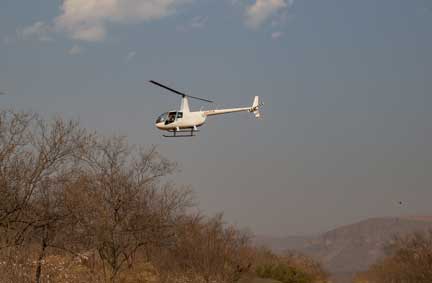
Flying into the bush looking for a rhino
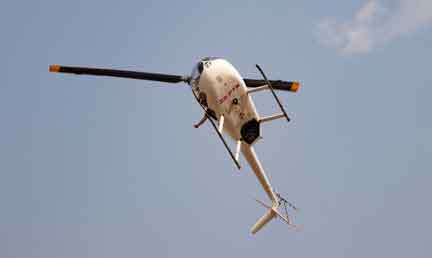
Andre giving a thumbs up that they found a rhino and are ready to sedate it
Video of Andre sedating the rhino
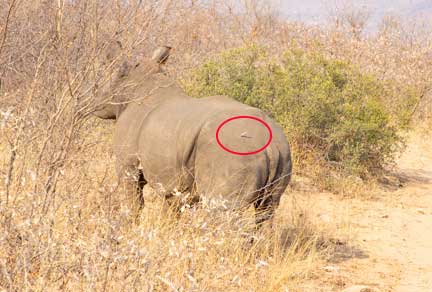
Location of anesthetic dart on rump
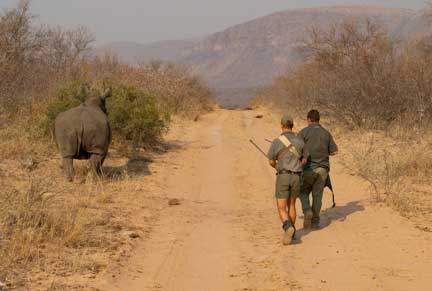
Andre and assistant approaching rhino to determine level of sedation
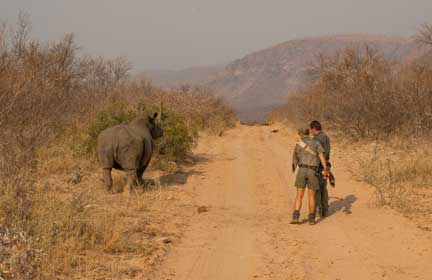
Looks like a standoff!
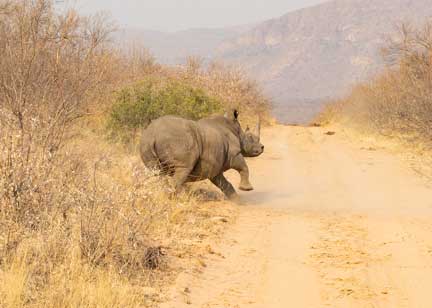
Rhino staggering just prior to going down
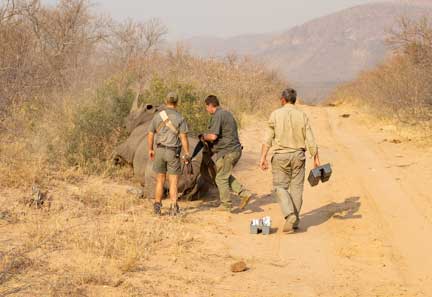
As soon as she goes down the face mask is put on
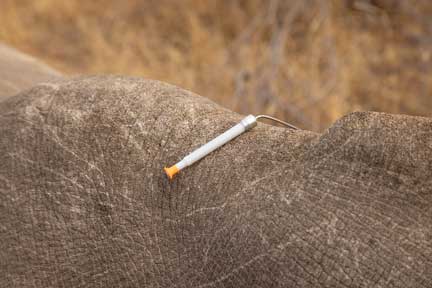
Dart removed from rump showing how it became bent when going through skin
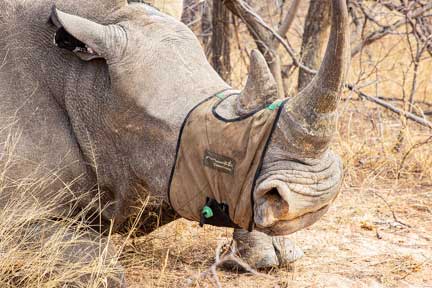
Side view of sedated rhino with face mask on
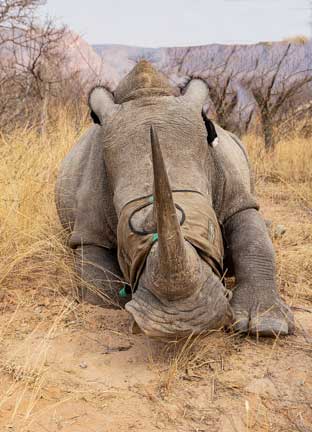
Front view of rhino head with face mask on
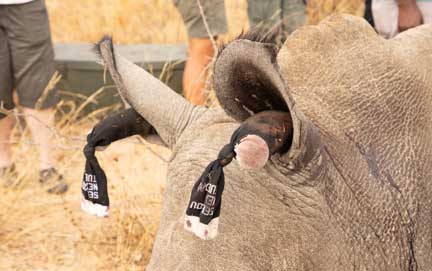
Ears are plugged to minimize sound stimulation
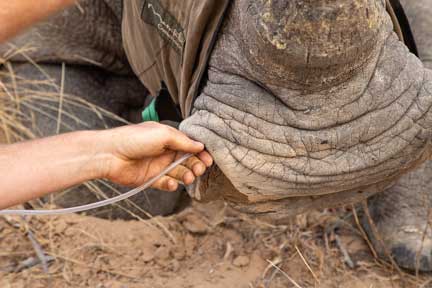
Administering 100% oxygen into nostril
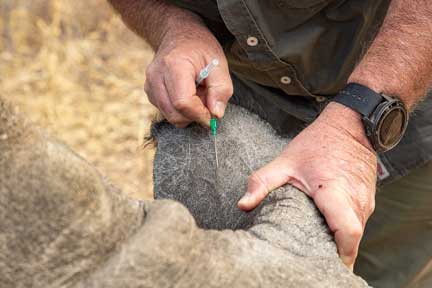
Placing intravenous (IV) catheter into ear vein
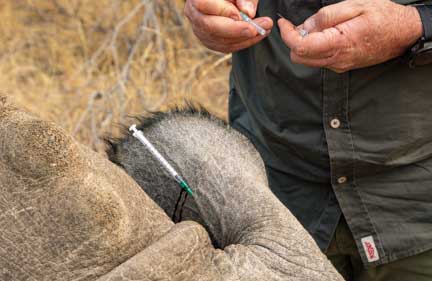
Giving an IV injection to help with sedation and breathing
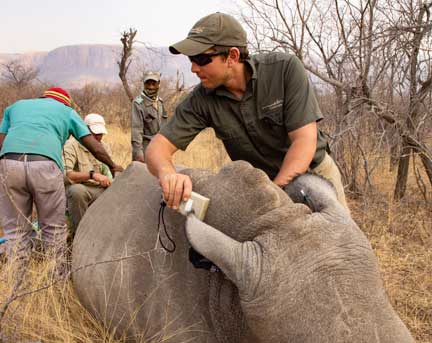
Checking for previously inserted microchip
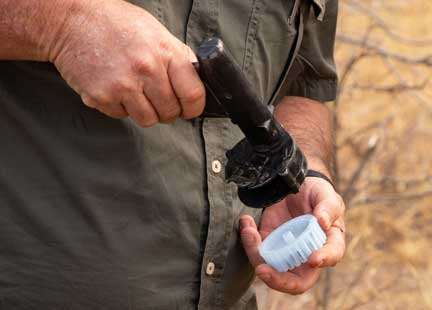
Preparing new microchip for insertion into neck
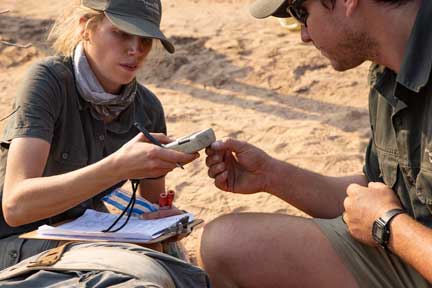
Reading the number of the microchip before being inserted into the horn
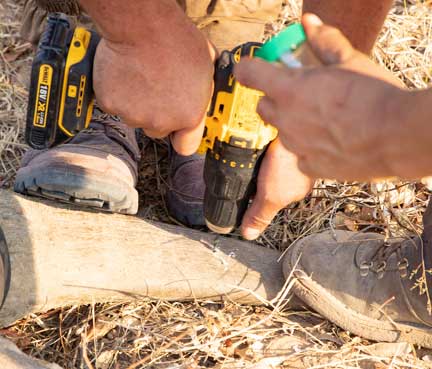
Drilling hole in horn to insert hidden microchip
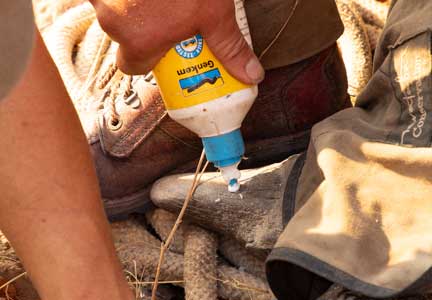
Sealing the opening where the chip was inserted
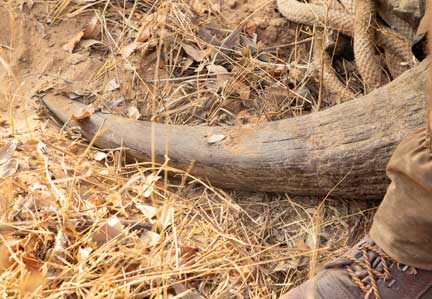
Horn after microchip inserted and camouflaged
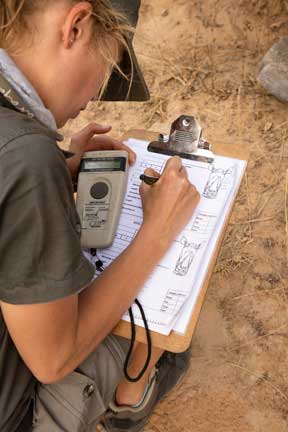
Recording all new microchip numbers
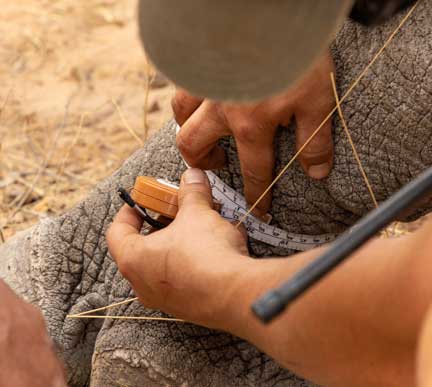
Measuring leg for proper sized foot collar
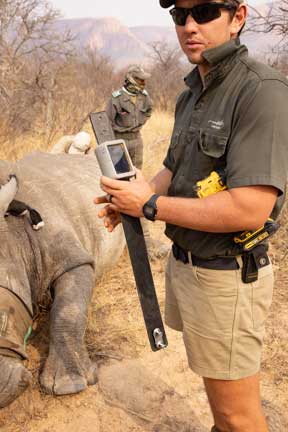
Getting ready to put the collar on
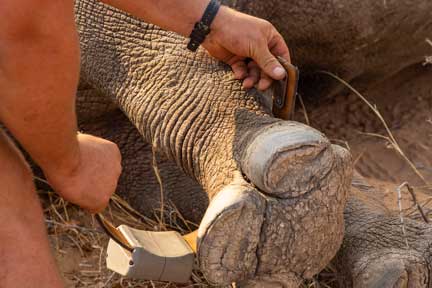
It goes on one of the front legs, not the back legs
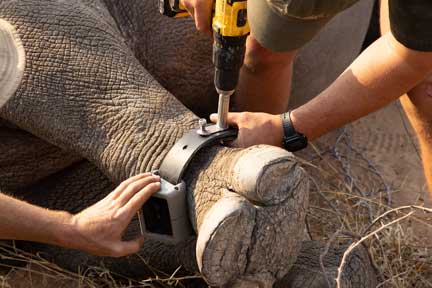
Securing it with two bolts
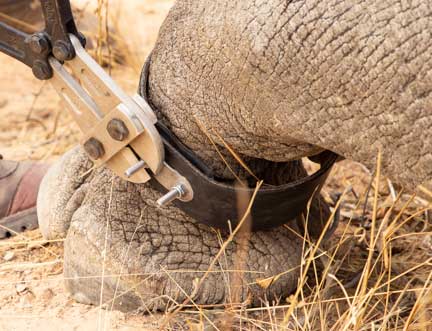
Excess bolts are cut to make them flush
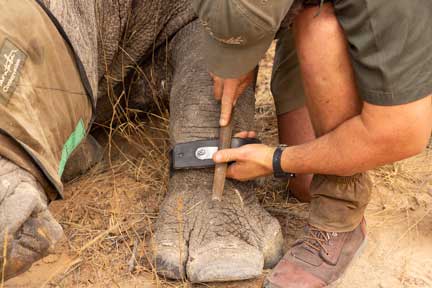
After cutting they are filed down as far as possible to prevent snagging
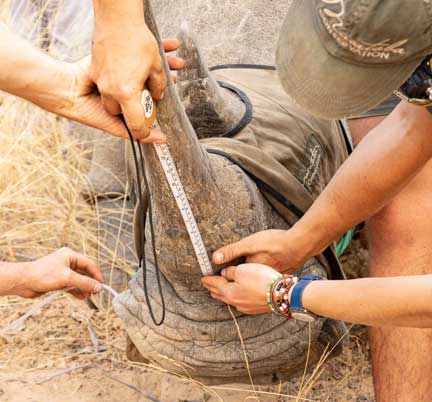
Measuring front (anterior) horn

Checking this female with ultrasound for pregnancy
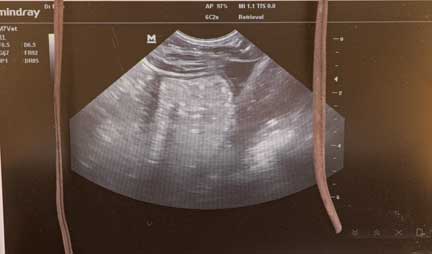
Affirmative on that pregnancy!
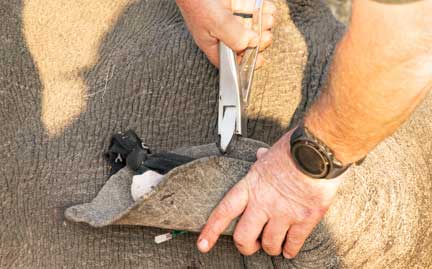
Ear is notched for identification and DNA sample
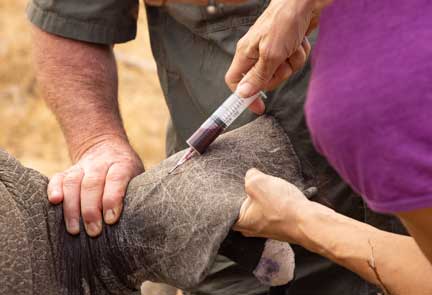
Blood sample from ear vein obtained to determine health
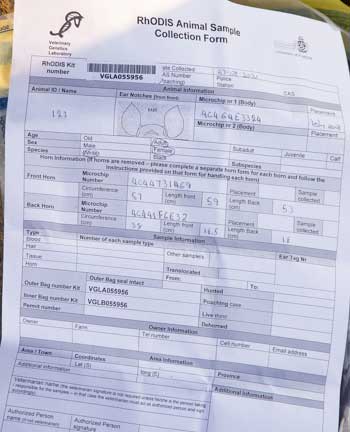
The form used for the DNA sample
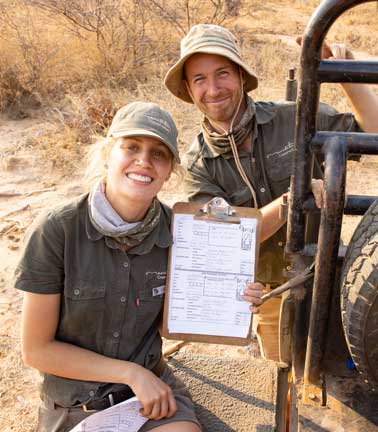
Part of the rhino sedation team with their data sheet
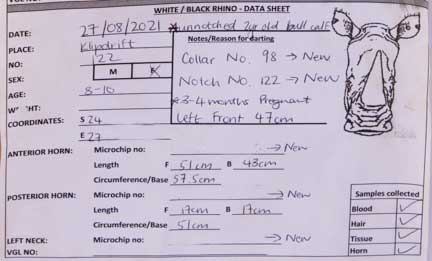
The data they collect, with GPS coordinates and microchip numbers removed to minimize information for poachers
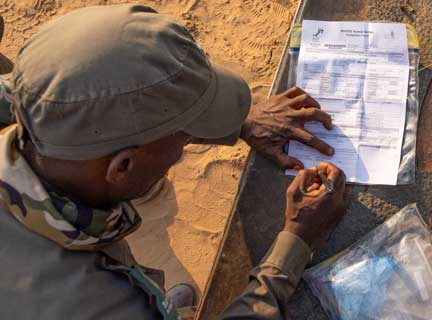
Sign-off on the procedure by park ranger before reversing the anesthetic and waking rhino up
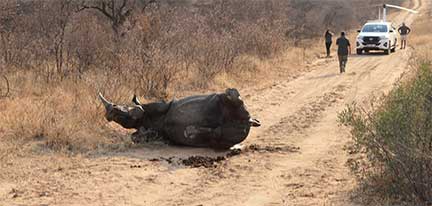
Rhino starting to wake up after anesthetic reversal drug given as Andre walks back to his vehicle
Rhino walking away after being given reversal agent
Video of the procedures illustrated in the photos above