Introduction
Botswana is a class act when it comes to safaris, and is a mecca for the traditional African wildlife, especially the leopards, lions, wild dogs, and elephants. The country of Botswana is at the forefront of conservation in African wildlife, and one of the best places to see these animals.
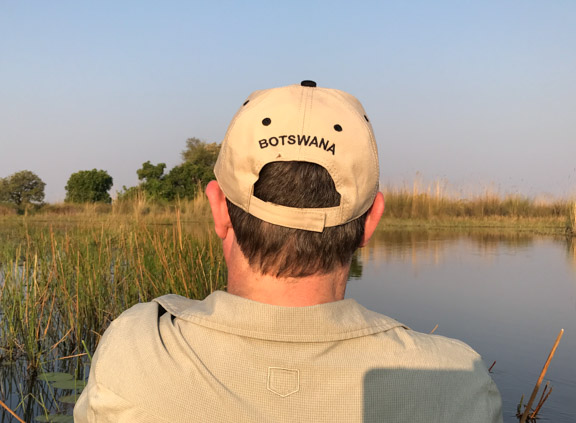
The waterways of the Okavango Delta are teaming with wildlife
You will have some of the best guides in Africa (I know, I have been there 12x), very few other safari goers, and first class accommodations and food.
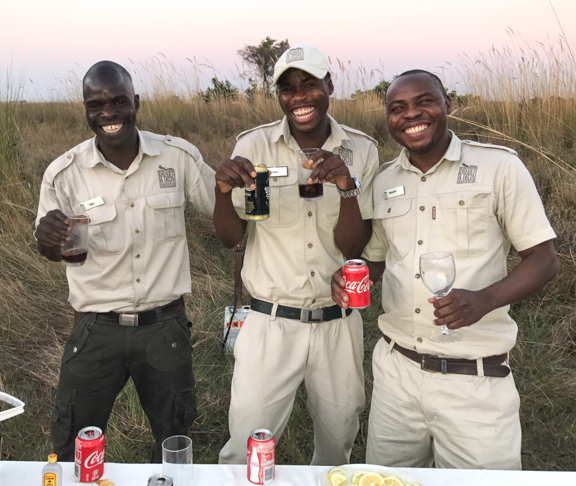 These guides were way too serious about their work, and we could never get them to lighten up for a photo
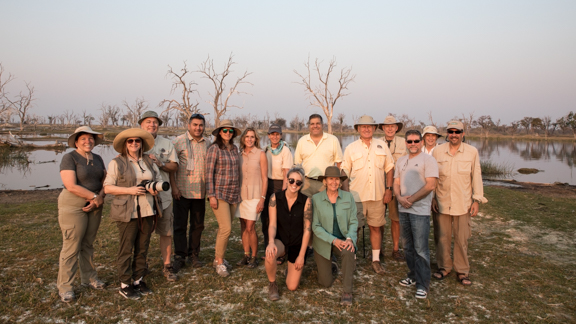
Four of my guests were from Michigan, one was from Nevada, and the rest from California. This is at Camp Moremi, at the Okavango Delta in Botswana. You will get a chance to see them in action later in this page.
This page, containing a substantial amount of information and photos on what it is like to travel to Southern Africa on a luxury safari (safari is a Swahili word for overland journey), and the wildlife you will encounter. I did it for those of you interested in going, and also for those that cannot make such a journey and need to experience it vicariously.
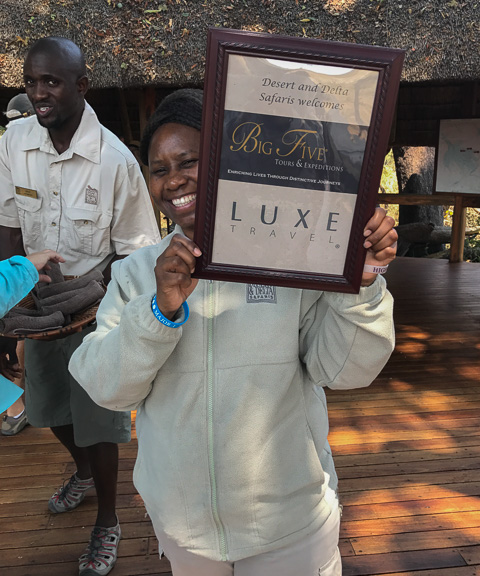
We set up the trip with my friend Sharel at Luxe Travel, using Big Five Safaris in Africa. They did a great job on the myriad of details and logistics required to make this trip a success.
The Okavango Delta
The Okavango Delta in Botswana gets its water from two rivers that flow from Angola, the country just to the north of Botswana. Angola has been the victim of tremendous political unrest, and it is still not settled. These people need important resources like water to rebuild, and there is worry that the people in Angola will use so much of the water from the rivers that supply the Delta, that the Delta is in peril.
The November, 2017 issue of National Geographic (Nat Geo) magazine lays out the troubles the Okavango Delta faces in regards to water replenishing the Delta each year. The potential changes here are another reason to go now.
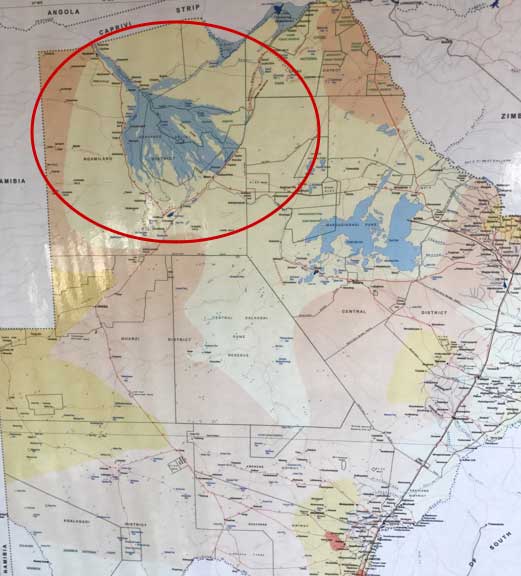
The Okavango Delta is the the northwest corner of Botswana, adjacent to the northern part of Namibia, and just below Angola
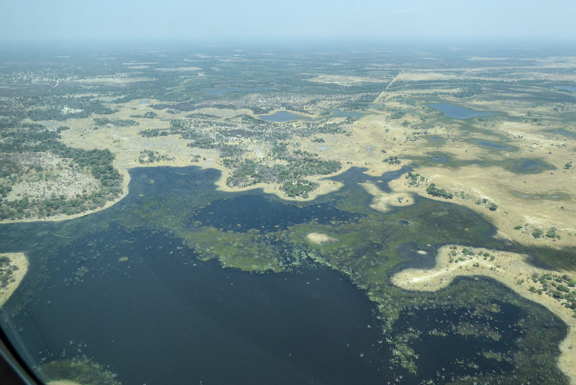
The view of the Okavango Delta on our flight from Zimbabwe
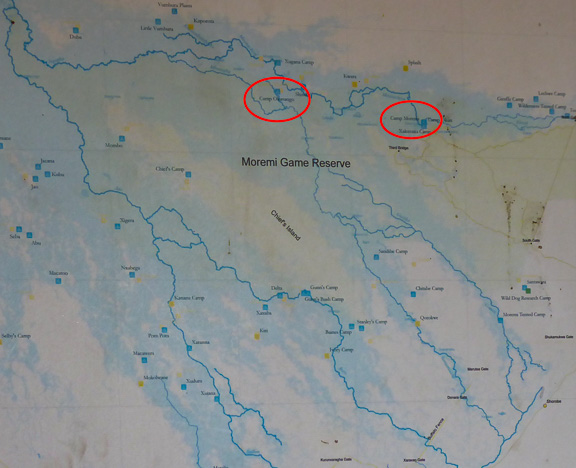
The two camps we stayed at in the Moremi Game Reserve are circled. After or four nights at Camp Moremi (rightmost circle above) we flew to Camp Okavango (leftmost circle above). The blue lines are waterways, where we spent significant time. In the center is Chiefs Island, where we went on walking tours.
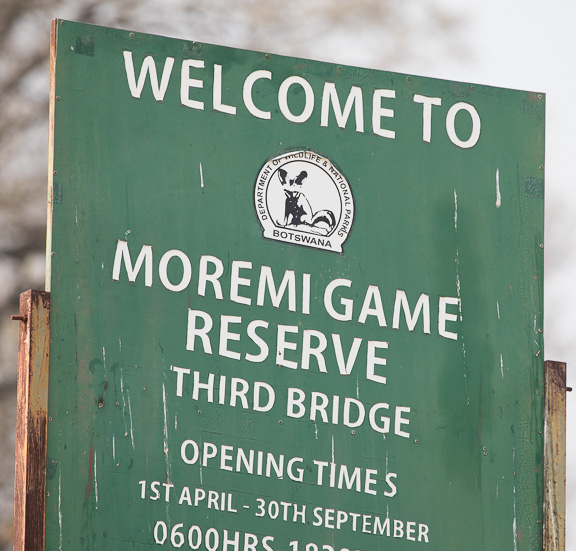
The Moremi Game Reserve has great wildlife viewing. I will be showing only a few of these animals on this page.
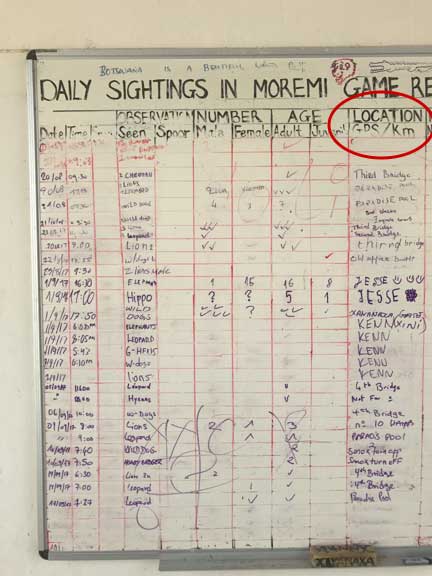
This is the wildlife sightings board at the entrance to the Moremi Game Reserve. The section on GPS is circled to remind everyone to turn off the GPS function of your smartphones and cameras. If you don’t, and you post animal pictures on social media, the poachers can track the animals you photograph using the GPS coordinates attached to your photo.
Let’s get on to the story and photos. This page has 14 separate sections on this trip, ranging from our adventure at Victoria Falls, to our camps, to the wildlife we photographed.
Zimbabwe and Victoria Falls (including swimming in Devil’s Pool at the edge of the falls)
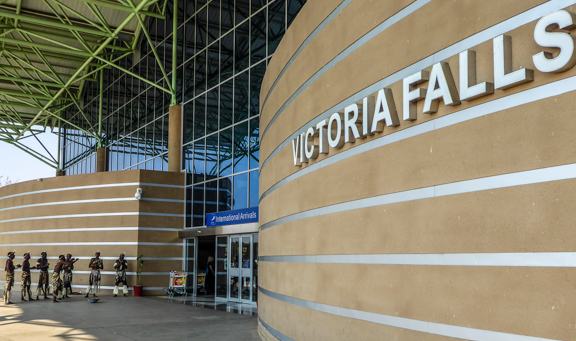
The Victoria Falls airport is nice and modern
Camp Moremi
After two days at Victoria Falls we flew to the Okavango Delta in Botswana, staying at Camp Moremi for the next four nights. After Camp Moremi, we stayed at Camp Okavango for three nights.
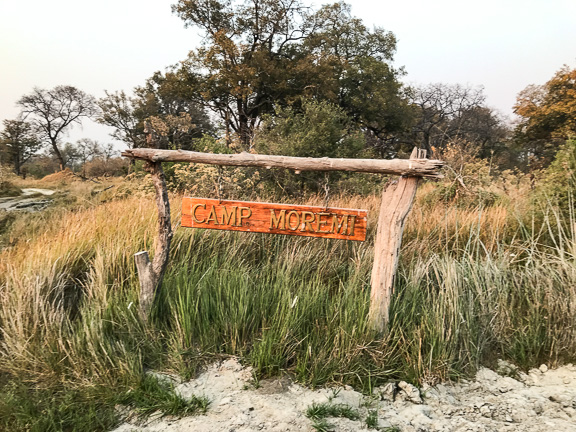
This camp is in a remote area surrounded by wildlife
Camp Okavango
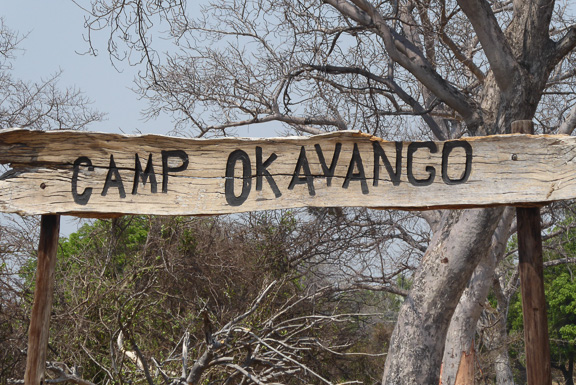
Our second camp was also in a remote area surrounded by wildlife
The fun people on our trip
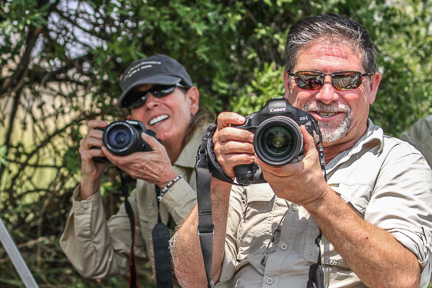
Dominic and Michelle have been on many trips with me, with many more to go!
Zebra in action
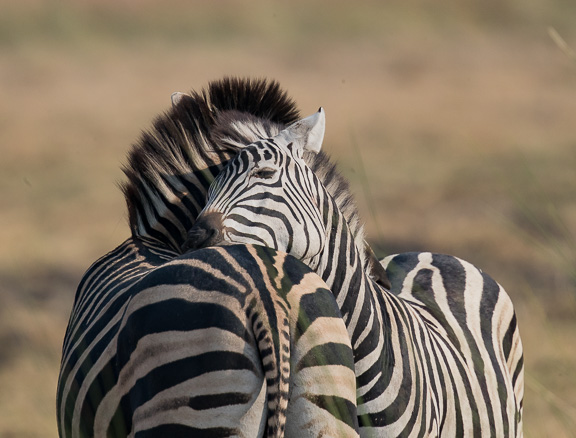
The calm before the storm
Elephant
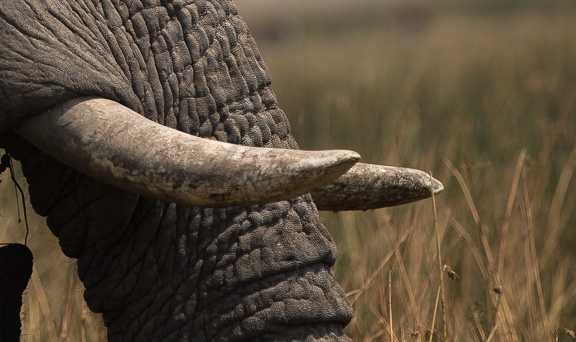
If it wasn’t for the Chinese the elephants would not be poached for their tusks
Hippos
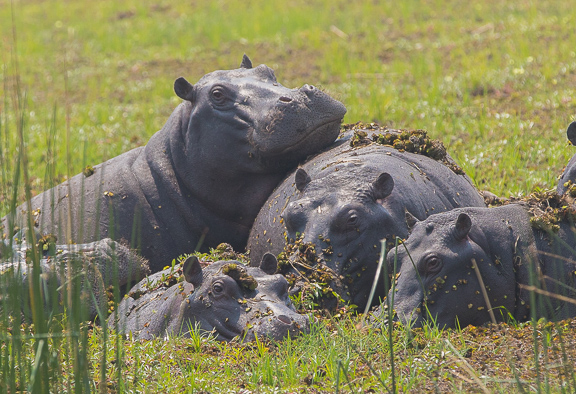
They are fun to watch, just keep your distance
Cape Buffalo
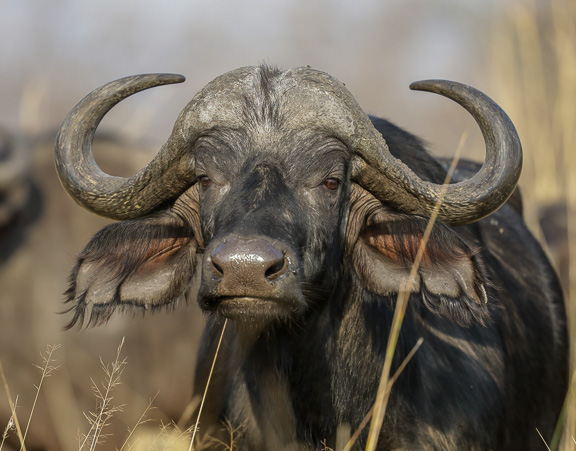
Their nickname is Black Death, so keep your distance from them also
Lions on the airstrip
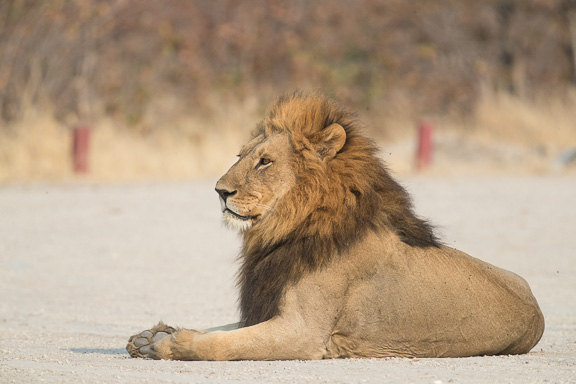
Time to move so the passengers can unload
Leopard on the hunt
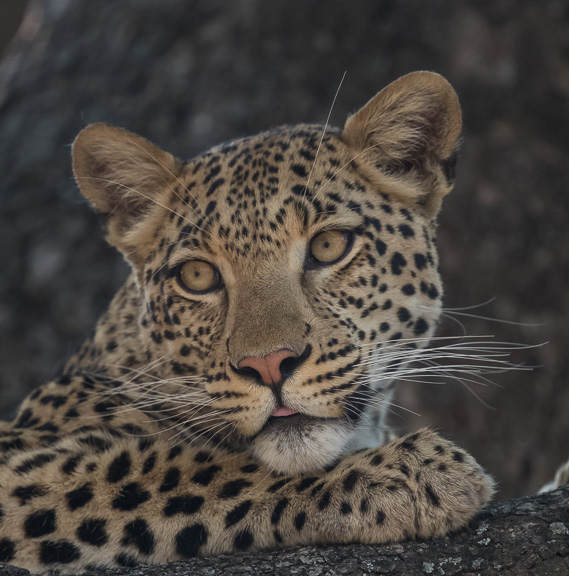
This female leopard loved having her picture taken
Wild Dogs
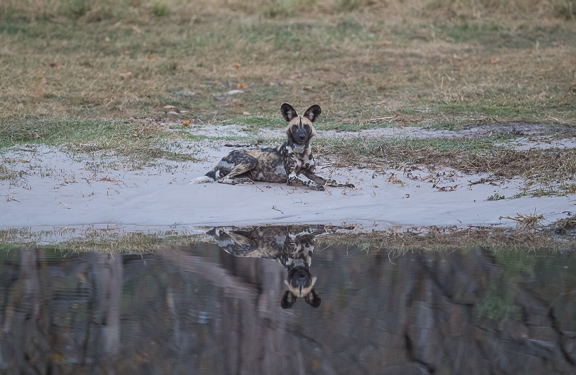
One of the most successful predators in Africa is the wild dog
Black Mamba
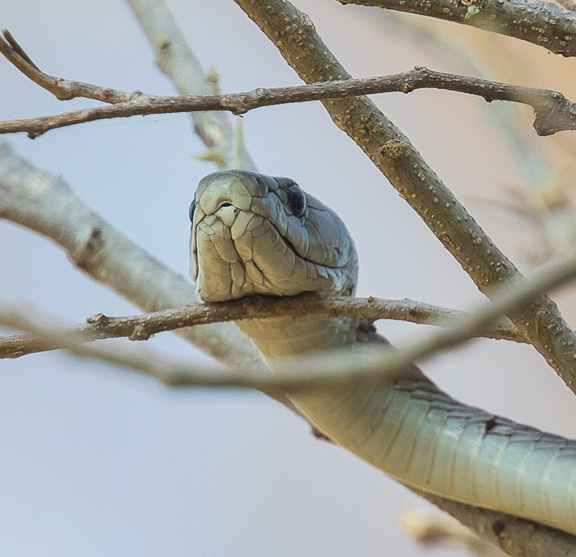
This one was far away in a tree, and only looks close due to a powerful telephoto lens
Delta Birds
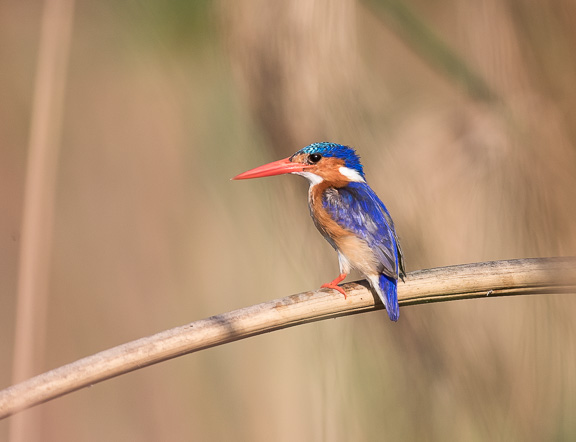
The reeds of the Delta harbored many colorful birds like this Malachite Kingfisher
Cape Town diving with the Great White Sharks (well, not exactly)
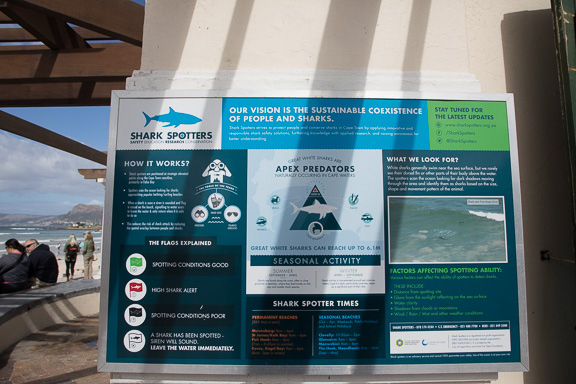
I learned about Great Whites, but not from diving with them
Wildlife Photography
For you wildlife photography buffs, the majority of the photos were taken with a Canon 1Dx Mark II using a Canon 400mm f/4 D.O. lens, sometimes with 1.4X and 2X teleconverters. After using the Canon 500mm f/4 lens for many trips, I have settled on the 400mm D.O. for my last few trips, and have not regretted it. Its smaller size and weight are a good tradeoff compared to the extra 100mm of reach with the 500mm lens.
My assistant photographer and I also used a Canon 5D Mark IV with a 24-105 f/4 lens and a 70-200mm f/2.8 lens. A small amount of photos were taken with an iPhone 7.
Then there is the challenge of getting this equipment though security. Each country is different as to what scares them about what you can bring on the airplane. After traveling through many security checkpoints with no problem, an allen wrench that I use for my tripod was considered dangerous in one country, and was confiscated- go figure. Overall though, security was professional and efficient.
The biggest challenge is using this equipment in the field; getting just the right angle for the photo on moving subjects that could care less about your photo, then getting the guide to stop the moving vehicle in time before the wildlife leave, and then fighting off the baboons when they try to steal your camera.
All in a days work for your average wildlife photographer. This page only has a fraction of the thousands of photos we took.
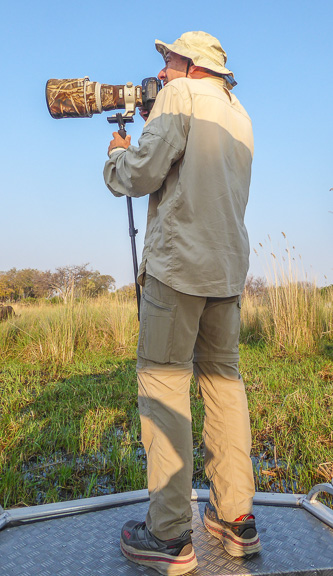
Sometimes that moving vehicle was a boat