
My Primary Wildlife Lenses
The most important part of your purchase in a digital camera setup is the lens. When it comes to lenses, the axiom “you get what you pay for”, certainly applies. You should budget for a high quality lens before the camera body. All too often a nice camera is used with a mediocre lens, negating the potential of the camera. If you want to get the most out of your expensive camera you need to upgrade to Canon’s L series of lenses. This is their professional lens series, and will give you pictures of better quality. You will notice the following lenses all have a red ring around the front of the lens. This denotes Canon’s professional series lenses, and are also called “L series” lenses in the Canon world.
You will learn more about my 3 primary wildlife lenses on this page:
- Canon EF 600 mm f/4L IS III USM
- Canon RF 100-500mm F4.5-7.1 L IS USM
- Canon EF 400mm f/4 D. O. IS ii USM
Canon EF 400mm f/4 DO IS II
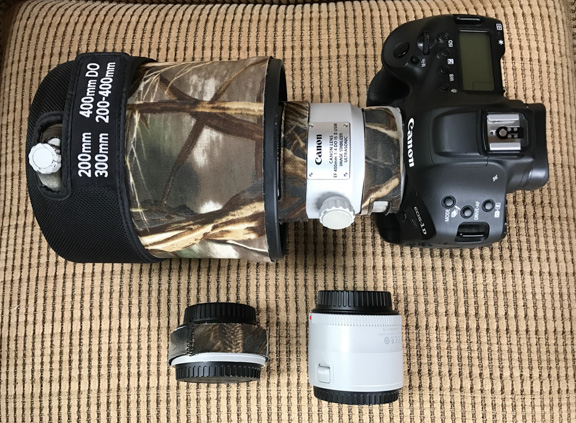
I now use the Canon EF 400mm f/4 DO IS II lens. Its light weight at 400mm, and its quality, make it my lens of choice when I am need to be mobile and flexible. Examples might be when I am in a kayak, or when I am hiking for long distances. I routinely use it with a 1.4X TC or a 2X TC. This gives me up to and 800mm f.8 . It is the only telephoto lens I used on my Botswana and Namibia trips in 2017.
- The smaller size of this setup allows for easier travel, and since it is relatively light and flexible, also allows you to forego a tripod, especially when photographing birds in flight (BIF), one the most difficult wildlife to photograph. I also use it when I am in a kayak.
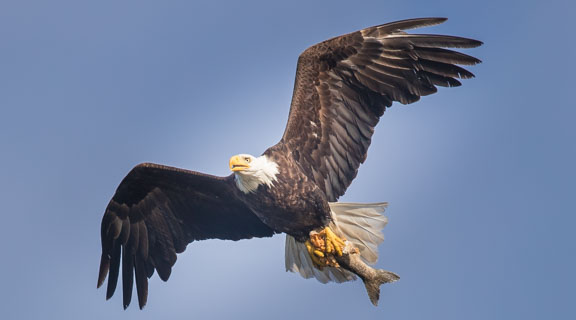
- I was in a kayak when I took this photo of a bald eagle flying overhead with a lake trout. The size and weight of this lens let me move around in the kayak to get this photo.
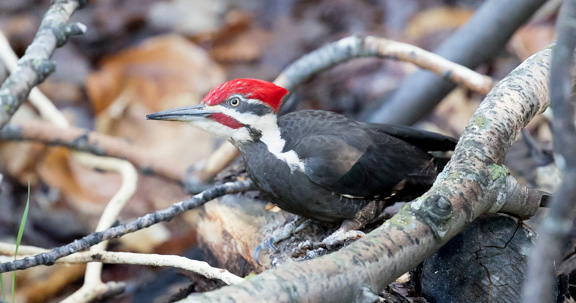
- This Pileated woodie was taken with the 400mm DO.
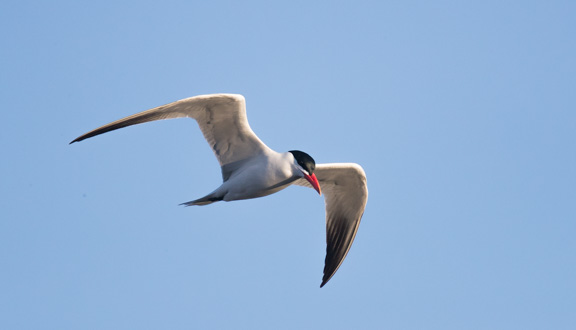
- This tern was taken with the 400mm DO and 2X TC in a kayak. It’s hard to find a more erratically flying bird.
Click images to view this lens set-up.
Canon 600 mm f/4 IS II
Version III of the 600mm is my current wildlife lens of choice, oftentimes used with the 1.4X teleconverter.
I use the 600mm it for all my wildlife work when I am was not hiking or in a kayak, in which case I used the 400 mm DO described above. I also purchased it so all of the attendees of the Yellowstone and Africa trips and workshops can get a chance to use such a superb wildlife lens.
If you are going to Africa and want to come back with outstanding photos this is a great lens. I sometimes use it with a Gitzo carbon fiber tripod and a Wimberely or sidekick head. This tripod is light, very strong, and can easily hold the weight of this lens. The Wimbereley head makes the lens “float” on the tripod, and is a joy to use. When I travel with it I bring a lightweight Gitzo tripod and use an Arca Swiss ballhead and the Wimberely Sidekick.
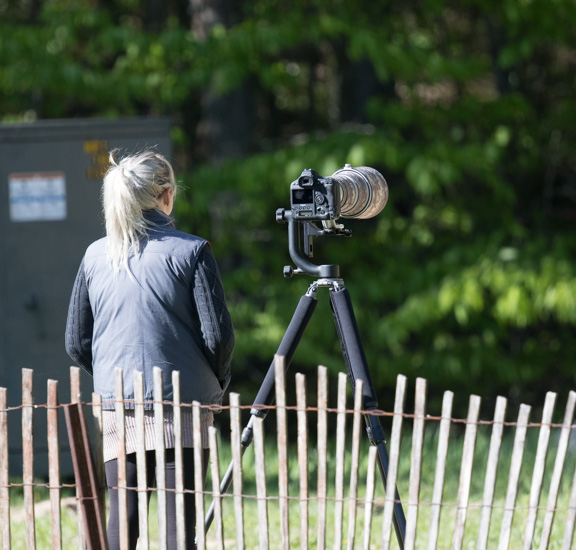
- My assistant photographer is using this setup to photograph owls in Harbor Springs, Michigan as she is training to go to Botswana with me
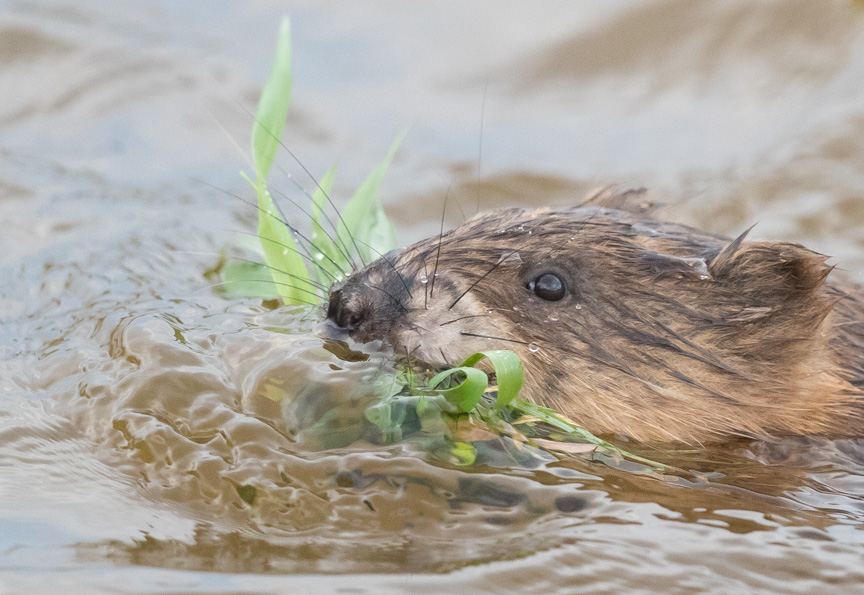
- An industrious beaver shot with the 600mm and 1.4X TC
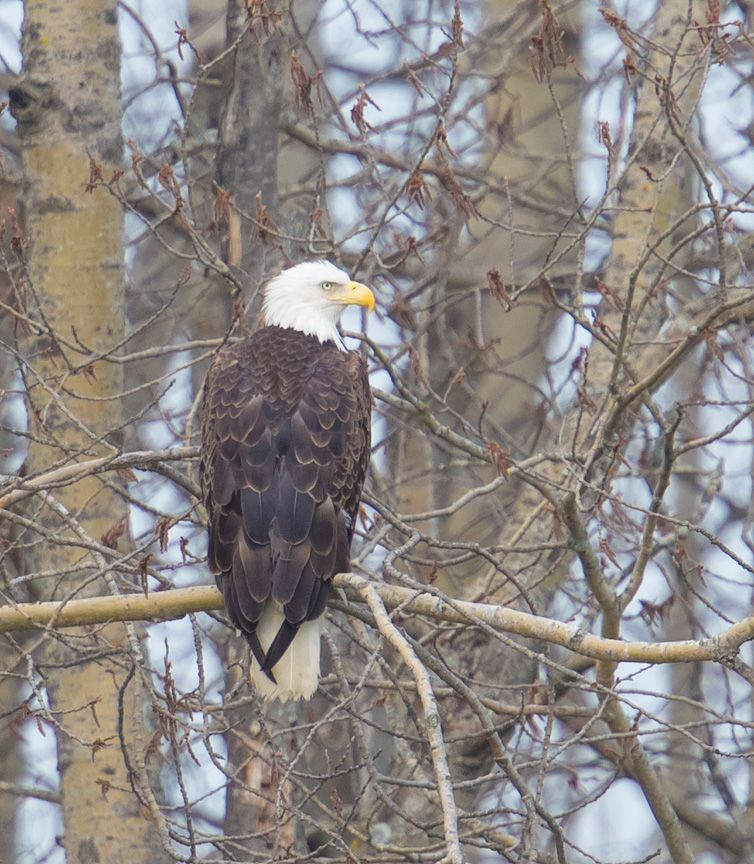
- An eagle at well over 150 yards away with the 600mm and a 2X TC
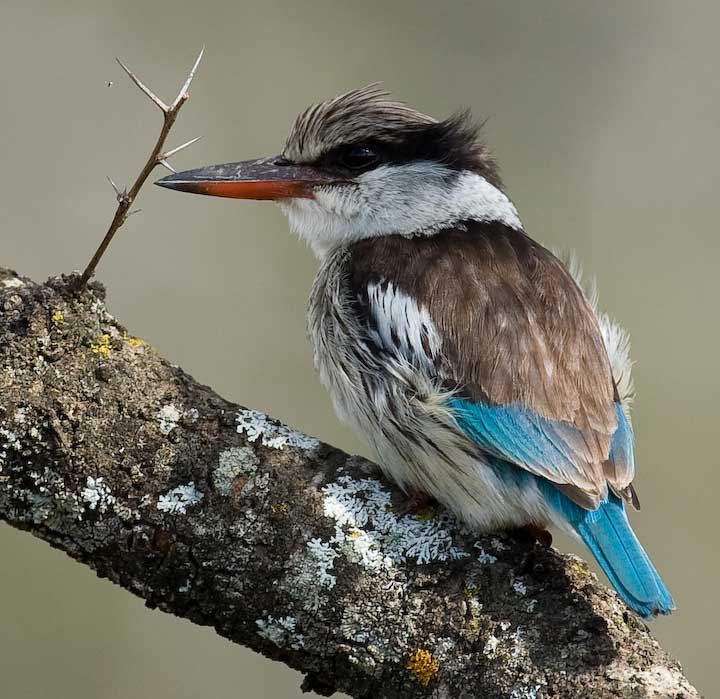
- Striped Kingfisher taken with the 500
I brought the 600 on all my Africa trips for everyone to use. It has Image Stabilization (IS) so you can hand hold it on occasion, although a tripod or steady support are recommended. We will almost always be using it from the Land Rover without a tripod since we can easily steady it (as long as the other people in the vehicle are not moving around) with a bean bag.
Click images to view this lens set-up.
Canon RF 100-500mm F4.5-7.1 LIS USM
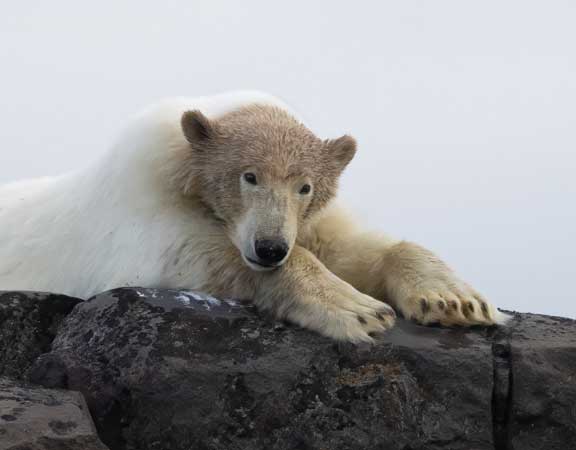
This is becoming my go to lens for a wide variety of my wildlife photography, especially when I have weight limits on airplanes and small boats and can only bring one wildlife lens. I used this lens almost exclusively on my 2024 Svalbard polar bear trip while in a bouncing zodiac and it worked as expected. Here is the page:
https://vetwildlifephotos.com/arctic-wildlife-teaser/
The maximum aperture of 7.1 at 500mm does not pose any problem, especially with the ability of modern mirrorless cameras to use high ISO's with minimal degrading in image quality (that is easily corrected in post-processing later.
Click image to view this lens set-up.
Canon 70-200mm f/4 or f/8 Image Stabilized (IS)
This lightweight and relatively inexpensive zoom lens will cover a wide range of photographic needs. It is recommended for general travel photography and takes great photos. If you can only purchase one lens for all your photographic needs this is the one if weight is important, and you are not shooting wildlife at a distance.
The lens can keep an aperture of f/4 all the way from 70 mm to its maximum of 200 mm. This differentiates it from a consumer grade lens, and is consistent across the Canon line of “L” series zoom lenses. It does not have enough focal length for wildlife photography in general, it is a compromise for someone needing a lens for general purpose photography, and wildlife lens that is light and inexpensive.
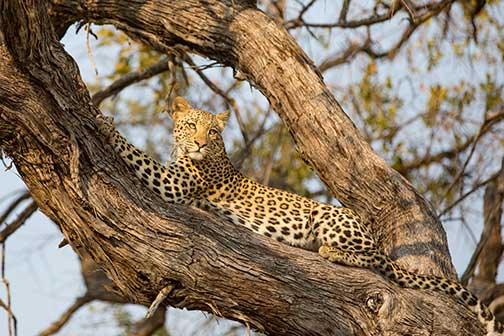
The f/2.8 version of this lens is even better, as long as you are OK with the added weight and cost. This is the one I bring on my trips.
- I used this lens with a 1.4X teleconverter to get this leopard shot in Botswana
Click image to view this lens set-up.
Canon 24-105mm f/4 Image Stabilized (IS)
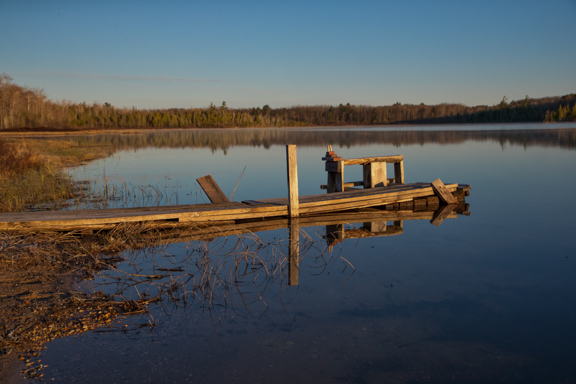
This relatively lightweight wide angle zoom has great image quality when you need to get a wide field of view. I used it often on my Tsavo trip, Antarctica trip and in Galapagos. Whenever I am shooting I always leave the house with this lens, no matter which camera I have or my subject matter. It is awesome on the 5D Mark IV and 5D Mark III, 1Dx, and 1Dx Mark II, yet it can zoom to 105 mm.
- This lens was used to take this photo of the lake where the above eagles had their nest
Click image to view this lens set-up.
Canon 135mm f/2.0
This very high quality prime lens is used when you want pictures of tremendous sharpness. I use it for many of my portrait shots. It excels in low light situations because of its f/2.0 aperture. When you are using flash at night the big aperture gives it more power to illuminate further in the distance. If you are photographing wildlife with a cluttered background this large aperture lens allows you to blur the background and eliminate the distracting clutter.
The photo at the top of this page with the lion over the cape buffalo was taken with this lens. It was a night shot, and since we didn’t dare get too close to this lion and his kill, I had to shoot from a distance that was at the maximum range of my flash. Having the larger aperture (f/2.0) of this lens gave me enough flash power to get the photo properly exposed.
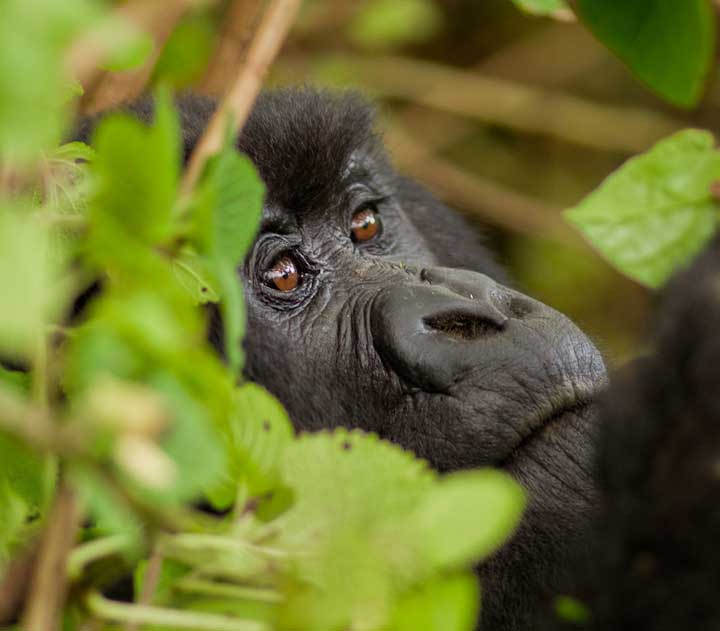
Many of the gorilla shots were with this lens because we were in the darkness of the jungle and were not allowed to use flash. This lens saved the day on this trip because flash is not allowed. It is also great at concerts, museums, churches and plays when flash is also not allowed.
- Many of the gorilla photos, like this female with two-day-0ld twins, that was hiding from us in the dark forest, were taken with this lens
Click image to view this lens set-up.
Canon 100 mm f/2.8 macro
For closeup (called macro) photography you need a specialized lens. I use the Canon 100 mm f/2.8. You will need to practice with this lens because focusing can be difficult due to the limited depth of field. A tripod is highly recommended. I use it for all the medical work at Long Beach Animal Hospital. Click on the Disease Section at the top of this page to see these photos, along with the Facebook link at the top right of this page.
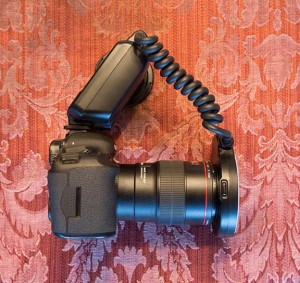
- Here is my 5D Mark IV with a macro lens attached to a ring flash
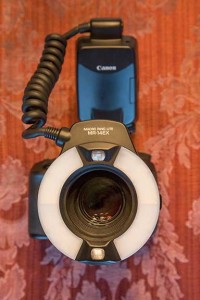
- Flash is important in macro photography. One of the best ones regarding portability, ease of use, and cost, is a ring flash.
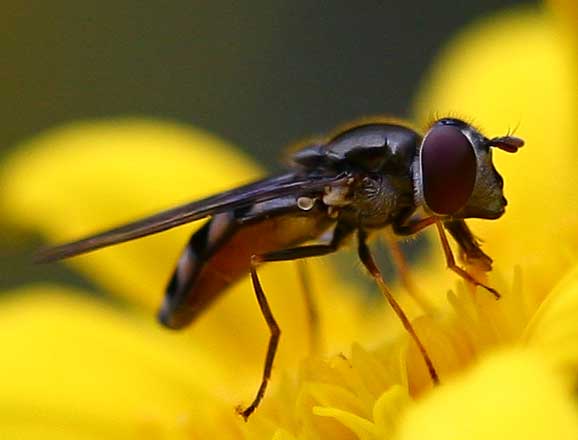
- A bee on a flower
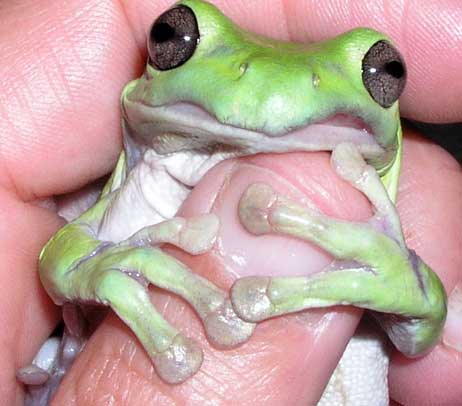
- I use the macro lens for most of my photography at the Long Beach Animal Hospital, especially surgery pictures.
- This lens is also a wonderful portrait lens (mother and child).
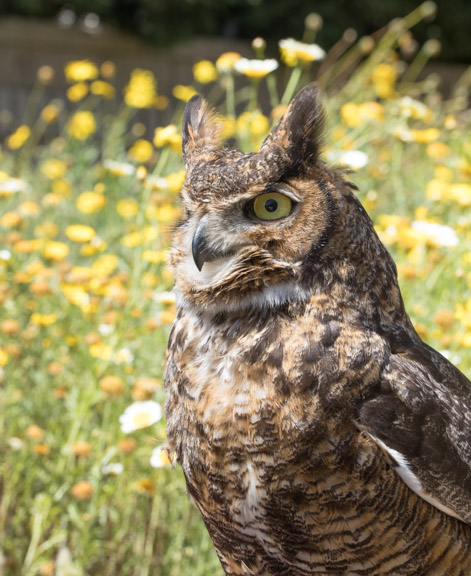
- We even take animal portraits with this lens (Great Horned Owl)!

Click images to view this lens set-up.
Flash
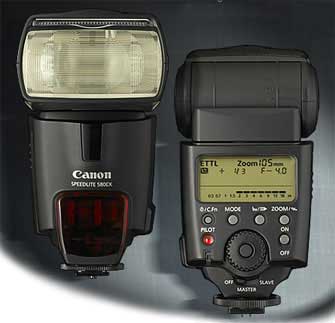
This is a good time to touch on flash photography. If you are interested in wildlife or sports photography you need a good external flash. I keep mine available at all times when I am shooting, even in daylight. I use professional external flashes (also called strobes) on all my workshops and will teach everyone how to use it in daylight and evening. When you want additional reach, and are using a lens of 300mm or longer, the Better Beamer will help extend your reach.
- The primary flash is use is the 600 EX. It has significant power to reach those elusive animals that hide in trees and bushes
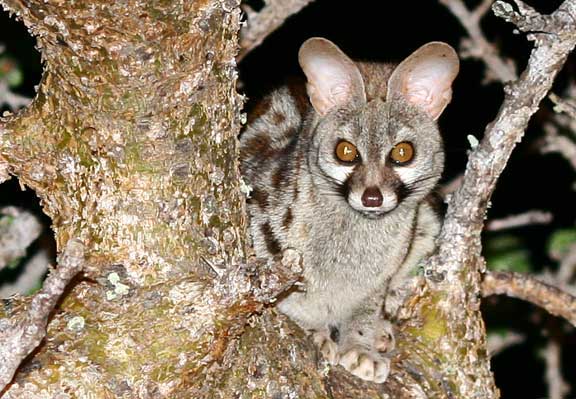
- One of those elusive night creatures you can surprise with a flash like this and a good lens.
Click images to view this lens set-up.