
You will be photographing an elusive and well-camouflaged subject in difficult (and constantly changing) environmental conditions at a distance of at least 300 yards most times. It would be a shame to spend all that money, time, and effort to see a snow leopard, and then not be able to get a reasonable photograph due to your equipment.
Camera
The ability to to focus on a moving object, a high frame rate to get that right moment, a high number of megapixels for the inevitable heavy cropping in editing, and a camera that can autofocus on a subject in poor contrast, and with heat waves, are needed if you want any chance of success. Dr. P used two Canon R5 Mark II cameras that worked well. To minimize any vibration when depressing the shutter Dr. P used remote triggers for his cameras.
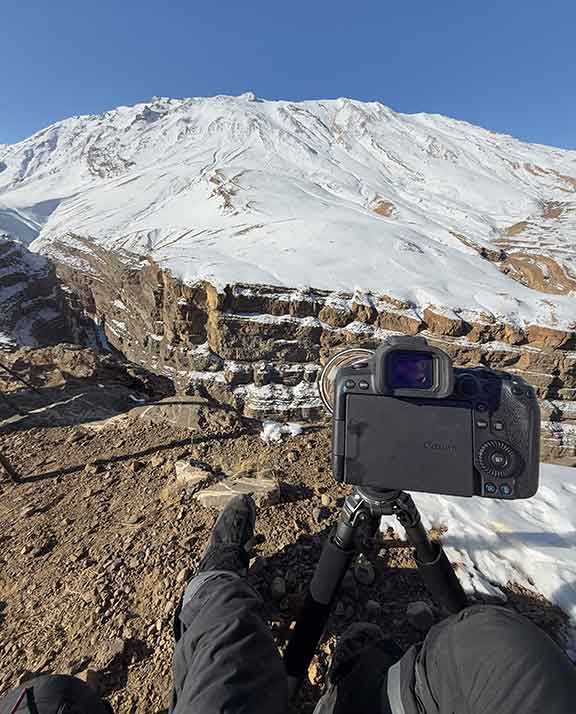
HIs view when shooting across the gorge
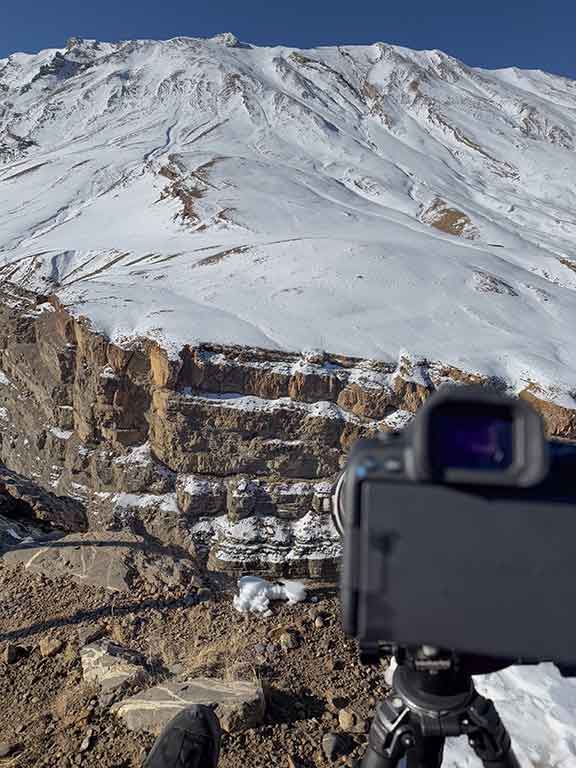
Zooming in a little closer
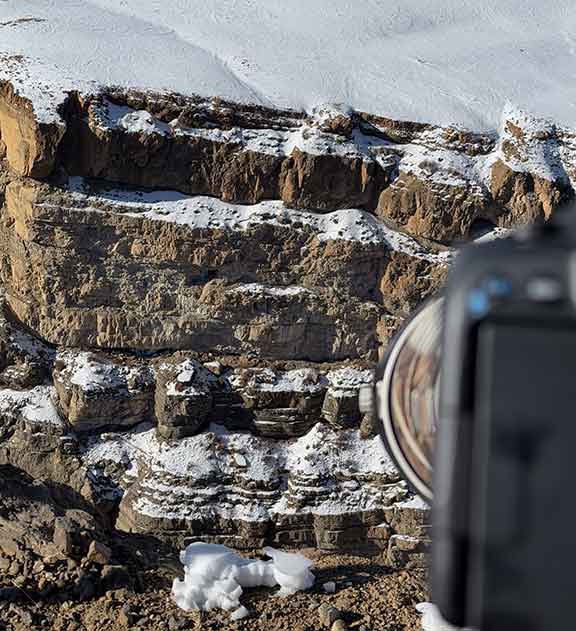
One last zombie to give you an idea of the precarious home of the snow leopard
Lenses and Tripod
Dr. P used his Canon 600 f/4 with 2X teleconverter (1200mm f/8) for almost all of his photos. On occasion he used this lens with the 1.4X teleconverter.
These lenses are not a panacea, and oftentimes the heat waves that built up between you and the snow leopards as the morning warmed up can dramatically affect the quality of your photo, even going so far as to make focus impossible. This can be very frustrating to say the least, when at last everything falls into place and the heat waves distort your photo.
Large telephoto lenses necessitate the use of a stable (meaning heavy) tripod to minimize motion blur. The weight of the lens can cause rapid fatigue if handholding, especially when there is physical activity at such a high altitude. A walk of 50 yards uphill as your guide and porter attempt to get you in photographic distance of some type of action will make you so winded as to make photography with a big telephoto lens virtually impossible without a tripod and remote release.
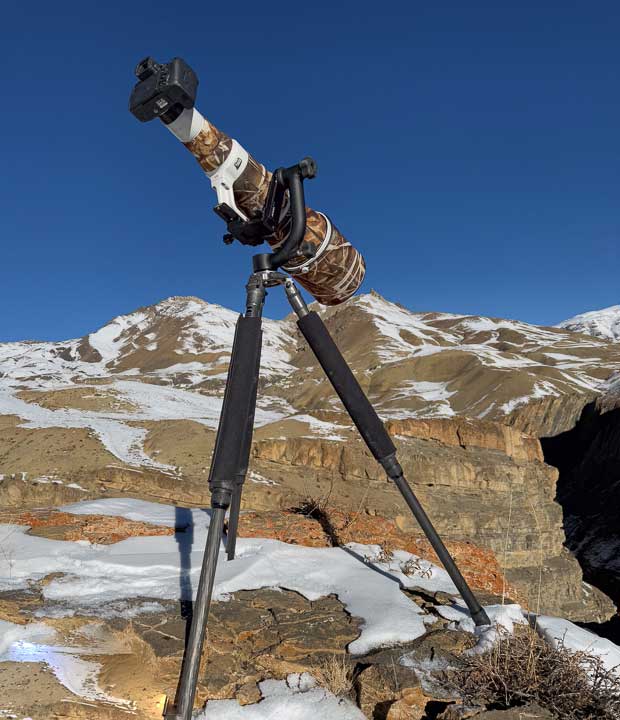
The 600mm lens with 2X teleconverter on a Gitzo tripod and a Wimberly head
He also had the Canon 100-500 that he used with his other R5 Mark II for the bearded vulture shots.
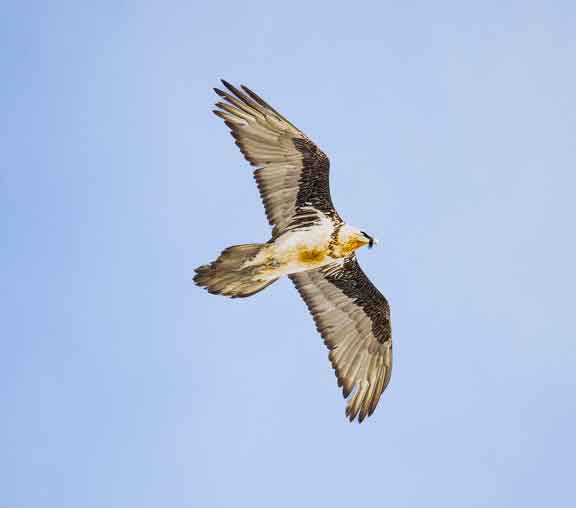
In case you have never seen a bearded vluture
In the next post you will see the snow leopard shots that Dr. P took.