
Our transient neighbors would “visit” us at all hours. By visit I mean either walking by in a curious manner as they looked at us and tried to catch our scent, to bluntly coming up to the fence to investigate even more. When that happened our head guide Dave Gibbs was a there with one of several of his deterrents. Dave’s most important skill, honed over many years of working with polar bears, is his ability to read the bears and anticipate any problems.
Polar Bear Visits
The bears came by at anytime, although it seemed they were bolder in the early evening and at night more than they were in the daytime.

Some of them would do a walk by and keep moving
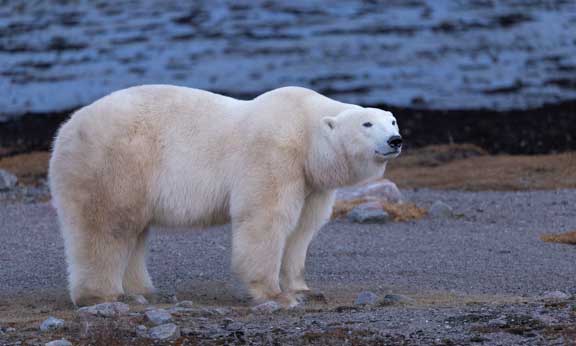
Others would stand and stare at us from 20 yards away
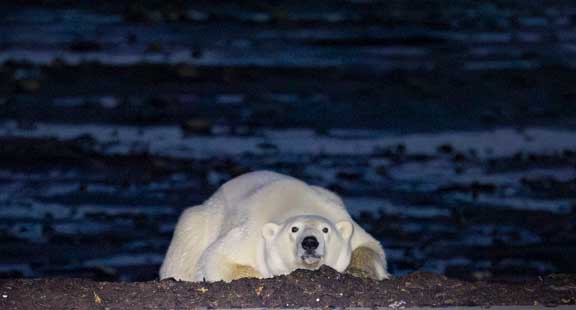
This one in the early evening apparently thought we wouldn’t notice him if he stayed low
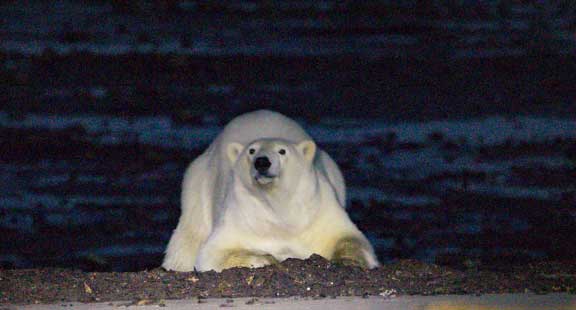
Apparently he gave up on his stealth approach to the fence

This early evening visitor eyed us for a while……

….. and then boldly walked right up to the fence
Dave’s Deterrence Method
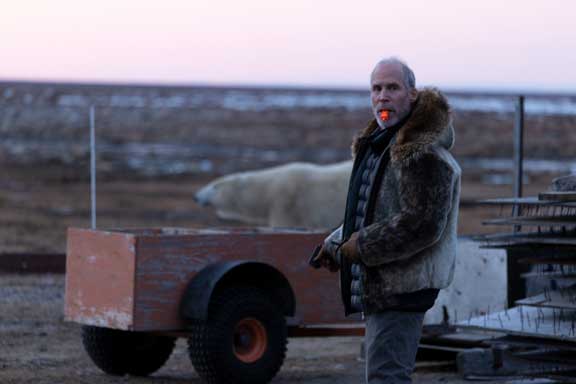
An early morning visitor with our head guide Dave making sure it doesn’t get any ideas about breaking in
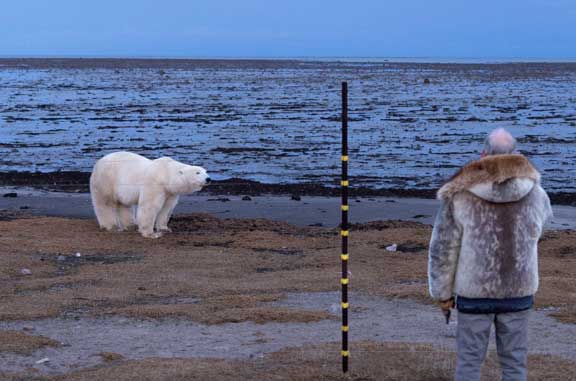
Dave keeping tabs on this one as it got close to the fence
Dave is all about deterrence using sound, and not injuring a bear. He talks about it in more detail in this short field video on a windy day.
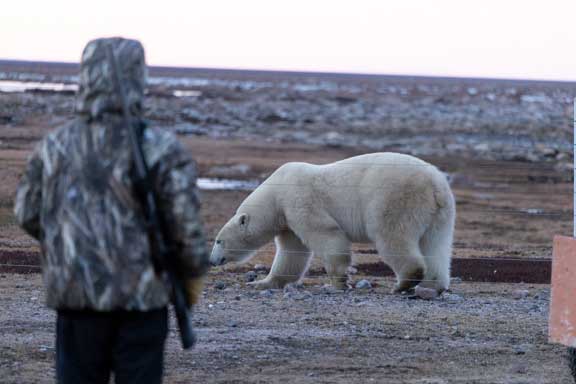
Behind Dave was Moses with a rifle
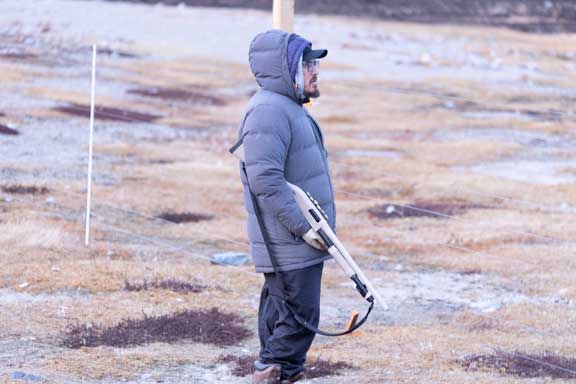
Behind that Inuit guide was Cam, this time with a shotgun
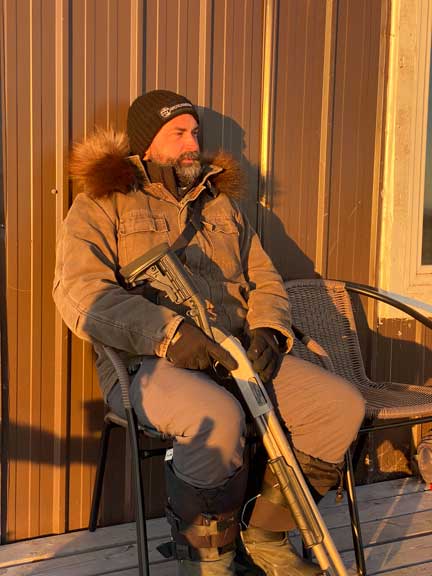
As the last level of protection was our camp manager Scott with a shotgun
Scott tells us much more about the use of this shotgun in this video
In the next post Dr. P will show the polar bear photos from this trip. They look so cute and cuddly with their antics as you will see from the following photos that it is easy to forget their true nature as the apex predator of the Arctic.