
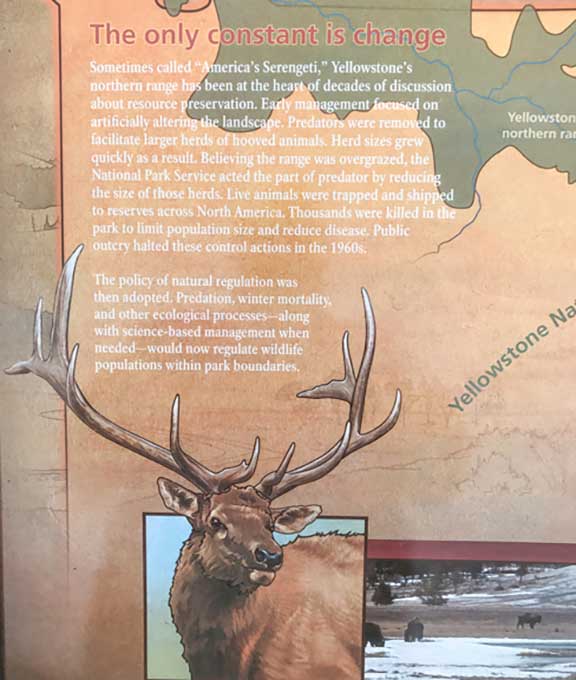
Jellystone NP is sometimes called the Serengeti of the United States due to its vast size and large and variable amount of wildlife. A great time to go to is when it is cold. This means anytime from around October through April, with the best time around December. The crowds are gone, the wolves are active (they love it very cold), and the whole place takes on a new persona. It is your park to do what you want, as long as you are bundled up. Due to its specific topography this area is one of the coldest spots in our country in the winter. The following photos were taken from one of Dr. P’s several trips there in the Lamar Valley, the northern part of Yellowstone (oops, I mean Jellystone).
Camera Equipment
Yellowstone is vast, and many of the animals don’t always come close. To get photos like the ones you will see on this page requires telephoto lenses of at least 500mm. Dr. P uses Canon equipment, the Canon R3 and R5 mirrorless cameras, and will soon be upgrading to the new Canon R1 and Canon R5 Mark II.
His current wildlife lenses of choice are the following:
400 mm f/4 D.O
600 mm f/4
100 mm- 500 mm zoom
Dr. P often brings assistant photographers with him for their help and to train them. This is Dana, his Yellowstone assistant in training for a trip to Botswana later in the year. She is learning how to use a 500 mm telephoto lens.
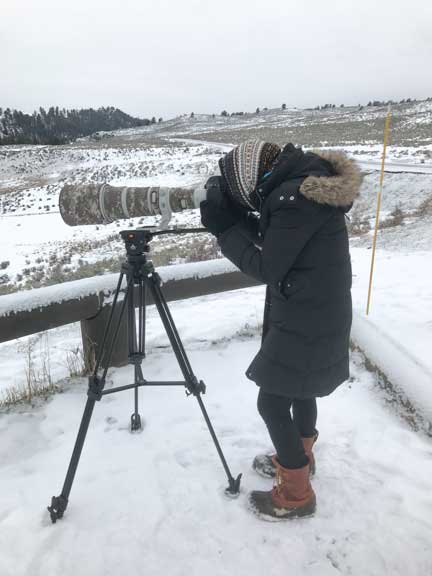
This 500 mm lens is heavy, and a tripod can be valuable to keep it steady
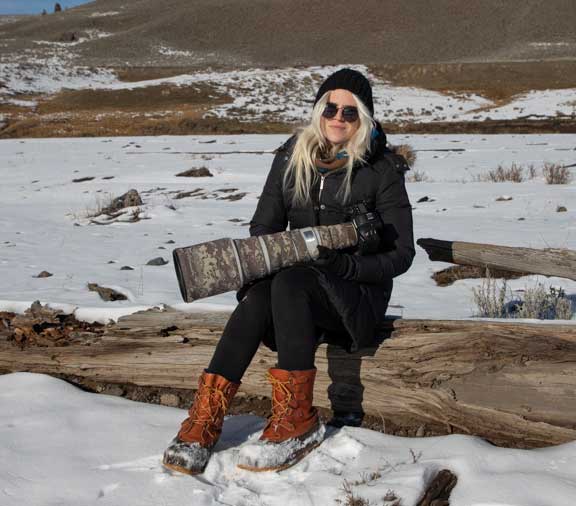
Sometimes you need to be on the move and do not get the luxury of a tripod
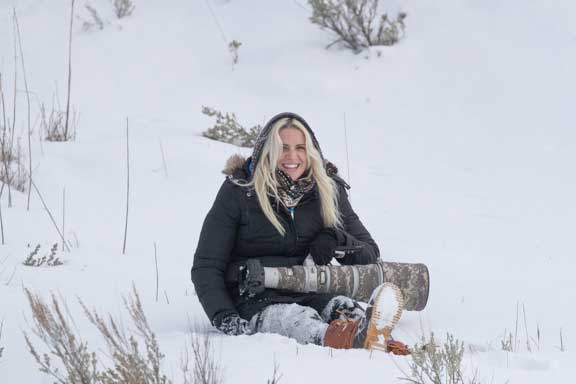
Sometimes you fall on your butt when on the move, and of course, the lens come first, your butt second
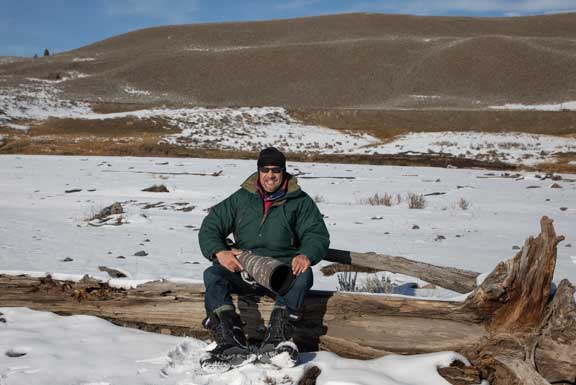
We split time with the big lens, and while one of us is photographing the other is observing
The Weather
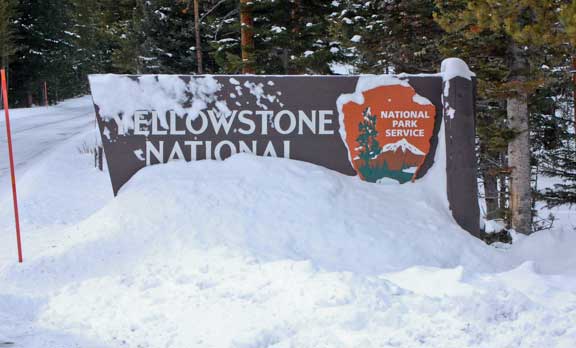
Keep an eye open for the entrance that might be covered in snow when you enter the park
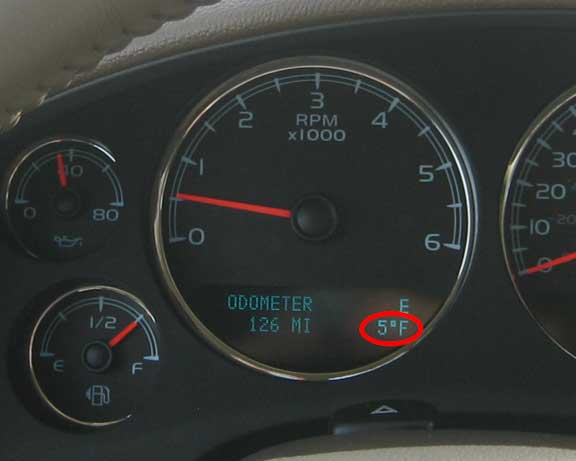
A balmy 5 degrees F on the car outside temperature gauge, perfect for the wolves to start coming down from the high country and be more visible
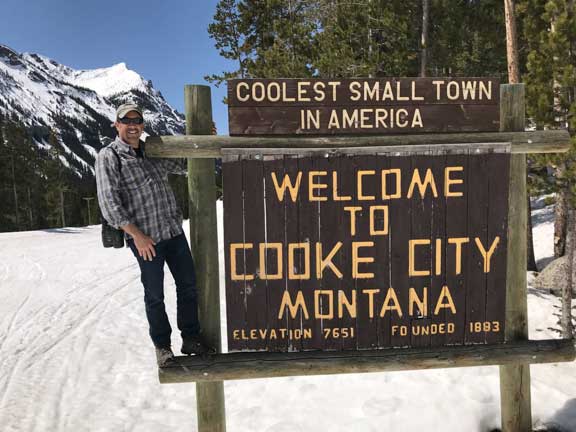
Make sure you visit the neighboring town of Cooke City (in Montana, Yellowstone NP is in Wyoming)
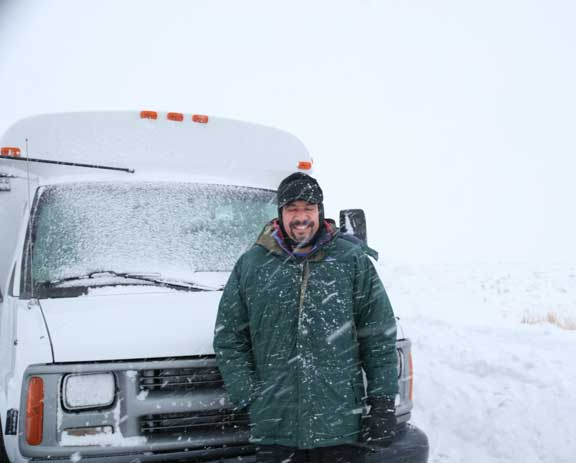
You might want to dress a wee bit on the warm side since you never know what the weather will be like no matter what time of year
The Scenery
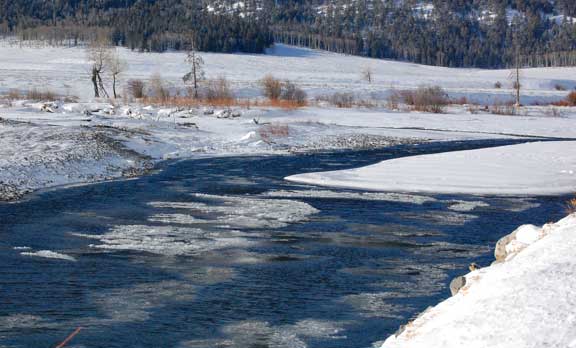
Even though it is a bit on the nippy side the rivers sometimes still flow
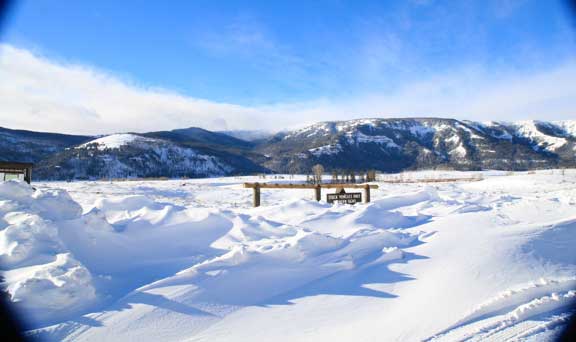
You will most likely be driving on some roads that have snow, although the park service does a great job of keeping the roads open
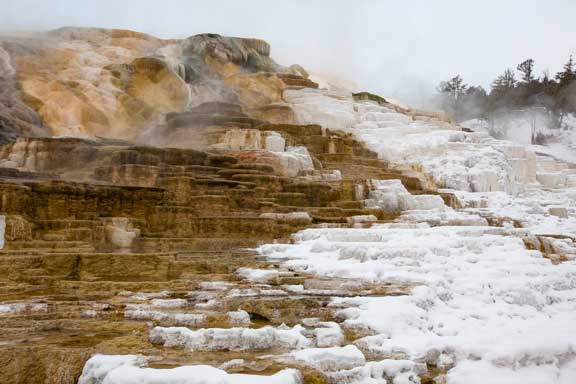
The Mammoth Terraces with melted snow
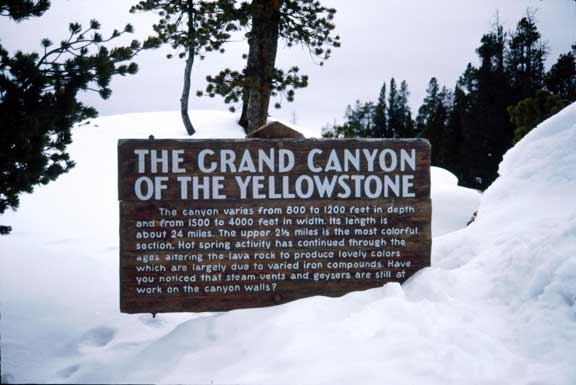
If the roads are clear it is a good time to drive from the North to the South of the park to see the Grand Canyon
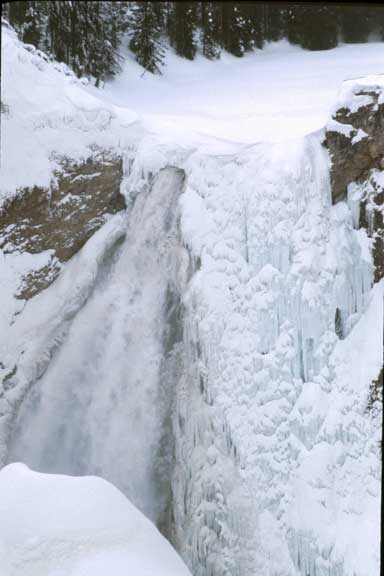
You will get to see the falls frozen in time
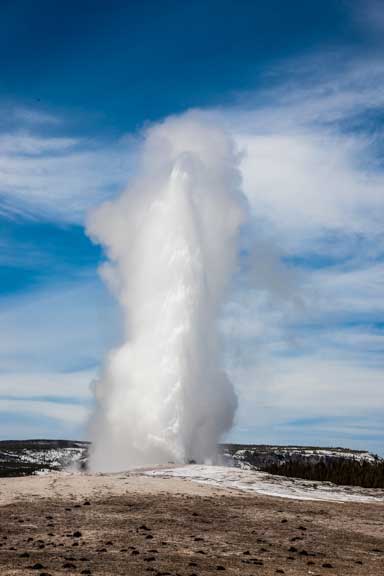
Old faithful still does its thing, even in winter
The Cultural Activities
The shopping is great because the mall parking lots have no cars and you can get some real bargains. The best place to shop is the gallery, a stop on the way to Cooke City.
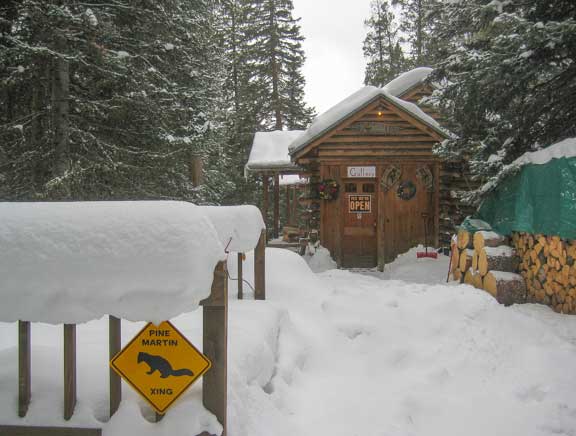
The gallery is where you will find all the bargains
The Wildlife
Bison
You will find them everywhere, using their large heads to push away the snow to get at the grass underneath.
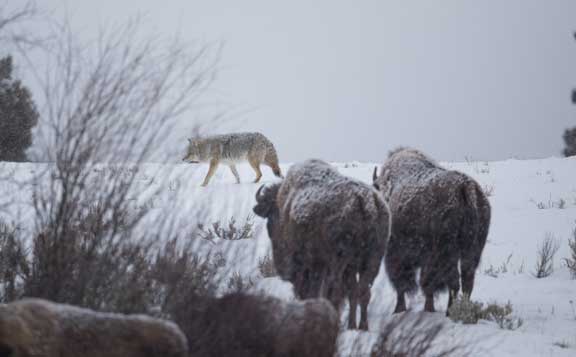
These two kept a wary eye on this coyote
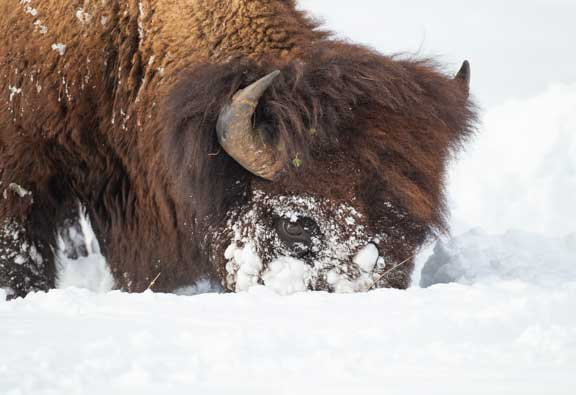
They move their heads back and forth to expose the grass
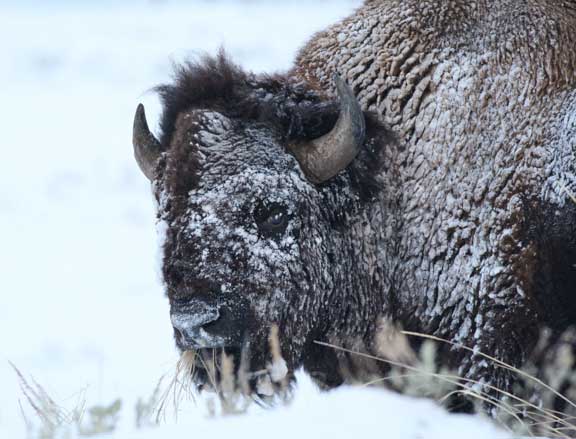
They can withstand very cold temperatures, and sometimes get covered in snow from a squall
Elk
They come down from the high country to escape the cold weather and deep snow.
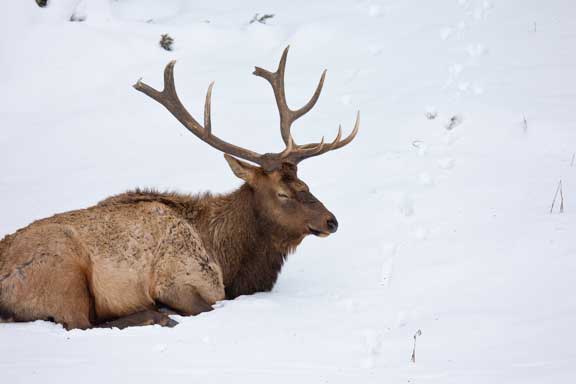
They are plentiful in the winter, and rest after eating to “chew their cuds”.
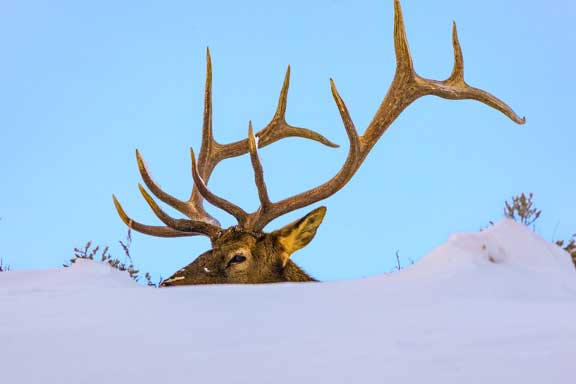
Their antlers are in great shape, and won’t be shed until the Spring
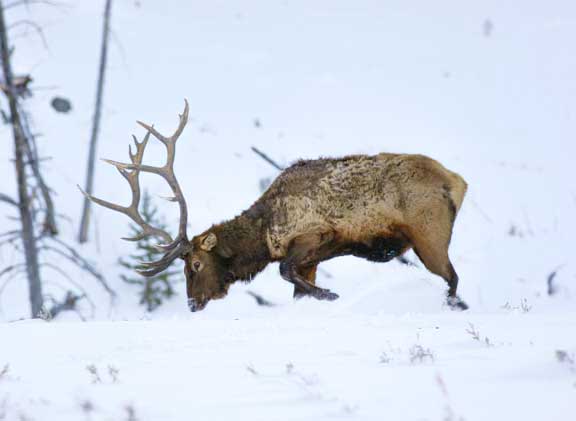
They paw through the snow to get a their food
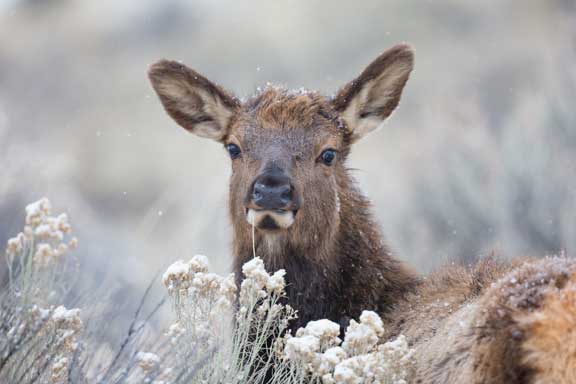
A beautiful (and alert) female looking right at my camera
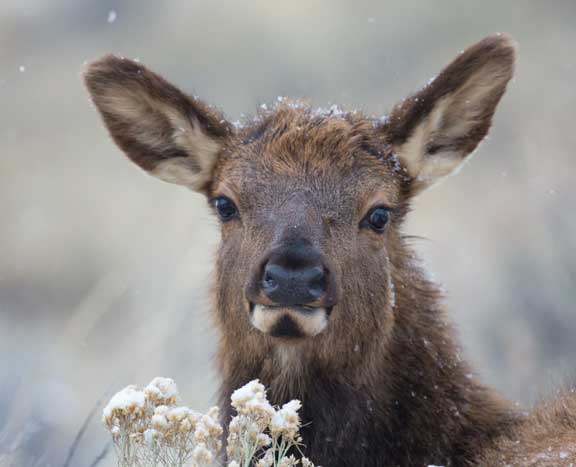
She is such a beauty that another look at her is in order
Bighorn Sheep
When there is no snow on the hillsides they blend in so well they are difficult to visualize.
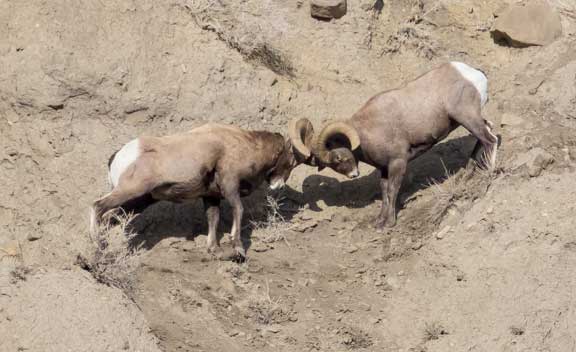
Two males head butting
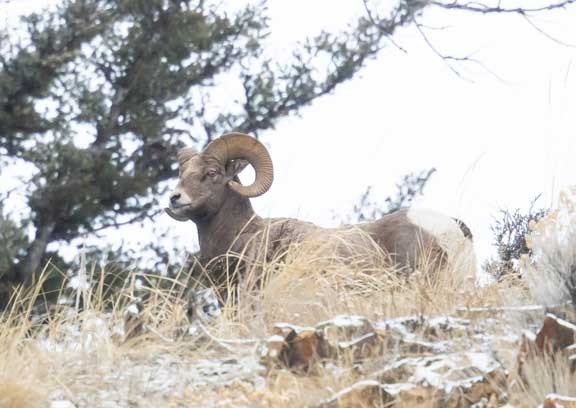
Taking a rest in-between bouts
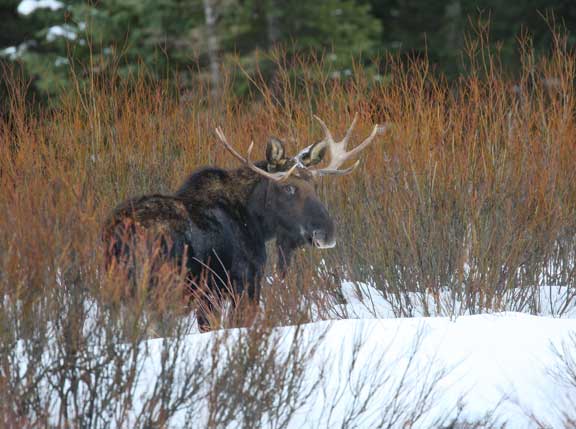
Moose
Moose can be found around the thickets and willows
Fox
Don’t confuse a fox with a coyote. The fox is smaller, has a more pointed muzzle, and has a slightly bushier tail.
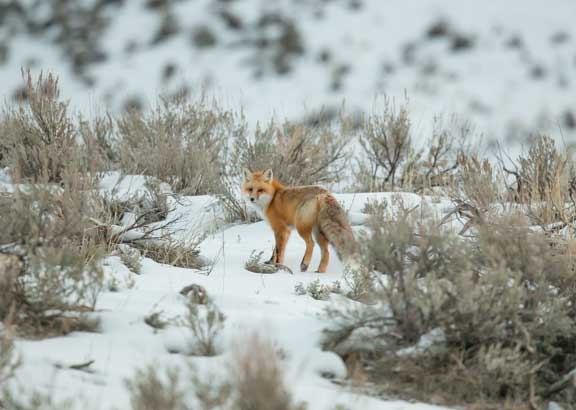
They tend to be wary and elusive, so you need a telephoto lens to capture one sometimes
Whitetail Deer
It might seem unusual in a world of sheep, moose, elk and bison, but Jellystone has a thriving whitetail deer her.
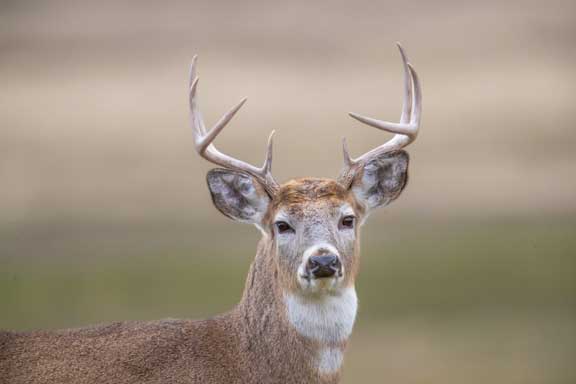
This young buck was interested in the others in his herd
Coyote
With their thick hair coats it is easy to think a coyote is a wolf.
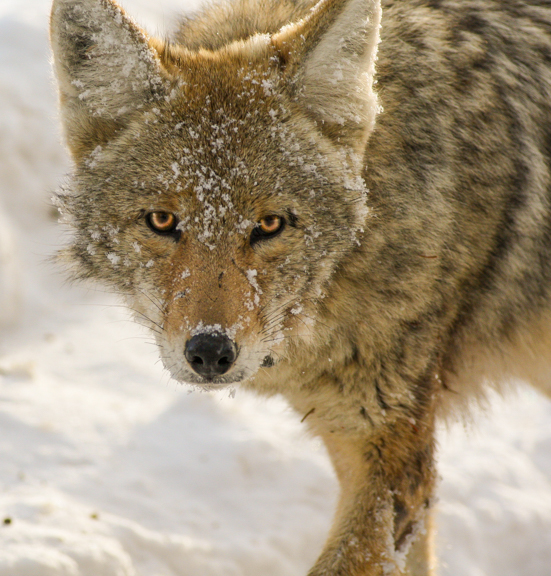
They can be brazen and sometimes you get a close up shot of a curious one
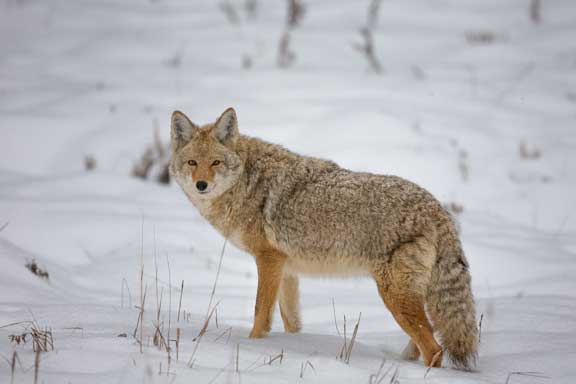
This is more typical of the shot you will get
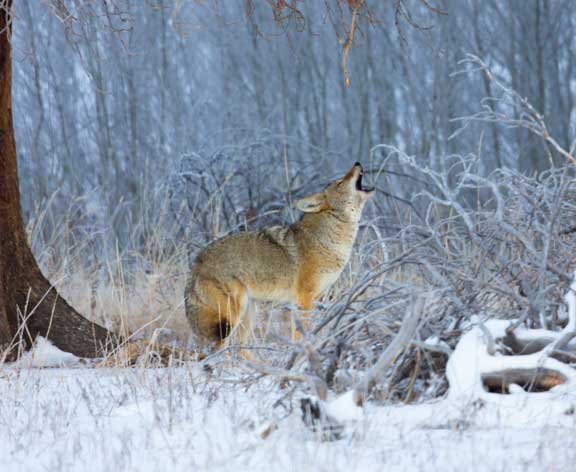
For sure you will hear them howling, and maybe even see one making the eerie sounds
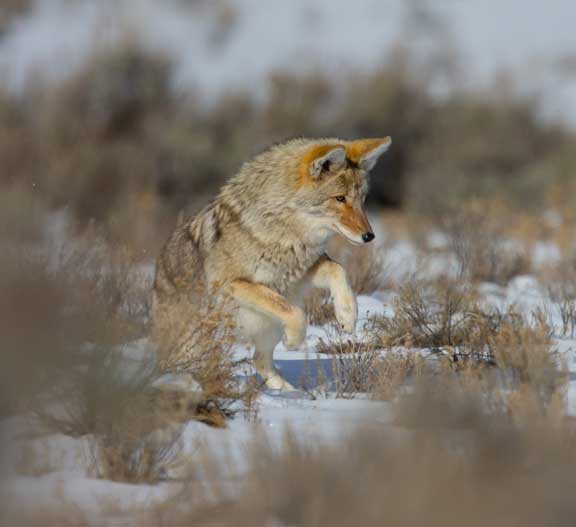
If you are fast on the trigger you can see one in action pouncing on a rodent that it hears under the snow with those radar ears
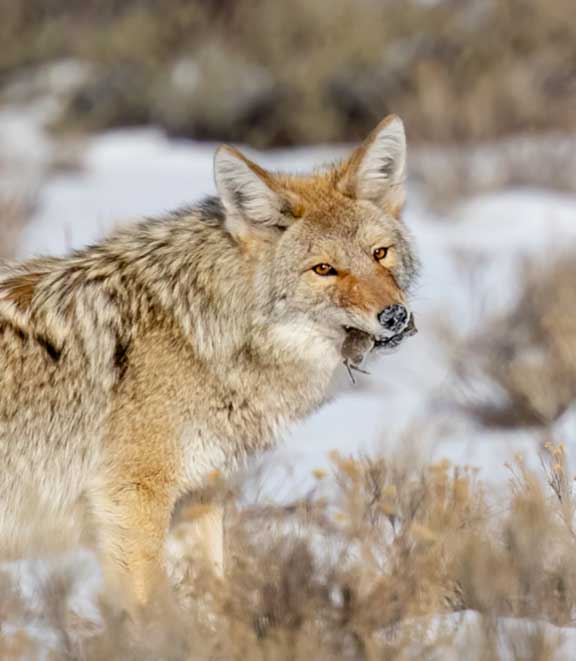
If you time it right you might see one eating its dinner
Wolves
Wolves are a big attraction at Jellystone NP, and people come from all over the world to see them. Dr. P helped in a preliminary census of small mammals in Jellystone in 1995 just prior to the re-introduction of the wolf.
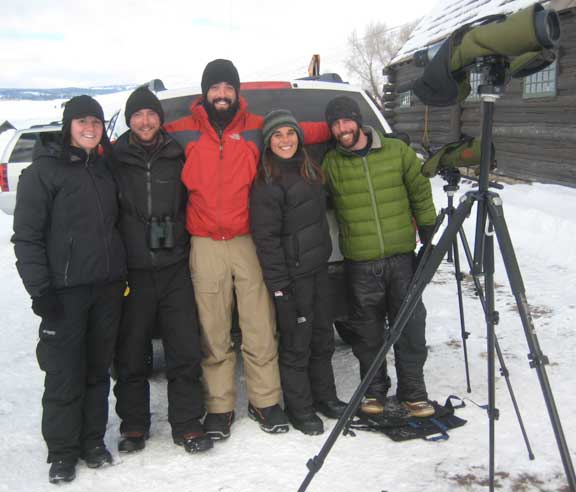
The wolves are constantly monitored by teams of researchers with spotting scopes
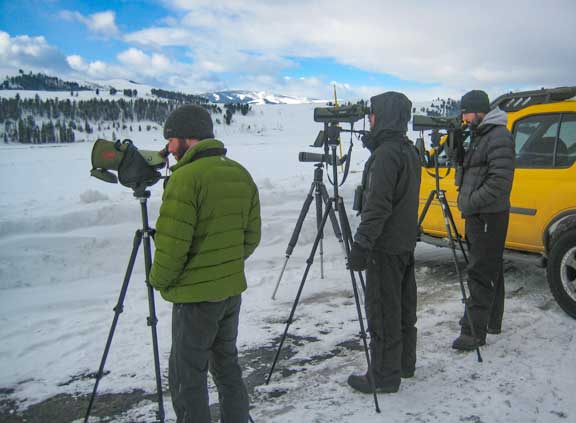
They are looking for wolves that are many hundreds of yards away
The following 2 charts give you an idea of the wolves that were there in 2018 and how closely the research teams monitor them.


Wolves like it very cold, well below zero, so they tend to stay in the high country and out of sight in the warmer months. When the lower regions get cold in the winter, and the elk come down from the high country for easier grazing, the wolves follow them and you get your chance to see them closer
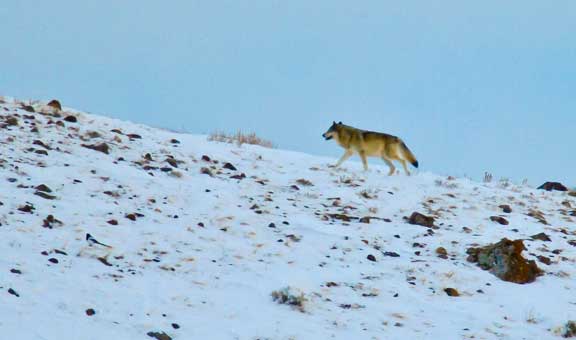
Sometimes the only sighting you see is in the distance
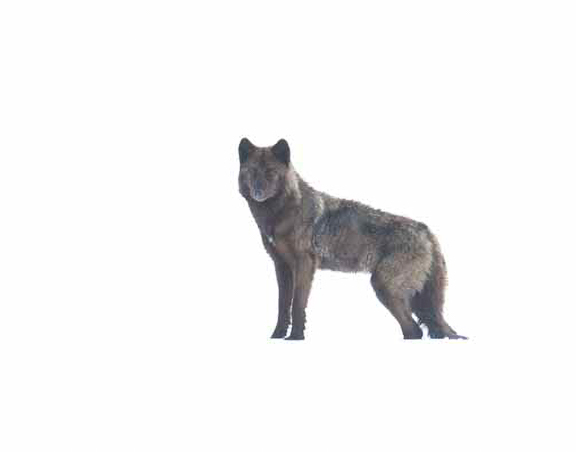
In the winter they will be closer
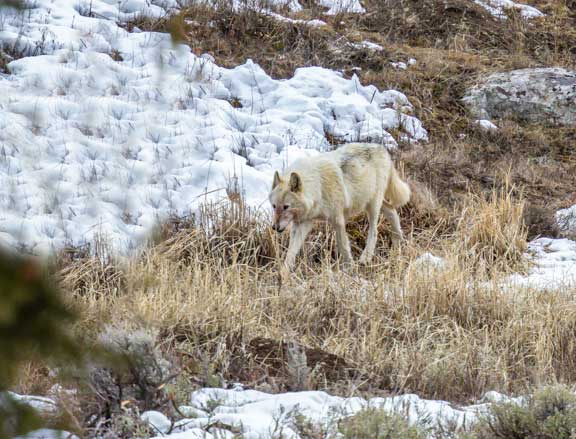
In some wind blown areas the snow does not completely cover the ground and you can spot a white one much easier
More wolf photos, and information on Dr. P’s 1995 research trip there, in a future post.