
Introduction
The bald eagle has certainly made a comeback in our country after DDT was banned. There is a long-standing eagle nest in northern Michigan where the adults consistently raise two chicks. The tree is dead and the nest is huge. The weight of this large nest (easily 1 ton or more) on a dead tree motivated me to get some photos before it all comes tumbling down some day.
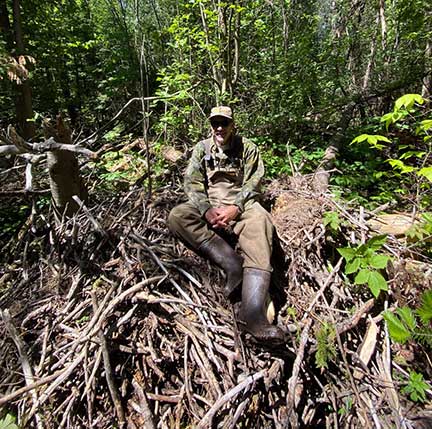
It did come tumbling down one winter, but that is getting ahead of our story…..
I photographed activity at the nest from May until the chicks fledged in August, as the parents fed and raised two chicks successfully for those seasons. I call this series of blog posts “As the Eagle Turns”. You will find out why as I continue to post them.
The Eagle Nest
The eagle nest in early May taken from a dock on the lake 200 yards from the nest. You can see an eagle standing on the nest, right in the center. This gave me hope that it is an active nest and there are eagle chicks in it.
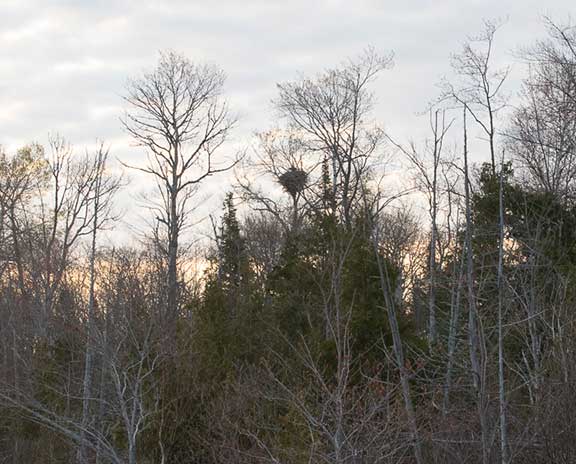
The lack of leaves on the trees this early in the season allows visualization. That will change in just a few weeks.
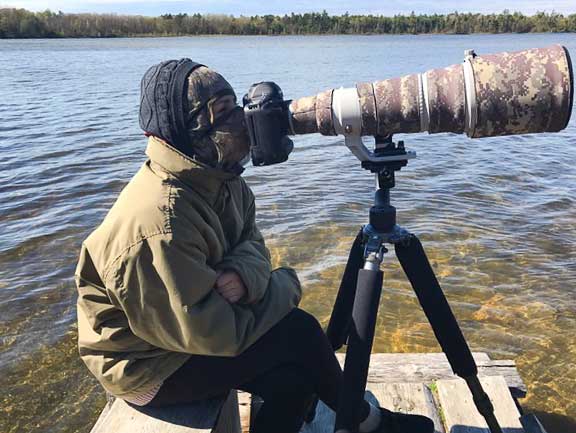
It took this photo of my 1000 mm lens (500 mm with a 2x teleconverter) from a small dock 200 yards away to get the above photo. In the photo I am teaching my young assistant in preparation for her joining me on an African safari in a few months.
I kayaked out near the nest a few days later and saw the male eagle perching near the nest. This good sign hopefully means there are eggs or chicks in the nest. I did not want to get too close at this early point in my quest. It is important that you take your time habituating them to your presence so as not to disturb them at a sensitive time in chick rearing.

He kept an eye on me from a distance
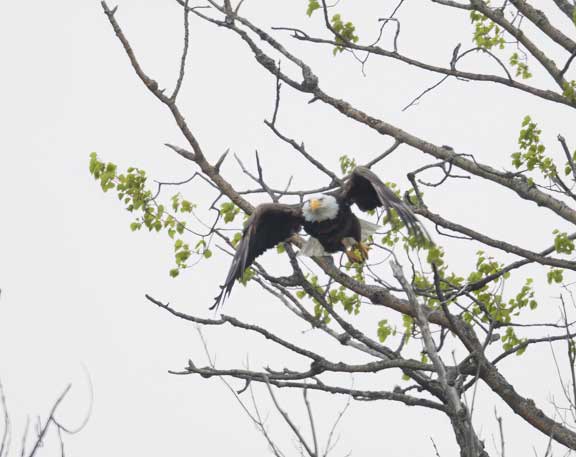
As I got near he flew towards me, telling me to slow down and come back another day to start the habituation process over again. Patience…….
It is important to habituate both parents to my presence. The following photos are the culmination of dozens of trips over several years. The early trips were to get them used to my presence in a kayak, and then later in a swampy area just below the 75 foot high nest when I got out of my kayak.
From the swamp I took the thousands of photos needed to get the shots I wanted. I waited many hours, sometimes in vain, other times the action came in fast. Patience, observation, luck, being proactive with your camera in anticipation of anything, and then fast on the autofocus, yielded the following photos. Since I never knew what was going to happen when I went there, I call this page “As the Eagle Turns”.
Plan A- Habituation Using the Kayak
I used the kayak to scout the lake and get the eagles used to my presence, a process called habituation. This took me several weeks of slowly going closer to the nest, pulling back when the eagles seemed irritated by their vocalizations or by flying away.
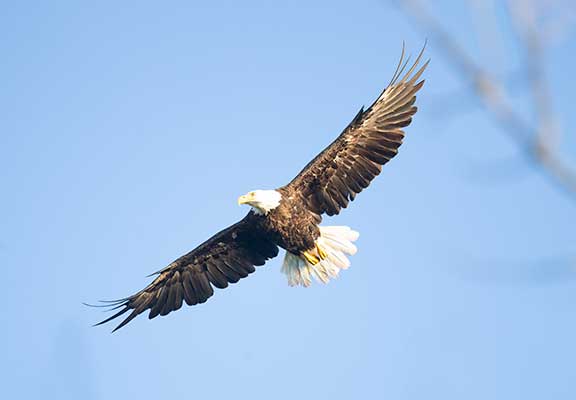
He flew off a perch near the nest when I got too close for his comfort while in my kayak
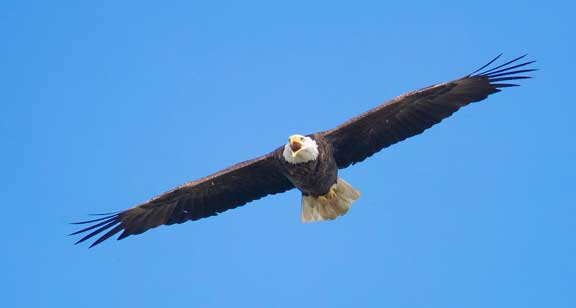
On his first pass he gave me an earful
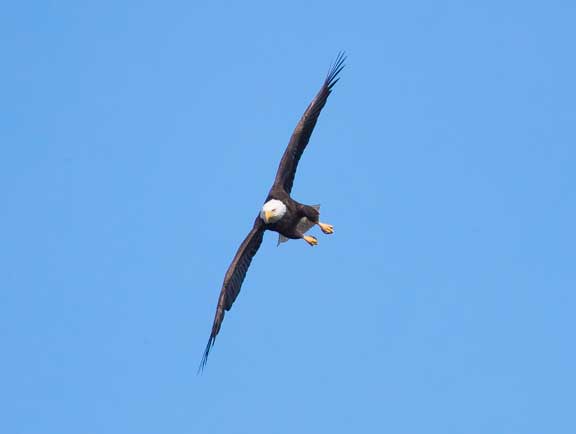
He banked hard and came right at me
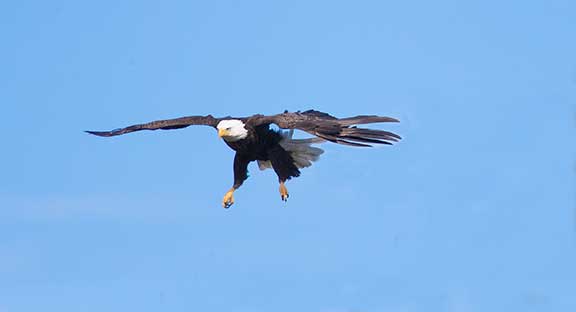
His final warning not to get too close just yet as he passed in front of me
After my “eagle strafing” episode I took my time until eventually he accepted me. Patience is the key to good wildlife photos. To start the habituation process I dressed in camouflage, hoping the more natural color would be less alarming to the eagle pair. There is no way you are going to escape their eyes, I just wanted to disturb them as little as possible.
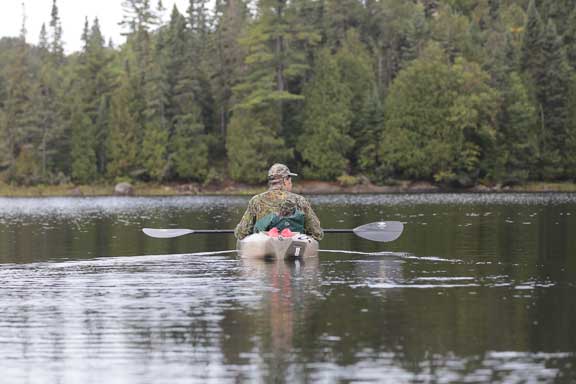
When I launched the kayak 200 yards from the nest I made it a point not to directly go towards the nest

I kept an eye on their body language as I kayaked past the nest from several hundred yards away
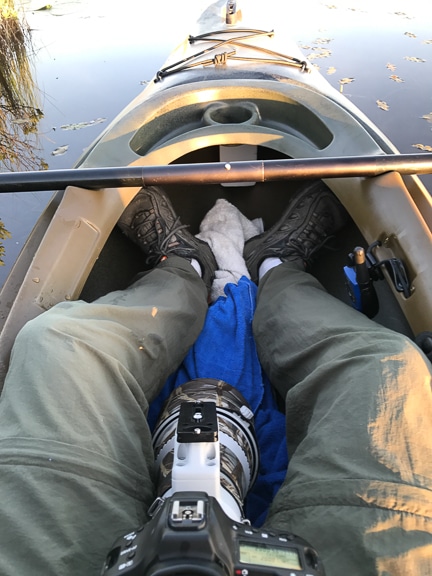
I had my camera with 400 mm or 500 mm lens between my legs at all times just in case
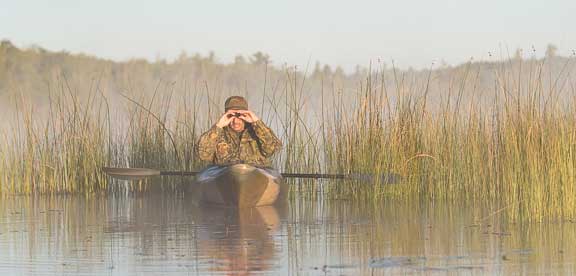
When they seemed comfortable with my presence I stayed in the reeds just below the nest. I would use my binoculars to watch for the male eagle bringing lake trout to his chicks from Lake Michigan in the distance
Morning Photography
One morning at 6 AM, as I got ready to launch my kayak from the small dock, I noticed the male eagle fly by with a lake trout. Now I knew for sure it was an active nest (even though I still could not see chicks because the nest was 75 feet up). This was great news, and it motivated me to go there many early mornings over many months when the weather was good to photograph from a bobbing kayak initially.
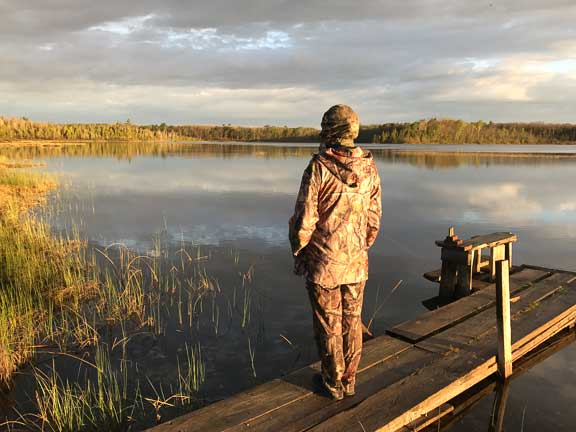
As I stood on the dock looking west, with the sun at my back, and totally unprepared to photograph anything, the male eagle flew by with his fish. No photo this time!
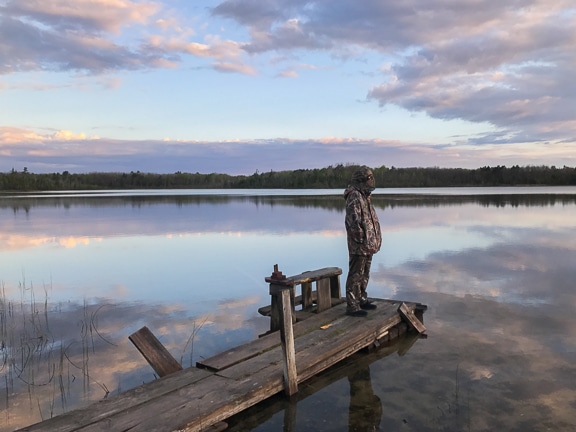
I even went back that evening to see if he was bringing dinner. He was a no show this time.
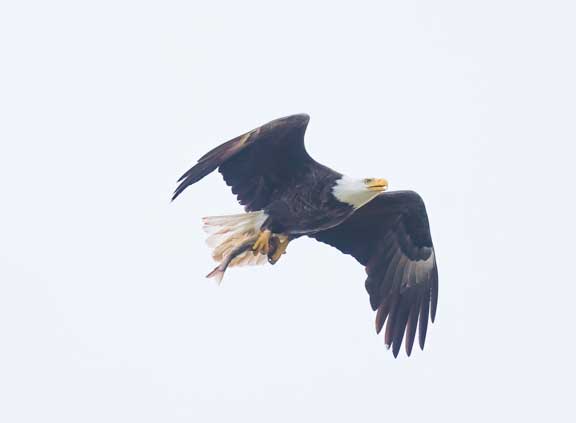
At 6 AM the next morning I was ready, and I got this shot from the dock. He has a small lake trout in his talons.
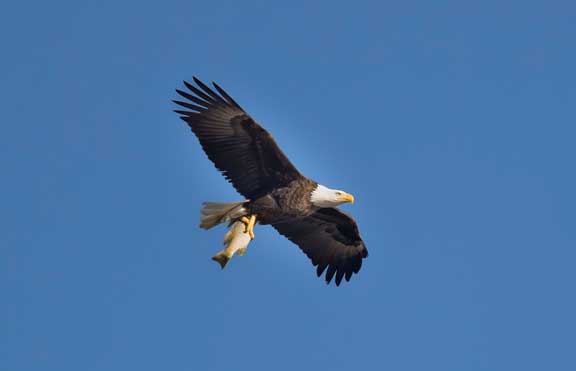
He brought fish most mornings between 6 – 8:30 AM. At 6 AM I would launch my kayak from the dock and paddle into the lake and get photos of him flying over me on his way to the nest. I was making progress!
The bobbing kayak was not a stable platform to use a 400mm or 500mm lens with teleconverters. I decided to walk closer to the nest using waterproof boots, but that was not very smart. All I did was sink into the muck, losing my balance so much that I almost fell in the lake with all of my camera equipment. Not a smart thing to do!
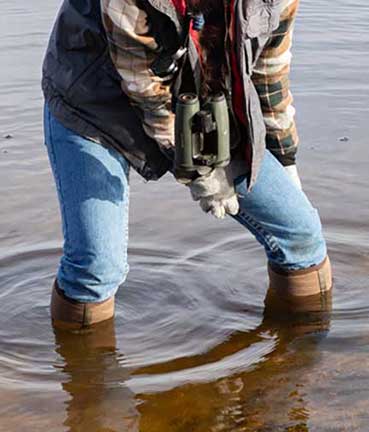
I thought the boots would be high enough in the shallow water, but I did not make the “muck calculation” in my head, and after one step I wisely went to plan B
Plan B- Setting up a Tripod
After I dodged that bullet I concocted a plan to walk to the nest from the dock using waders, and then setting up a tripod on the marshy area below the nest. It actually worked!
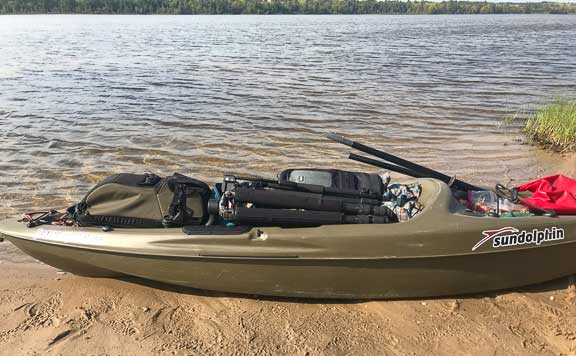
My kayak loaded with camera equipment and ready to start walking to the nest via the water

The walk started easily in the shallow water
If I walked slowly and used the kayak for stability and buoyancy, I was able to make it without sinking into the muck at the bottom of the lake. The lake starts off shallow, as you can see from the picture above.

When you get to the marshy area near the nest it gets a good bit deeper……

….and rather mucky
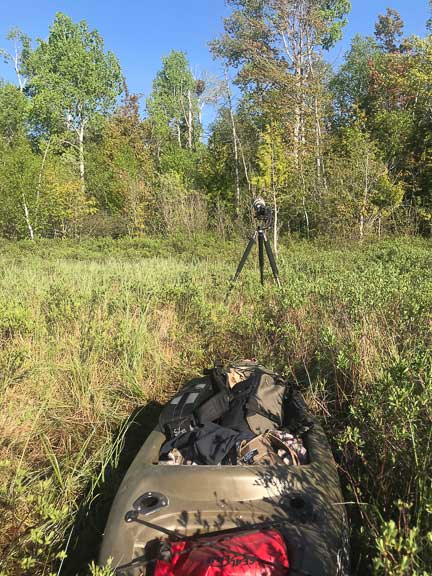
Success- kayak, camera on tripod, with nest in the distance, 80 yards away and 75 feet in height
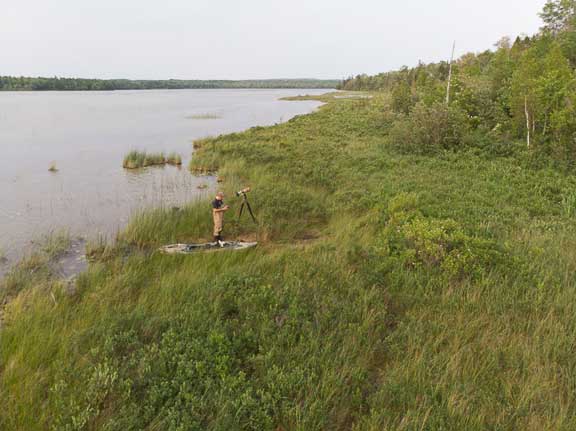
A drone perspective on the location, with the eagle nest just out of view on the right
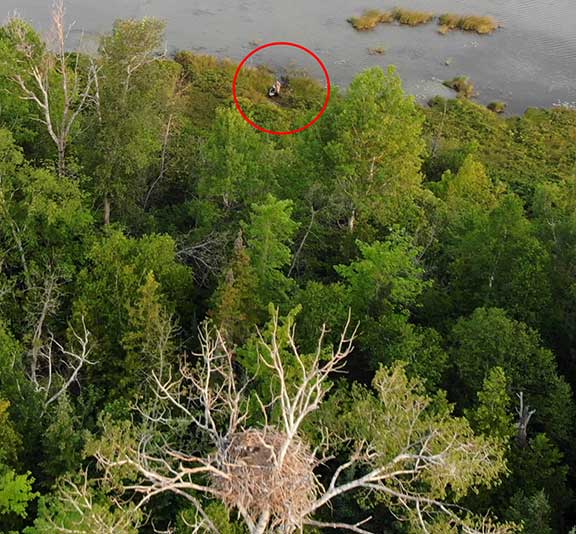
Drone shot from the eagle nest showing me circled in red at the top, the lake behind me, and at the bottom of the picture the nest with a chick in it way below the drone
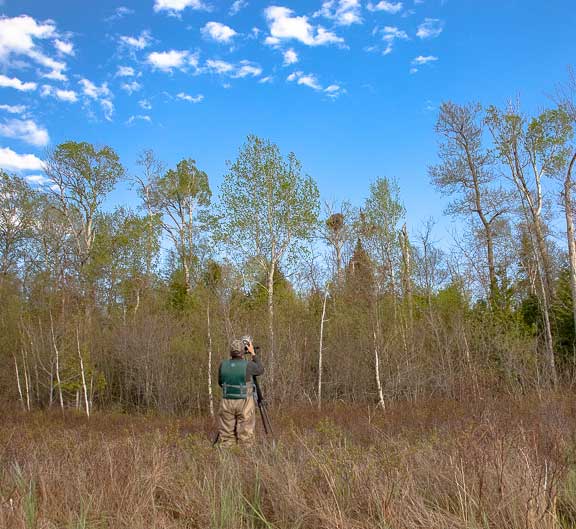
Time to spend lots of hours waiting for something to happen at the nest
Taking photos like this requires professional level equipment that not only focuses fast with powerful lenses but it can stand up to the rigors of the outdoors. I will go over this equipment in the future as “The Eagle Turns” blog post continues.