
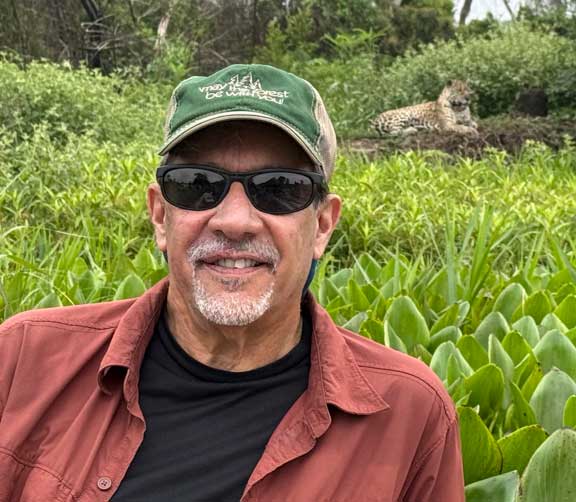
The Road to Jaguar Land
In November of 2024 Dr. P took 3 guests (all trouble makers) to the Pantanal to photograph jaguars and other wildlife. It was a great trip that Karine Aigner set up with a local guide named Duda Fernandez. Because of their expertise we saw 24 jaguars during our week on the rivers in the Porto Jofre region of the Pantanal in Brazil.
Almost all of the wildlife photos on this trip were taken from a boat with a Canon R5 Mark II with a Canon RF 100-500 mm f/4.5-7.11 L IS USM lens. It was used handheld at all times, and with the ability to increase the ISO on this camera, the maximum aperture of 7.1 at 500 mm was not a problem. The ability to rapidly zoom between 100 and 500 mm with a relatively light and high quality lens made it ideal for jaguar photography. Dr. P is going back to this same area in November of 2025 and bringing this same camera and lens.
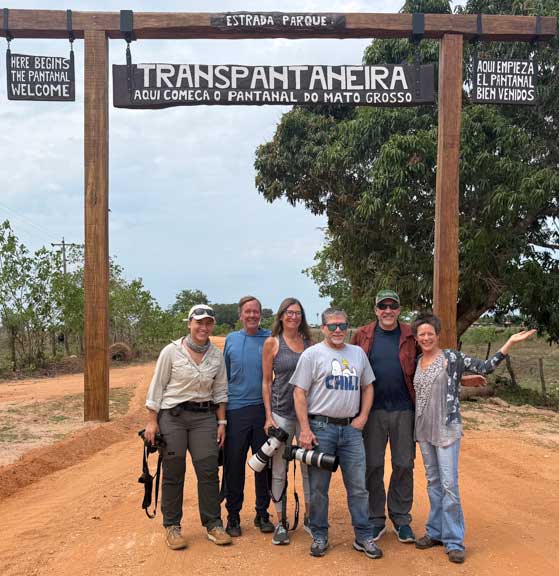
Our group at the start of the Tranapantaneira Highway on the way to Porto Jofre and the start of our Pantanal wildlife viewing
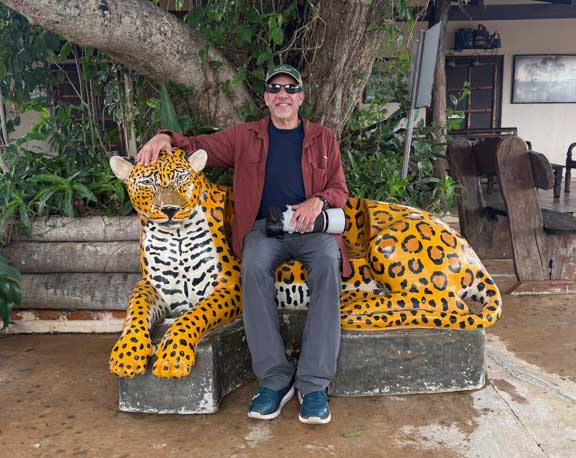
Lunch with a jaguar during the drive to Porto Jofre
Fun Facts About Jaguars
Panthera onca is the largest feline in North and South America, and is the 3rd largest cat in the world after the tiger and the lion. Jaguars are considered near-threatened by the IUCN (International Union for the Conservation of Nature). Up to 7,000 jaguars reside in the Pantanal, making the Pantanal one of the best places to see one (or 24 like we did). We encountered male and female jaguars doing a wide variety of things; hunting, playing, mating, eating, and of course being cats, sleeping.
The males are big boys, and can weigh over 300 pounds, larger than an African leopard. You can think of them as a leopard on steroids.
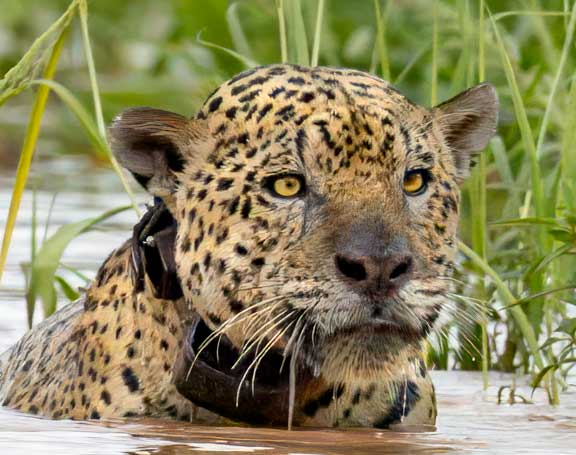
Jaguars are very much at home in their water world, and hunt caiman and capybara while stalking from the water
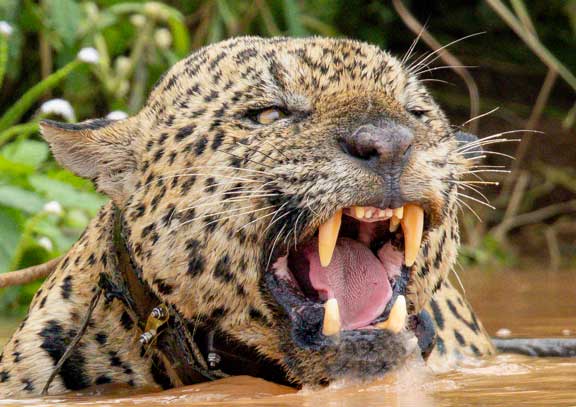
In relation to body size, they have the strongest bite of any cat. Their bite is strong enough to pierce a caiman skull.
Comparison of Leopards and Jaguars
Jaguars look like leopards to the uninitiated. The rosettes on their hair coats are larger and wider than leopards, and oftentimes include smaller dots inside the large ones. It is easy to see this difference when compared at the same time.
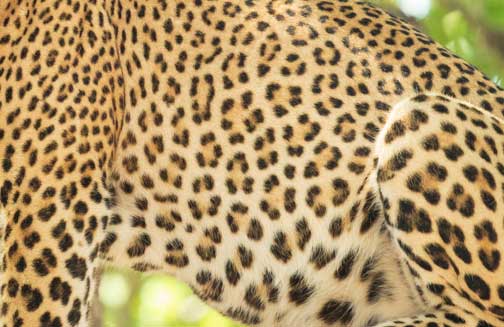
This is the hair coat of an African leopard
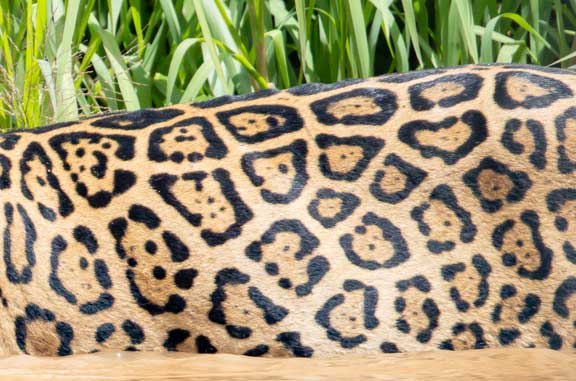
This is the hair coat of a jaguar
Faces of Our New Friends
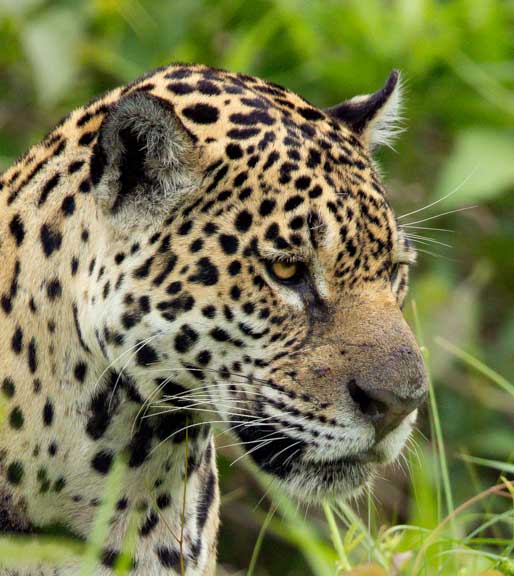
Here are a few faces we came to know and love during our trip to show you how large and regal the male jaguars are.
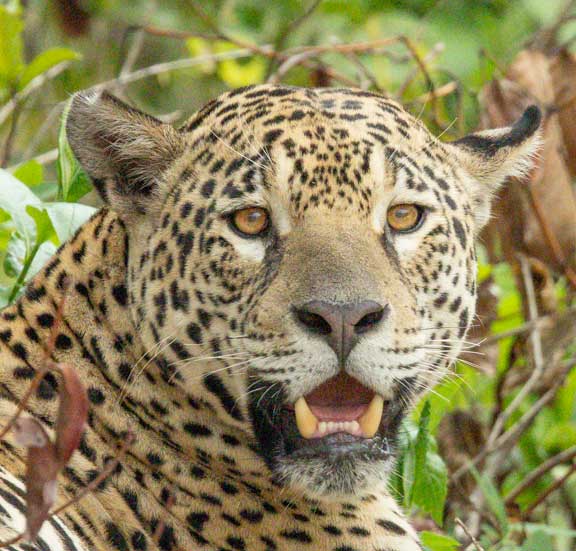
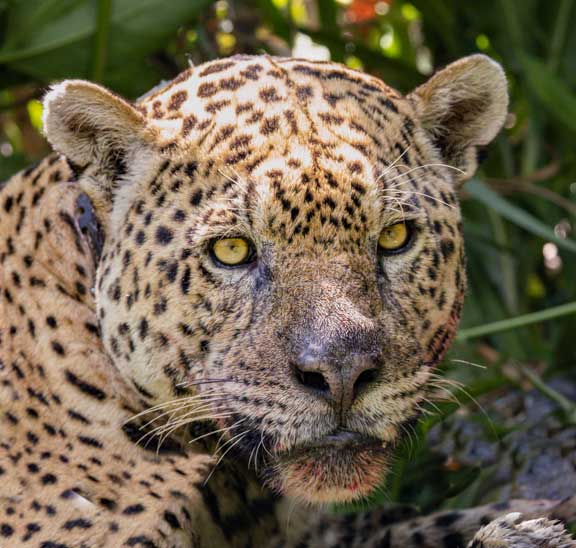
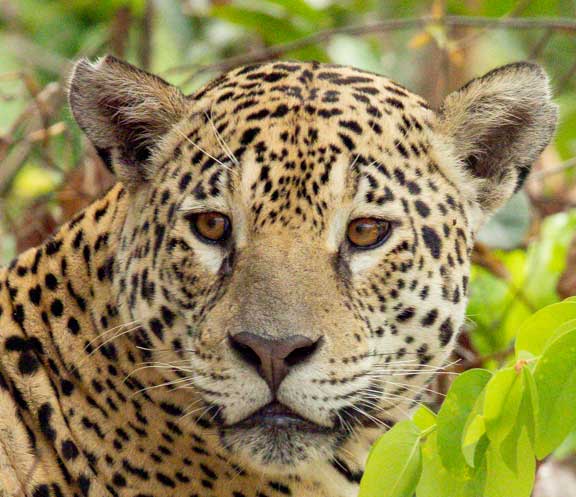
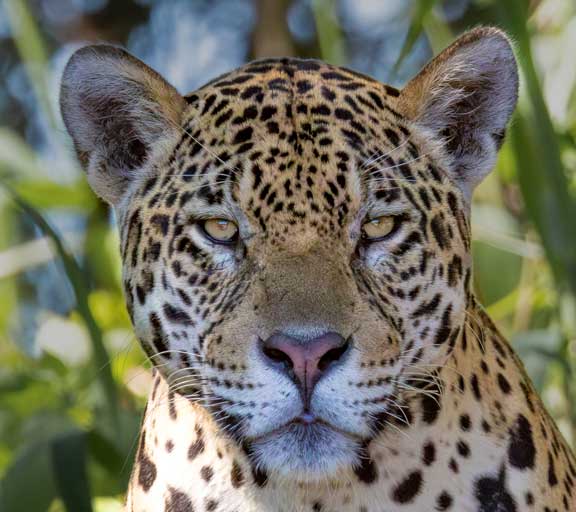
Where is the Pantanal?
The Pantanal is in the south-central part of Brazil, in the State of Mato Grosso, and is south of the Amazon. It is the world’s largest tropical wetland (the Amazon River Basin is the world’s largest wetland system). Like many wetland ecosystems it faces deforestation from agriculture, fires, hydroelectric dam diversion, and poaching, all due to human activities.
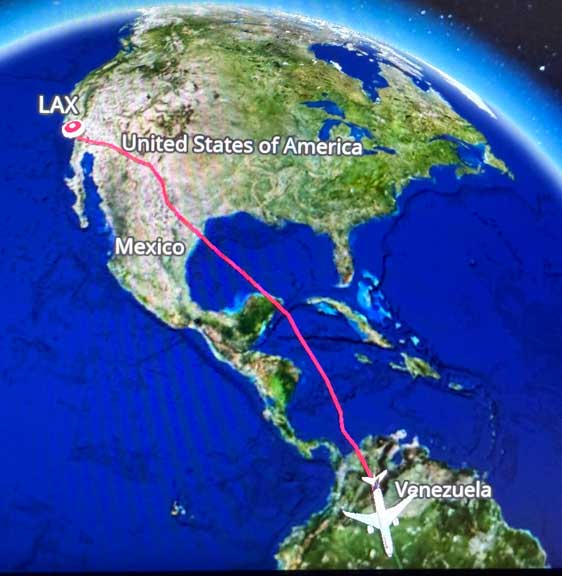
Our flight path from Los Angeles to Sao Paulo, Brazil
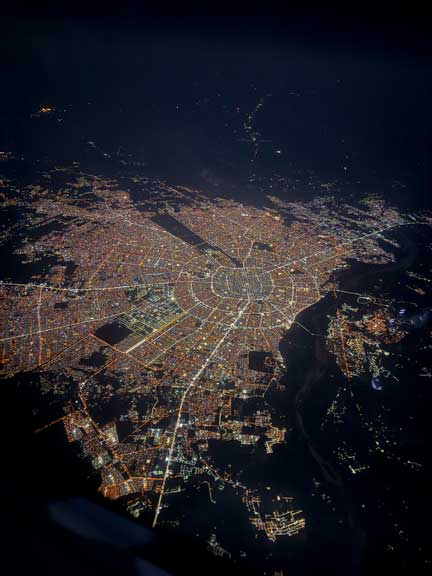
The view from the evening flight of a large city in Brazil at 35,000 feet
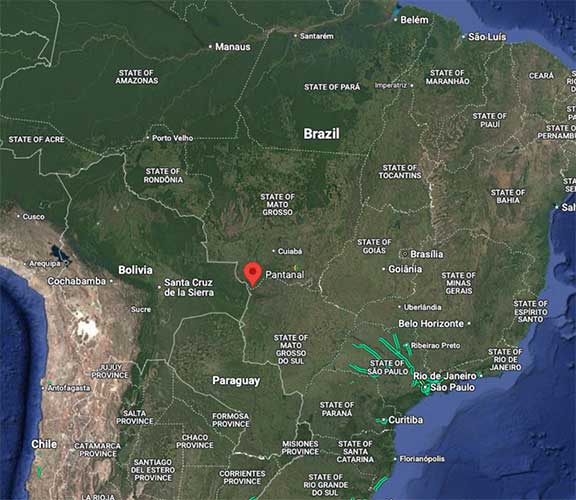
The Pantanal is located in the south-central part of Brazil, right next to Bolivia
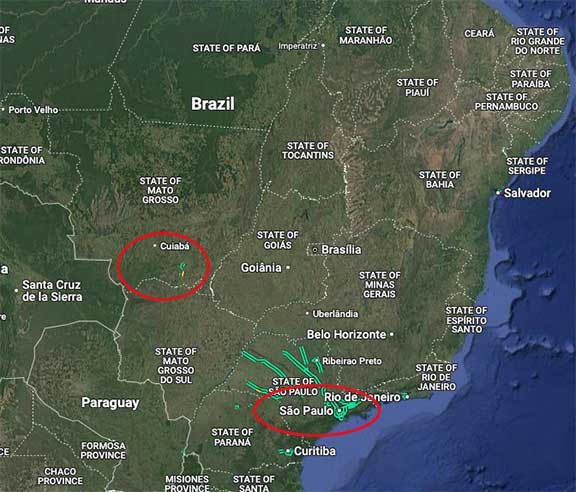
To get there we flew to Sao Paulo, then connected with a flight to Cuiaba where we spent the night
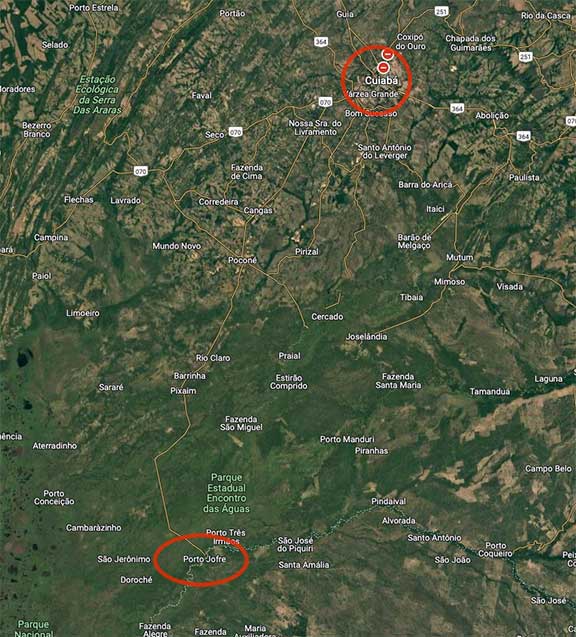
From Cuiaba we drove the Transpantaneira Highway (see the picture at the start of this post) to Porto Jofre
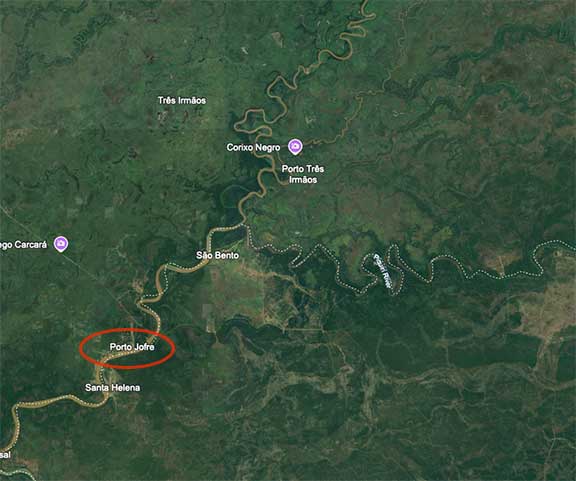
At Porto Jofre we boarded a boat that took us to our Flotel where we spent the next week on the rivers of the Pantanal
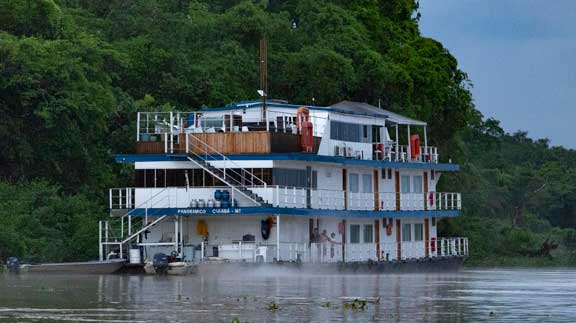
We stayed on a large floating hotel, called a Flotel, that is right in the middle of jaguar country
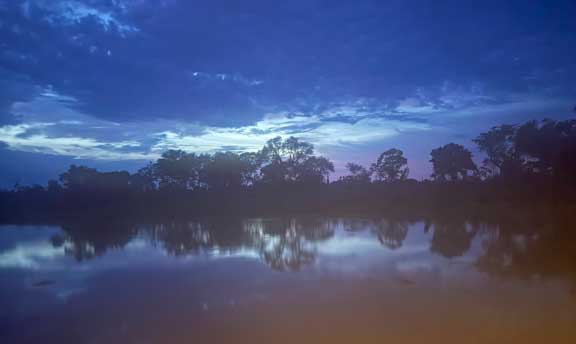
A view of the river at 5 AM (yes, we were up that early every day)
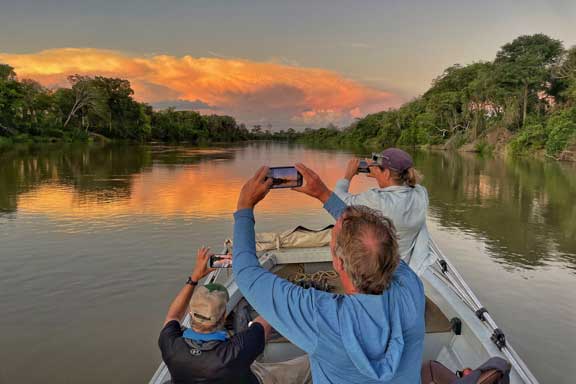
Our view at the other end of the day
Our Guides (Par Excellence)
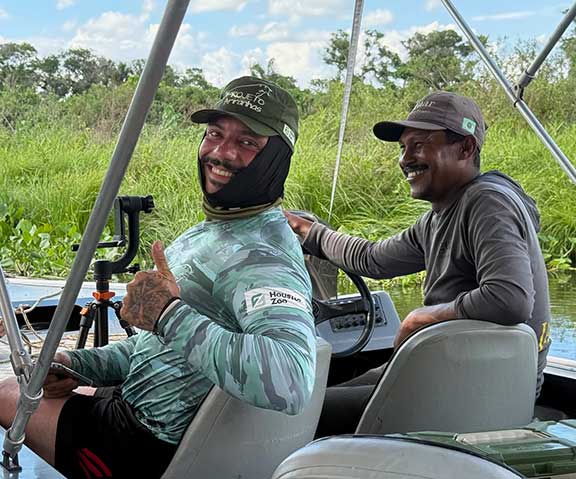
Our guides knew every jaguar by name, could identify them in a second, and even anticipated their behavior at times.
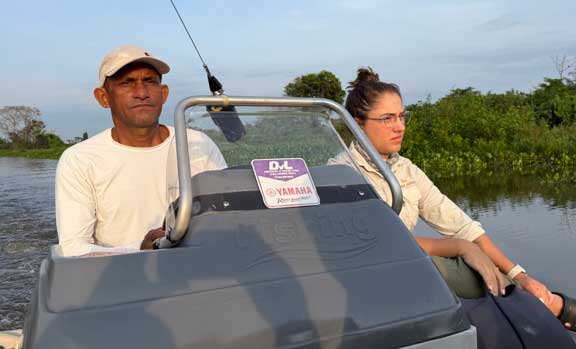
Pio and Duda, hard at work looking for wildlife (and finding them)
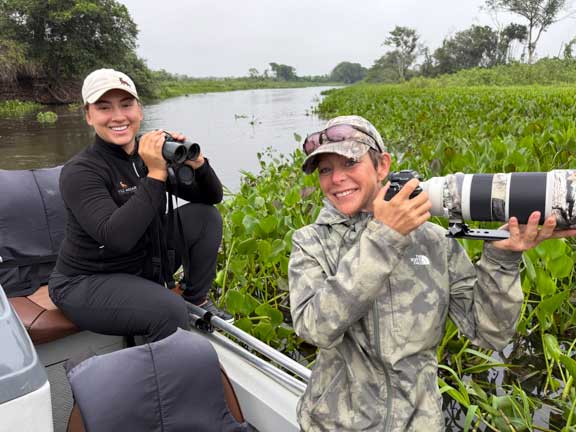
Duda and Karine doing their thing
Reference Books
If you go there make sure you purchase these books to help understand and identify the wildlife. You can get them online ahead of time, or purchase them on arrival.
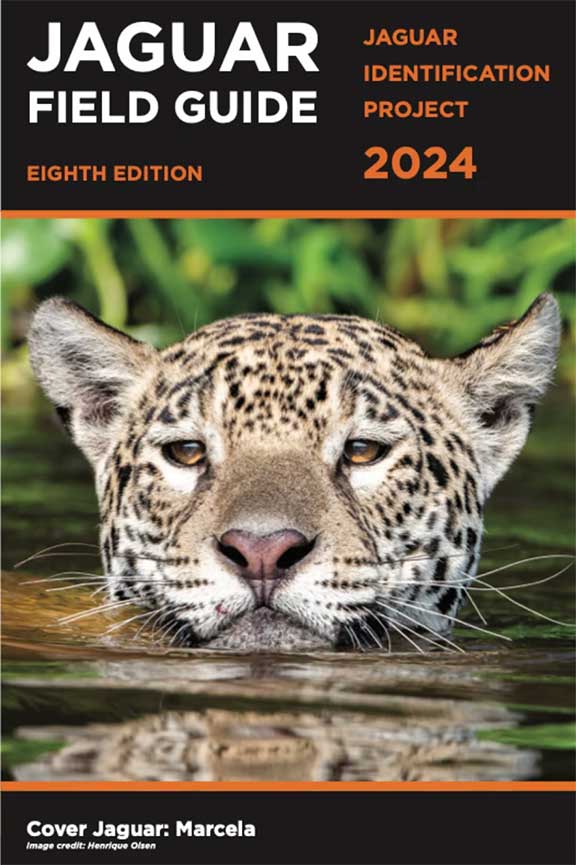
Dr. P took this picture of Marcela on his trip. Can you tell it is the same jaguar as the one on the cover of the book above by looking at the markings on the head?

You can get this brochure at many of the gift shops you will encounter
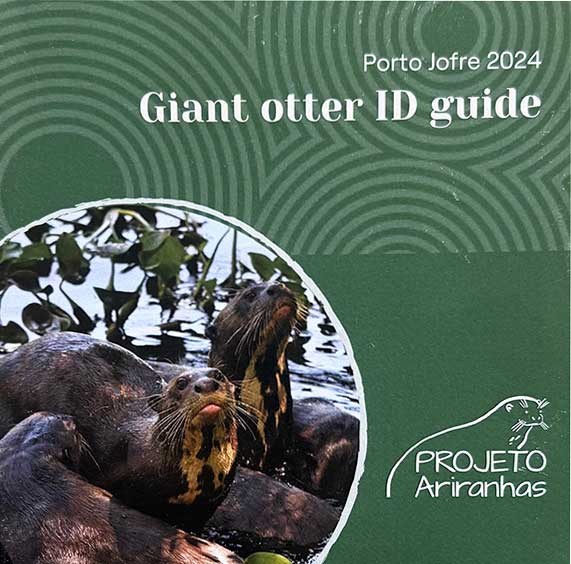
We got lucky, and were given an otter guide book while on the river when we encountered these giant otter researchers
Other Wildlife in the Pantanal
Included in these posts on jaguars will be photos and information on the following animals in the Pantanal.
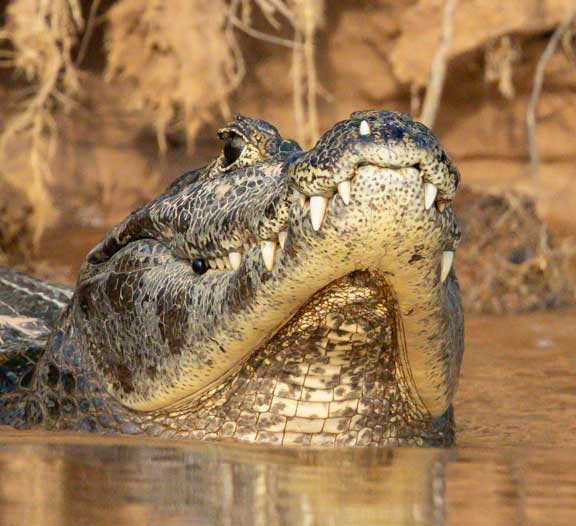
Caiman
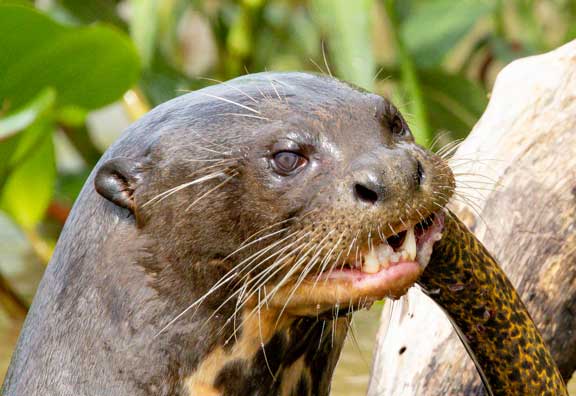
Giant River Otters
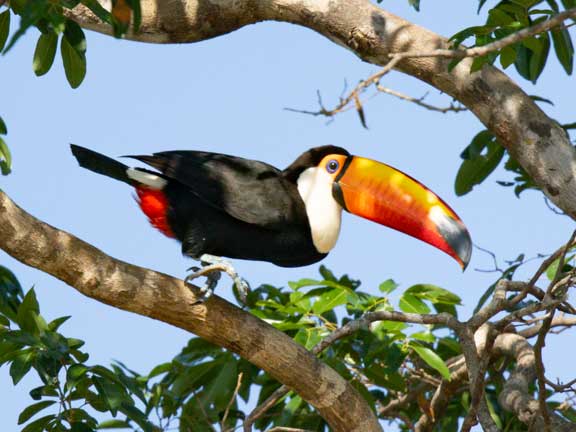
Birds like this Toco Toucan
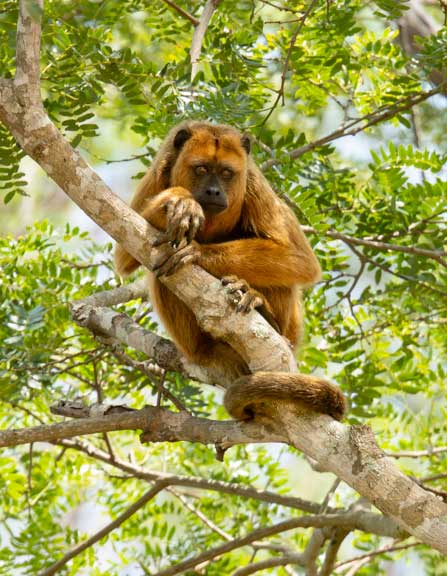
Howler Monkey
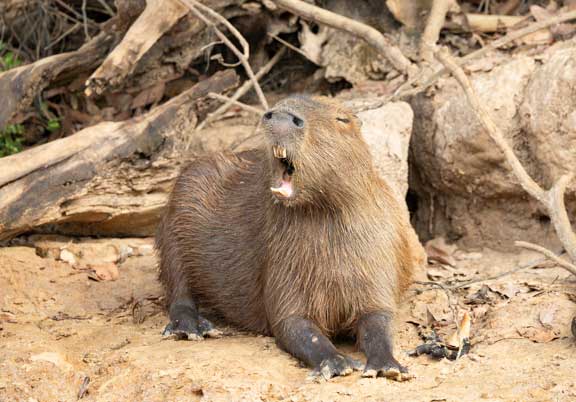
Capybara
Follow the link to “Next Post” and let’s see what those jaguars are up to.
Amazing photos. The 10th picture down looks like the Jaguar had a little bit of stained blood leftover from his last meal on his chin.
Some of the Coats are so cool and you just wonder how something so pretty is created.
Awesome these experiences you are living.
Beautiful fotos. So much effort goes into capturing those shots and I can’t see how they could be any better.
Maybe one day when we go back you can join us on this trip.