
Introduction
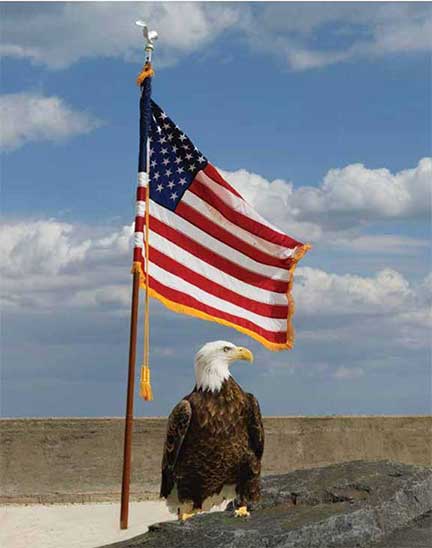
The regal nature of our bald eagle has endeared it to Americans since becoming our national bird in 1782. The bald eagle symbolizes valor, dignity, and pride. The bald eagle has many attributes that make it deserving of its regal status in our nation.
Lifetime Bond
Bald eagles mate for life, and only the premature death of one of them will cause the bond to break.
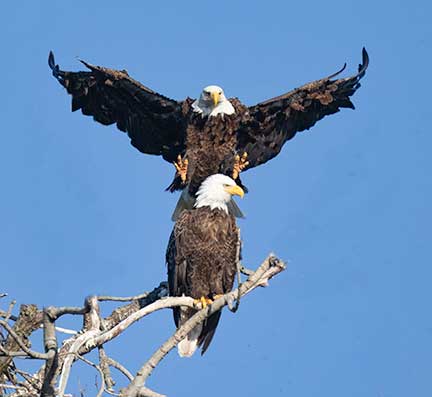
Male flying to the female on a branch near the nest
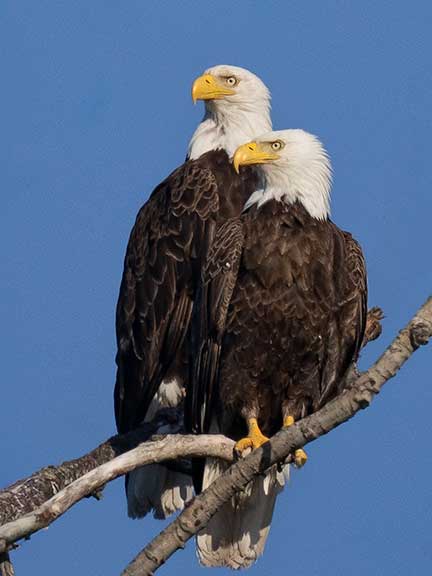
This mated pair is getting ready to build a nest
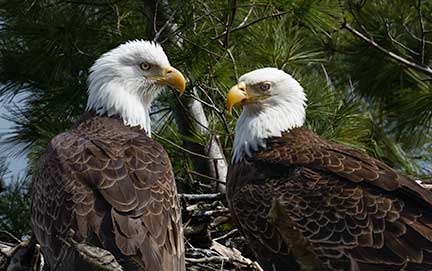
On the nest communicating with each other
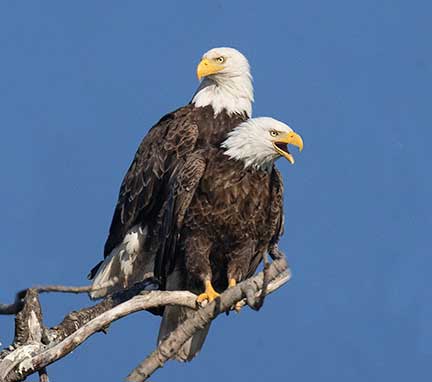
Preparing to mate
Vigilant Parents
They are fierce protectors of vulnerable eggs and chicks. They are ever vigilant, and one of them always guards the nest when vulnerable chicks or eggs are present. When not on the nest you will find one perching nearby, or flying over the nest, using tremendous vision to spot potential threats (and also prey opportunities).
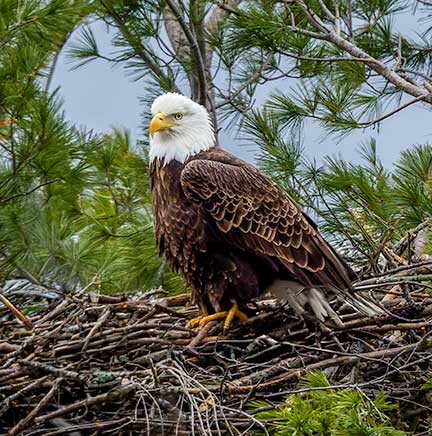
Female standing guard on the nest
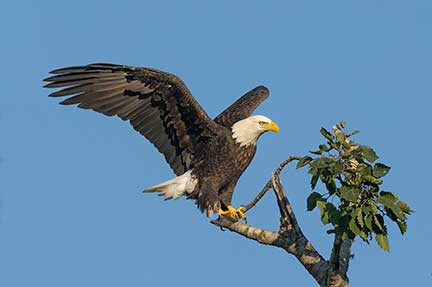
Male standing guard at the nest
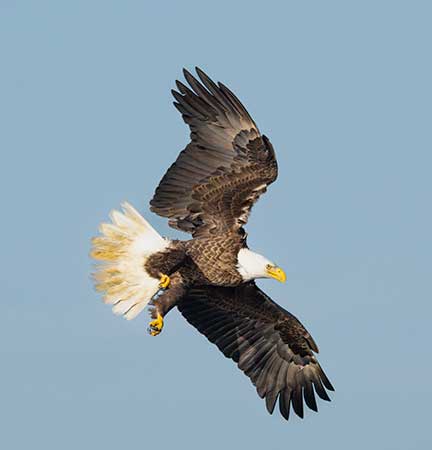
Male flying off to confront a perceived threat
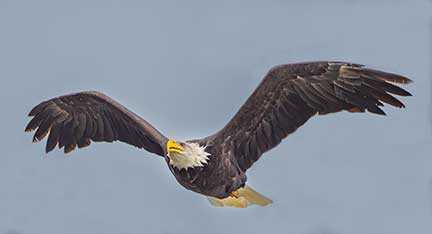
Male zeroing in on a perceived threat
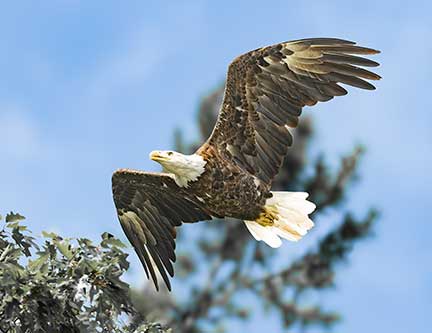
Male zooming past the threat
Doting Parents
They are dedicated to caring for their young. It starts as soon as the chicks are born by providing shelter from the elements and the chicks’ first meals.
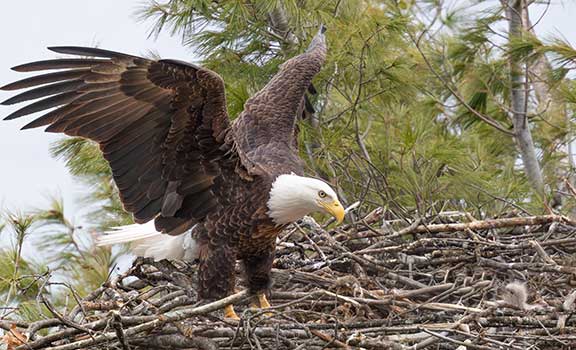
At any sign of a problem one of the parents will be at the nest in an instant
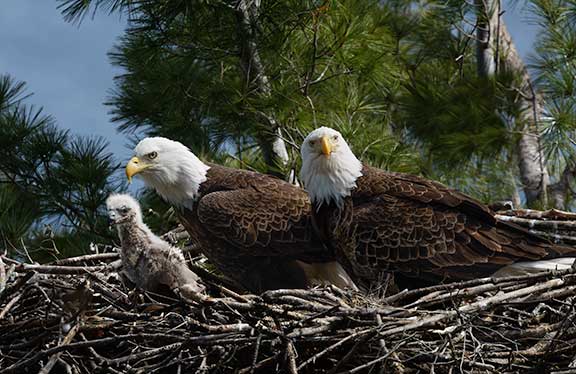
Ever vigilant, they constantly scan for dangers to their chicks
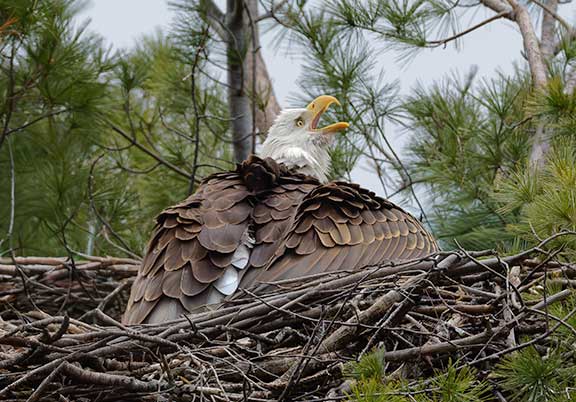
At any sign of a perceived danger they huddle over the chick and yell at the intruder
Great Providers
With usually 2 (occasionally 3) very hungry chicks to feed, the parents have a full-time job giving the chicks enough nutrition to grow on schedule. This is no easy feat considering the chicks go from zero to juvenile stage ready to leave the nest in 3 months (equivalent to a teenage human being).
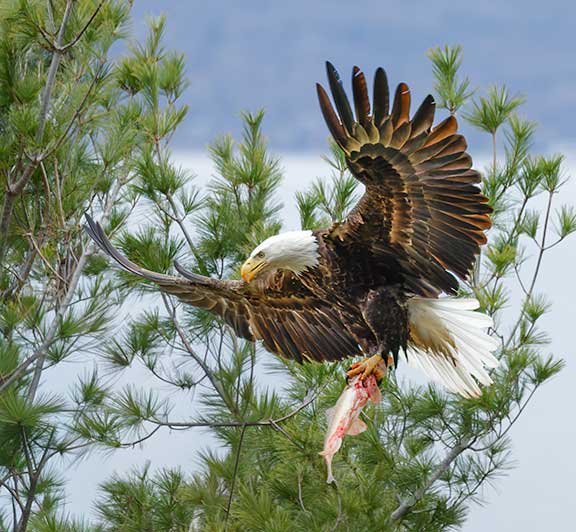
The male tends to do most of the hunting while the larger female protects the chicks on the nest
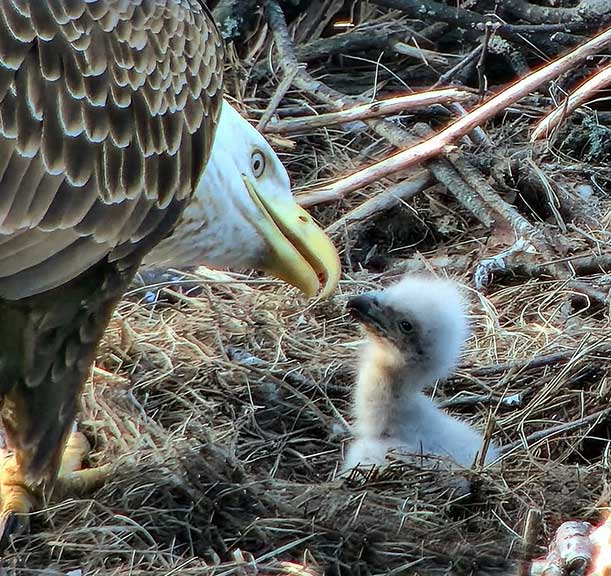
Gently feeding a newly hatched chick with small pieces of fish
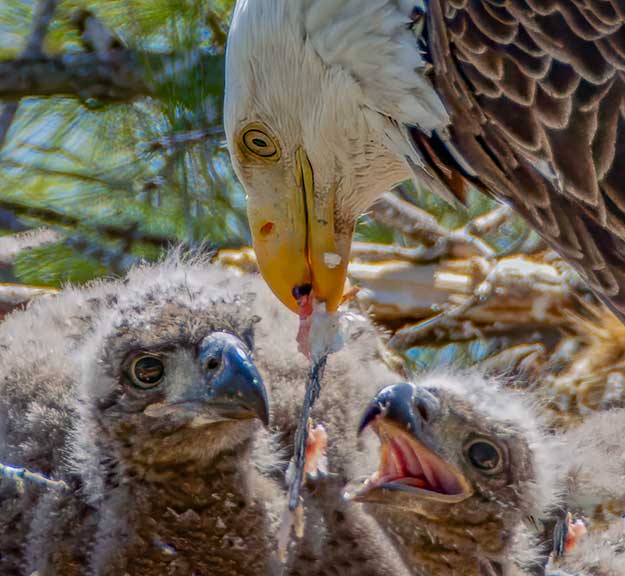
As the chicks grow the fish pieces get much bigger
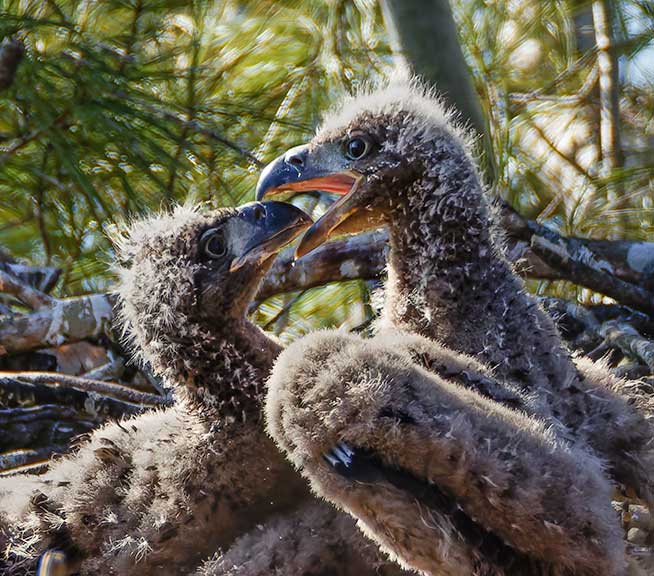
They are soon fighting over food
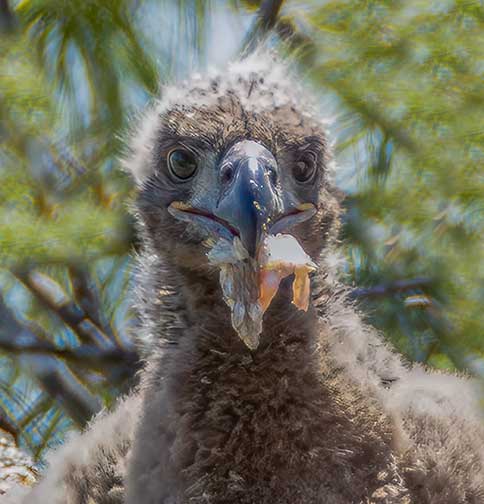
The first hatched and largest gets the spoils
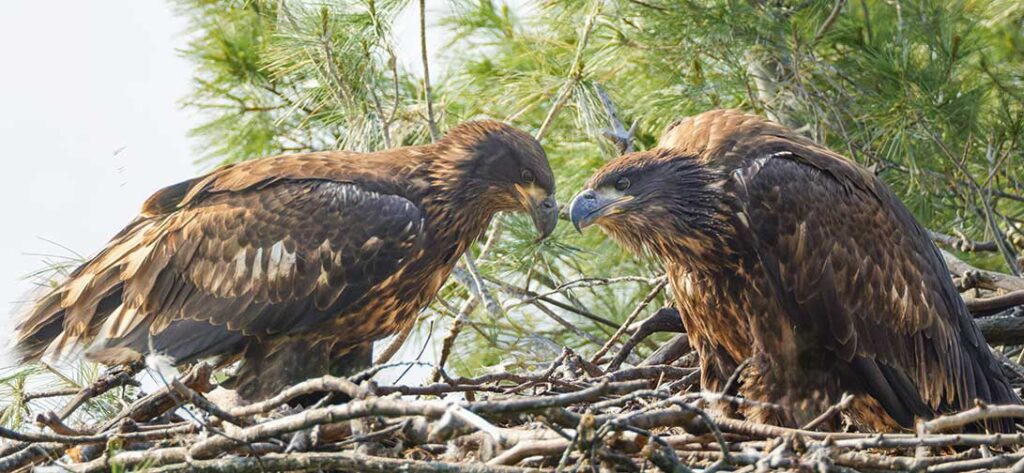
Competition for food is a way of life for them
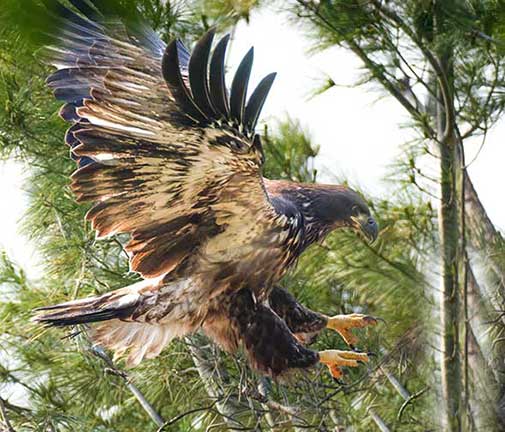
3 months after hatching they are testing their wings
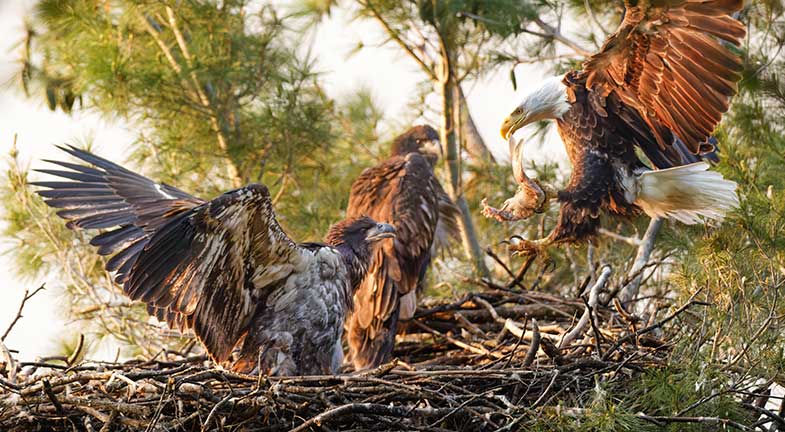
They still cannot hunt on their own and need to be fed by the adults for another few months